KRW 1,000 Trillion Nuclear Decommissioning Market Opens... Korea Bets on 'Decommissioning Technology' After New Reactor Builds
- Input
- 2026-01-22 09:43:43
- Updated
- 2026-01-22 09:43:43
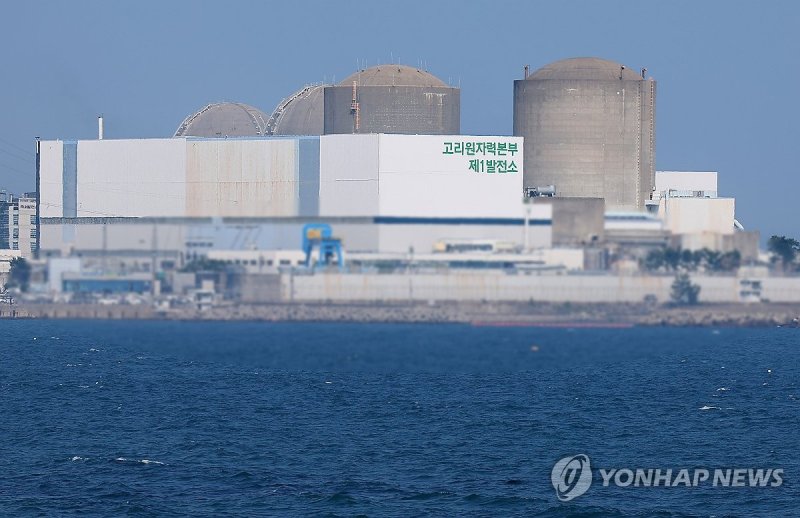
[Financial News] The global nuclear power industry has recently entered an unprecedented "two-track market" in which new construction and decommissioning of aging plants are growing simultaneously. In other words, the industry is being reshaped so that it is no longer enough to have "construction technology" alone; only players that also possess full-fledged "decommissioning technology" can survive in global bidding competition.
According to estimates released on the 22nd by the International Atomic Energy Agency (IAEA), the nuclear decommissioning market is expected to surge to around 1,000 trillion won by 2050.
The international community is demanding safety that covers the entire life cycle of nuclear power plants. New builds that are not backed by credible decommissioning technology are finding it increasingly difficult to gain trust.
In fact, the International Atomic Energy Agency (IAEA) strongly recommends that ease of future decommissioning be incorporated from the design stage of new reactors. In particular, it requires the submission of a "preliminary decommissioning plan" when applying for a construction license, underscoring a safety framework that takes responsibility from start to finish.
Under the European Union (EU) taxonomy for sustainable activities, nuclear power can be classified as green energy only if decommissioning funds are secured and plans for operating radioactive waste disposal facilities are in place. In effect, decommissioning capability is directly tied to financing for new nuclear projects.
Globally, an estimated 400 to 580 reactors are expected to be permanently shut down before 2050. With decommissioning costs per unit materializing at around 1 trillion won, the total market size is projected to exceed a cumulative 1,000 trillion won by 2050.
An industry official said, "In the export market for new nuclear power plants, client countries prefer partners that can take responsibility not only for construction but also for decommissioning after operation," adding, "This is why securing decommissioning technology has become a key indicator of competitiveness in winning new nuclear orders."
Korea’s strategy is to add decommissioning technology to its world-class nuclear construction capabilities and thereby complete a "full life-cycle export" model for nuclear power.
For this reason, the decommissioning of Kori Nuclear Power Plant Unit 1 is especially important for Korean companies. With the Nuclear Safety and Security Commission (NSSC) granting decommissioning approval in June 2025, Korea has begun to build a commercial nuclear decommissioning track record at home. This is akin to obtaining a mandatory license to enter the 1,000 trillion won global market.
The decommissioning of Kori Nuclear Power Plant Unit 1 is currently proceeding with a "non-controlled area decommissioning" phase, which focuses first on dismantling secondary systems such as turbines and generators that are free of radioactive contamination. Doosan Enerbility is leading this work. As the project moves into subsequent stages, a number of small and mid-sized partner firms are expected to join and build their own references.
A defining feature of the nuclear decommissioning industry is that projects worth around 1 trillion won per unit are not one-off jobs. Instead, the same processes are repeatedly carried out as decommissioning continues at other plants.
As experience and performance accumulate, the likelihood of repeat orders rises. The industry therefore views this not as a "one-time mega project" but as a "long-term pipeline industry."
Unlike conventional construction, which ends with a single large-scale project, nuclear decommissioning is a service- and technology-driven business that can run for 10 to 20 years. It is seen as an attractive market because small and mid-sized companies can generate stable revenue, and accumulated track records translate directly into global competitiveness.
Industry experts note that as the nuclear sector shifts from "simple construction" to "full life-cycle management," attention should focus on companies—large or small—that possess not only new-build capabilities but also maintenance and repair, which provide stable income, and decommissioning technology, which serves as a future growth engine.
Another industry insider commented, "With tighter international regulations, decommissioning capability is becoming a mandatory prerequisite for winning new nuclear orders," adding, "Regardless of company size, only those with a full life-cycle portfolio—from design to decommissioning—will be able to overcome global market uncertainty and secure long-term, stable 'pipeline revenue.'"
[email protected] Kim Kyung-a Reporter