For People in Their 20s and 30s, Moving Into Seoul Beats Moving Out... Inflows Rise While Net Migration Declines
- Input
- 2026-01-22 09:24:49
- Updated
- 2026-01-22 09:24:49
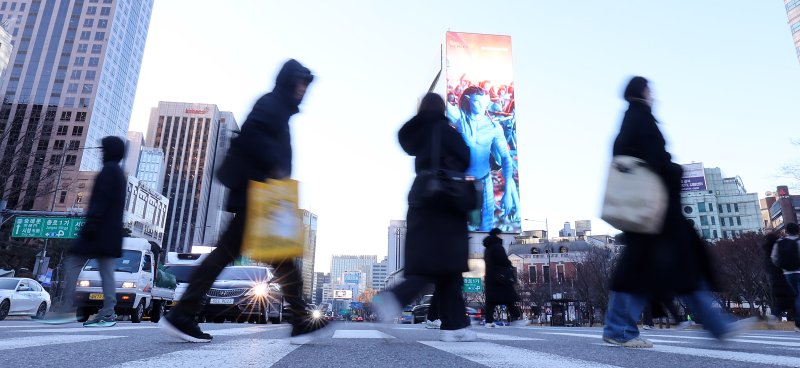
[The Financial News] Young adults in their 20s and 30s are increasingly choosing to move into Seoul Special Metropolitan City rather than leave it. People moving from Gyeonggi Province and Incheon Metropolitan City to Seoul accounted for 60.7% of all inflows, the largest share. Among reasons for moving in, the proportions citing jobs (workplaces), education, and residential environment have been rising, while the share citing housing itself has been falling.
The Seoul Metropolitan Government on the 22nd released the results of its "Analysis of Population Movements in Seoul (2001–2024)."
The analysis used microdata from the Internal Migration Statistics compiled by the Ministry of Data and Statistics. It covered changes of residence across eup, myeon, and dong boundaries reported over the 24 years from 2001 to 2024.
Over the past 24 years, the net migration (inflows minus outflows) of Seoul Special Metropolitan City has consistently shown a "net outflow" pattern, with more people leaving than entering. However, as of 2024, net migration stood at a decrease of 44,692 people, narrowing from a decline of 113,949 people in 2001.
Among those moving into Seoul Special Metropolitan City, the share accounted for by moves within the city fell from 72.2% in 2001 to 64.9% in 2024. In contrast, the share of people moving into Seoul from other cities and provinces rose from 27.8% in 2001 to 35.1% in 2024. This indicates that more people are choosing Seoul as their destination.
In particular, since 2019, the number of young adults in their 20s and 30s moving into Seoul has exceeded those moving out. In 2012, net migration for this age group (inflows minus outflows) showed a decline of 20,222 people. By contrast, in 2019 there was a net inflow of 19,000, and except for 2021, inflows have outnumbered outflows every year since.
In 2024, among people moving into Seoul Special Metropolitan City from other regions, those from Gyeonggi Province made up the largest share at 53.0%, followed by Incheon Metropolitan City at 7.7%. Together, these capital-area regions accounted for 70.7% of all inflows into Seoul. Net outflows from Seoul to Gyeonggi Province fell from 120,000 people in 2021 to 60,000 in 2024, effectively halving the gap.
Comparing 2024 with 2013, based on reasons cited by people moving from Gyeonggi Province into Seoul Special Metropolitan City, the share citing "jobs" increased the most, by 6.4 percentage points. The share citing "housing" as the reason for moving dropped by 12.0 percentage points.
Notably, 39.2% of people in their 20s and 30s who moved from Gyeonggi Province to Seoul Special Metropolitan City in 2024 did so for jobs or workplaces. This is 9.4 percentage points higher than in 2013.
Cases of "moving alone" have also increased. As of 2024, single-person moves accounted for 79.8% of all moves into Seoul Special Metropolitan City, up 15.9 percentage points from 2004. Young adults aged 19 to 39 made up 68.8% of these moves, and their main reasons for moving were "jobs" (36.5%) and "family" (22.7%).
Looking at reasons for moving in, since 2013 the share citing "housing" has declined, while the shares citing "jobs," "education," and "residential environment" have all been on the rise.
For moves within Seoul Special Metropolitan City, the share citing "residential environment"—which reflects quality-of-life factors such as commuting and school convenience and overall living conditions—rose from 2.8% in 2013 to 8.2% in 2024, an increase of 5.4 percentage points. In contrast, the share citing "housing" reasons such as lease or purchase contracts fell by 10.1 percentage points.
By contrast, among those moving into Seoul Special Metropolitan City from other cities and provinces, the shares citing "jobs," "education," and "residential environment" increased, while the shares citing "family" and "housing" decreased.
Kang Ok-hyun, Director of the Digital City Bureau of the Seoul Metropolitan Government, said, "When it comes to population inflows into Seoul, we need to focus less on the sheer volume and more on the changing purposes and patterns of movement." Kang added, "As individual-based moves and inflows of young people continue to grow, we will use population-movement data to enhance the precision of policy analysis and urban strategy development."
[email protected] Lee Chang-hoon Reporter