"Only Two Tickets" – South Korea Lose to Younger Japan at U-23 Level... Without Europe-Based Stars, LA 2028 Looks Out of Reach
- Input
- 2026-01-22 09:00:00
- Updated
- 2026-01-22 09:00:00
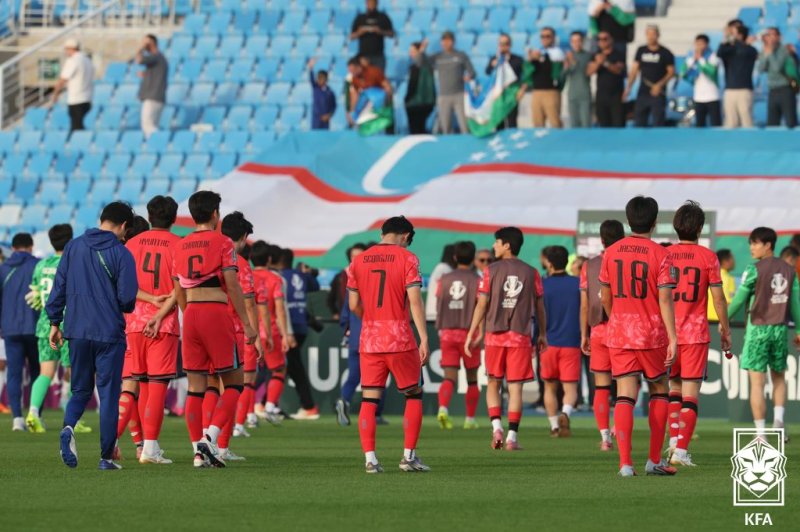
According to The Financial News, after South Korean football bowed to a Japan side that was two years younger at the AFC U-23 Asian Cup, fans’ worries have shifted entirely to the Asian Games in September. Pessimistic voices are pouring in, saying, "At this rate, a fourth straight Asian Games title is gone."
Yet, to be clear, there is no need to panic about the Asian Games. The real source of fear is not Nagoya in September, but the 2028 Summer Olympics in Los Angeles two years from now.
Many people are mistaken. They think that because the Asian Games are not organized by the Fédération Internationale de Football Association (FIFA), it is difficult to call up overseas-based players. That is completely wrong.
The Asian Games come with a stronger incentive than any tactical system: military service exemptions. Clubs may object, but in the past Son Heung-min and Lee Kang-in both pushed through. Players persuade their clubs themselves, because resolving their military duty boosts their market value and allows them to continue their careers in Europe. Young Europe-based core talents such as Bae Jun-ho of Stoke City Football Club, Yang Hyun-jun of Celtic Football Club, Yang Min-hyeok, who is set to join Tottenham Hotspur Football Club, and Kim Ji-soo of Brentford FC will stake everything on joining the squad.
Once these players pull on the shirt with a military-exemption lifeline on the line, the Asian Games team will be on a completely different level from the current U-23 side.
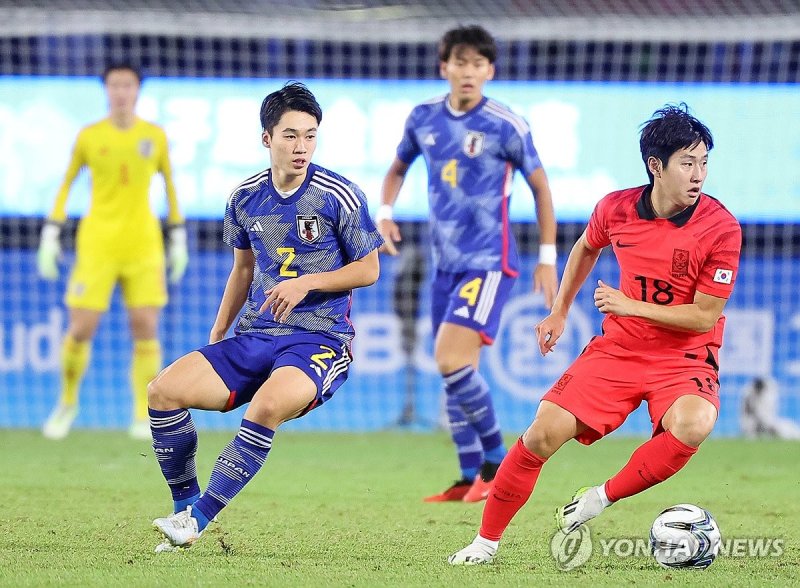
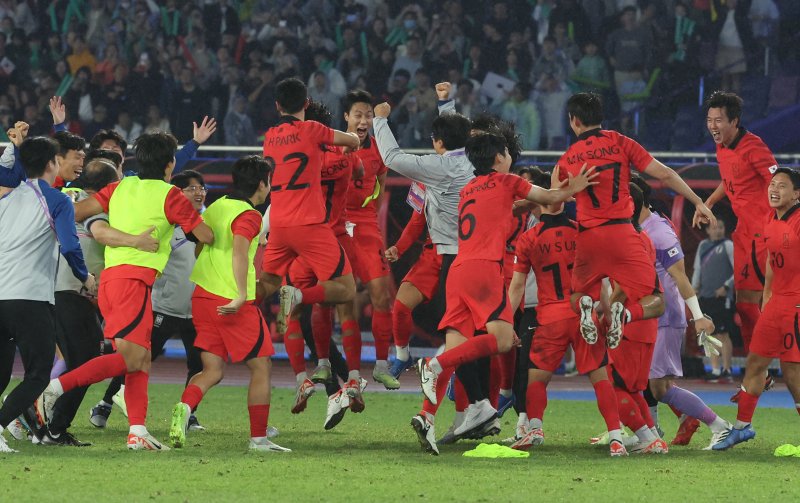
If players with near A-team-level firepower join, they can easily break down Japan’s vaunted under-21 national football team or even China’s suffocating defensive block. The biggest reason for the defeat to Japan this time – the lack of attacking threat – would naturally be resolved simply by adding the Europe-based players.
The real issue comes after that: the 2028 Summer Olympics in Los Angeles. Due to a FIFA decision to reduce the number of teams at the Olympic finals, Asia’s allocation has been cut from 3.5 tickets to just 2. If you do not reach the final, you do not go to the Olympics.
The Olympic qualifiers are not a mandatory call-up window under FIFA regulations. Once Europe-based players have already secured military exemptions through the Asian Games, they have little reason to defy their clubs and travel for Olympic qualifying. In the end, it means that the qualifiers for the 2028 Summer Olympics in Los Angeles will again be played mainly by Im Min-seong’s largely domestic-based squad, the same type of group that was outclassed by Japan this time.
The situation is bleak. Japan and the Republic of Uzbekistan, who beat South Korea at this tournament, were both under-21 national football teams already assembled with the 2028 Olympics in mind.
Against their "big brother" South Korea, they were superior in both technique and organization. Two years from now, when they return as fully developed under-23 national teams, can a South Korean side stripped of its Europe-based stars really beat them and reach the final?
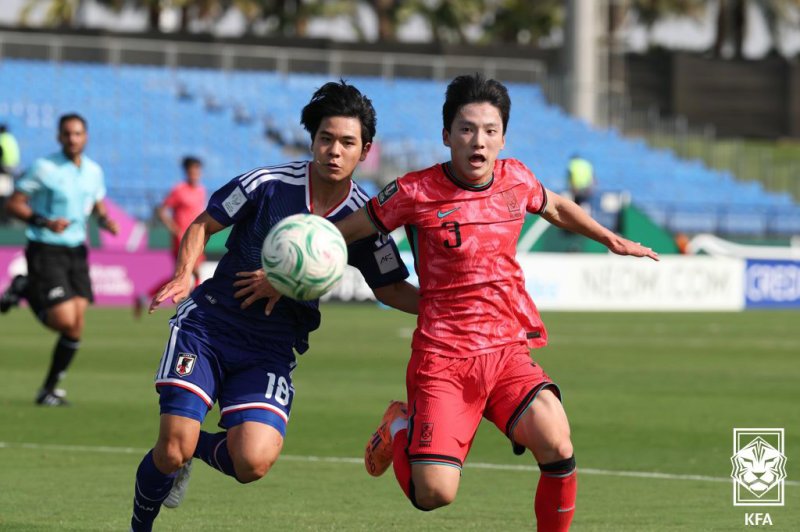
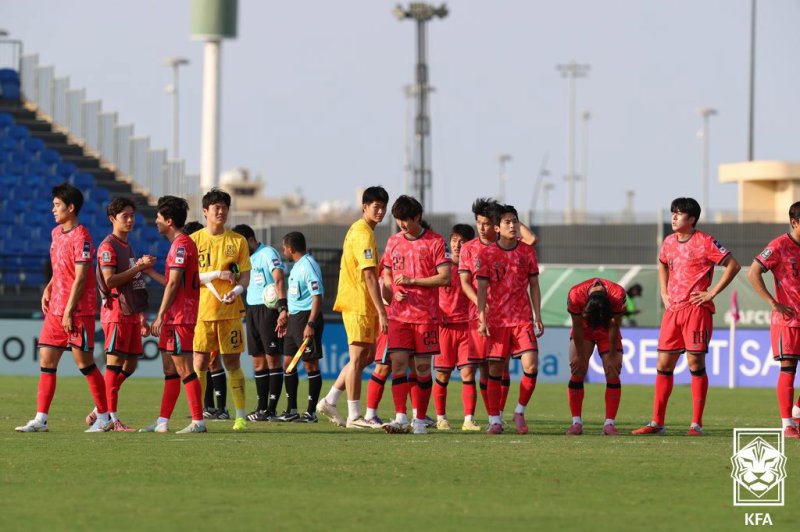
There is serious doubt. South Korea’s exit in the semifinals of this tournament came at the hands of what was effectively Japan’s second-string side. Even when Asia had 3.5 tickets, South Korea failed to reach the Olympic finals for the first time in 40 years. Now that the allocation has been cut to two, claiming that this level of performance will be enough to make the final is closer to gambling than prediction.
Korean football, which already suffered the disaster of missing the Olympics after nine straight appearances, could be heading toward an even greater catastrophe: failing to qualify for the Olympic finals two times in a row.
This is not the time to fret about the Asian Games. The real crisis is the bare reality of Korean football that will be exposed once those Europe-based stars have come and gone. The road to Los Angeles is far narrower and rougher than the road to Paris.
jsi@fnnews.com Jeon Sang-il Reporter