"I Was Enlightened" and the So-Called 'Gaemong-ryeong'... First-Trial Court for Han Duck-soo Says It Deepened Social Conflict, Not Enlightenment
- Input
- 2026-01-22 05:00:00
- Updated
- 2026-01-22 05:00:00
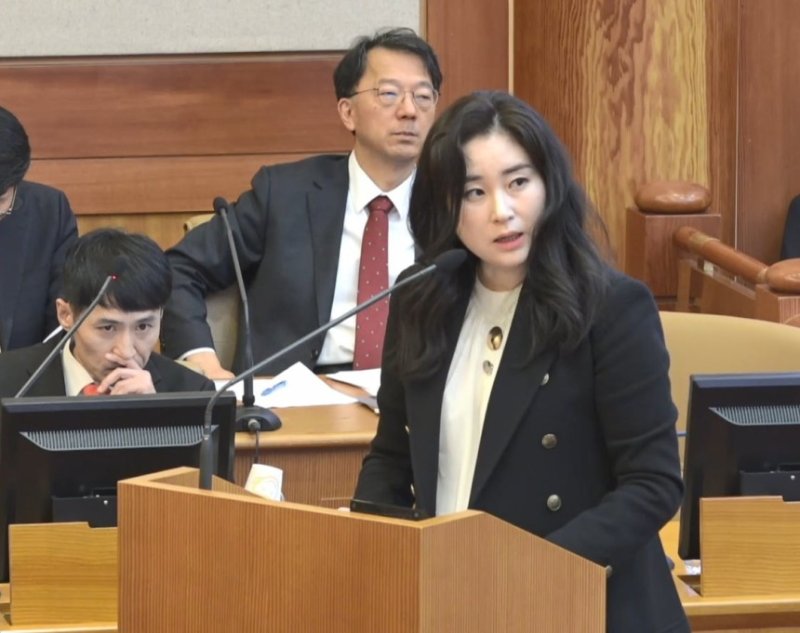
[The Financial News] "I have been enlightened."On February 25 last year, during the final impeachment hearing for then President of South Korea Yoon Suk Yeol, attorney Gye-ri Kim, appearing as one of his representatives, left a phrase that became etched in the public mind.
The phrase 'Gaemong-ryeong' that marked the Yoon impeachment phase
At the 11th hearing of the impeachment trial, held in the grand courtroom of the Constitutional Court of Korea, Kim was the first to deliver a comprehensive argument on behalf of Yoon. She insisted that the reason for the December 3 emergency martial law was what she called the "fascist acts" of the Democratic Party of Korea (DPK).
She went on to say, "After carefully reading the address following the emergency martial law, I came to see the DPK's vicious behavior, one-party dictatorship, and fascist acts, which I had not known about because I was busy with pregnancy, childbirth, and childcare. That is why I joined the defense in this case," adding, "I have been enlightened."
Until then, this kind of language was mostly used by far-right YouTubers who claimed that the declaration of martial law was meant to 'awaken the people.'
Previously, another representative for Yoon, attorney Cho Dae-hyeon, a former justice of the Constitutional Court of Korea, had also used the term at the fourth hearing. He said, "The people understand the emergency martial law as 'Gaemong-ryeong.' The emergency martial law was intended to appeal to the people’s sense of alarm." Even then, the phrase did not really catch on with the public.
But once it came from Kim’s mouth, 'Gaemong-ryeong' became a widely recognized expression. It turned into a symbolic slogan for those who defended former President Yoon and the December 3 emergency martial law.
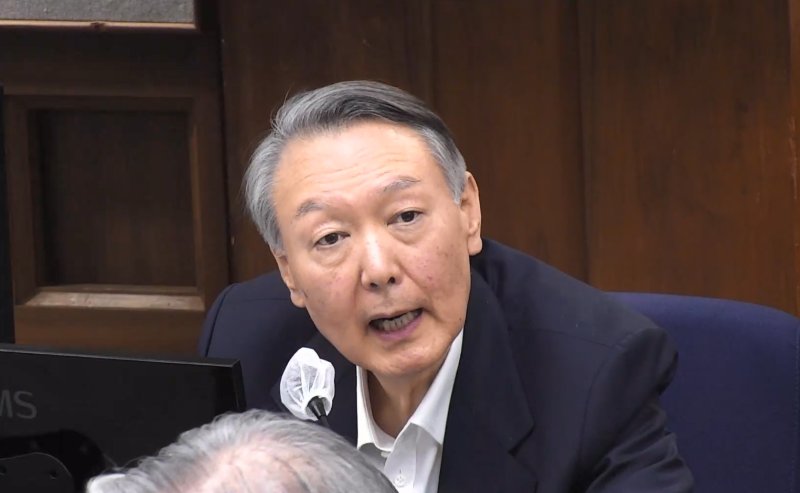
The phrase resurfaced at the sentencing hearing on the insurrection case against Yoon and seven other defendants, held on the 13th before Criminal Agreement Division 25 (presiding judge Jee Kui-yeon) of the Seoul Central District Court. Beginning his final statement at 12:11 a.m. the following day, after the hearing ran past midnight, Yoon again invoked 'Gaemong-ryeong.'
Yoon argued, "The December 3 emergency martial law was lifted after only a few hours, and more than a year has passed since then. Yet the drive to brand it as an insurrection, in order to purge and suppress political opponents and dissenting forces, continues." He stressed, "They remain indifferent to the reality of South Korea, where warning lights are flashing over people’s livelihoods and the economy, and to the national crisis of fractures in the solidarity of the free world."
He continued, "The people and the youth know that the martial law has become 'Gaemong-ryeong,' and they are crying out that it was an unavoidable decision in a time of national crisis."
Defining the emergency martial law as insurrection, the court addresses 'Gaemong-ryeong'
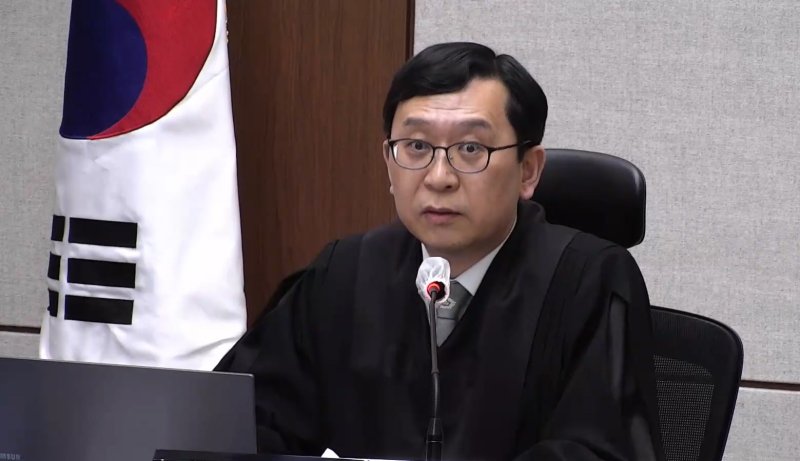
Then, on the 21st, Criminal Division 33 of the Seoul Central District Court (presiding judge Lee Jin-kwan) effectively brought an end to the term 'Gaemong-ryeong.'
This came in the first-trial sentencing of former Prime Minister of South Korea Han Duck-soo, who was prosecuted on the charge of failing to actively stop and instead condoning Yoon’s December 3 emergency martial law.
The court stated, "The holder of power chosen by the people disregarded the Constitution and the law, and committed an act of insurrection in violation of them," adding, "This shook the very foundations of the people’s belief in democracy and the rule of law."
The court went on, "There are people who claim that this unconstitutional and unlawful martial law was an enlightening martial law or a warning-type martial law. There are also people who think it is only natural to violate the Constitution and cause harm to others if it serves their own political stance." The bench concluded, "The emergency martial law did not enlighten anyone. Instead, it produced misguided claims and ideas and made social conflict even more severe."
This directly contradicted the notion of 'Gaemong-ryeong' advanced by those who had defended the December 3 emergency martial law as a measure to awaken the public and justify its legitimacy.
That day, the court found Han guilty of the charge of performing key duties in an insurrection and sentenced him to 23 years in prison, eight years more than the 15-year term sought by the special prosecutor. After delivering the sentence, the court held a separate detention hearing and ordered him taken into custody in the courtroom, citing "concerns about destruction of evidence."
[email protected] Seo Yoon-kyung Reporter