On first anniversary in office, Trump boasts of "unprecedented funds" secured from Korea and Japan
- Input
- 2026-01-21 10:42:43
- Updated
- 2026-01-21 10:42:43
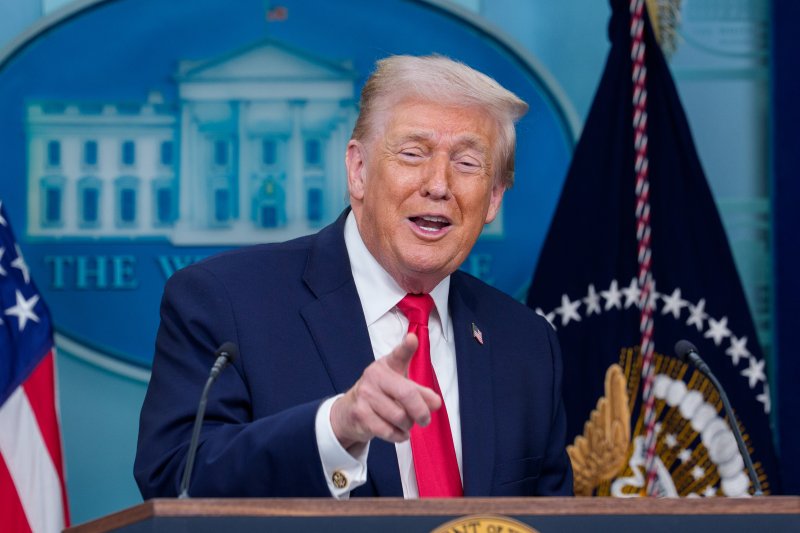
According to The Financial News, Donald John Trump, marking his first year in office on the 20th (local time), held a press conference and claimed he had achieved major results through tariff wars and an expansive foreign policy. He specifically pointed to the Republic of Korea and Japan, which pledged large-scale investments in last year’s trade talks, and boasted that he had secured "an unprecedented level of funds."
Korea and Japan mentioned in connection with Alaska natural gas
According to Cable News Network (CNN) and other local outlets, Trump used the White House press briefing room in Washington, D.C., that day to personally outline the achievements of his second administration over the past year. "It is January 20, one year since my inauguration, and it has been an amazing time," he said, adding, "We are now richer than ever before. That is because we have used tariffs properly, and we are also safer than ever before." Trump went on, "We have launched a massive Alaska gas pipeline construction project to export natural gas to Asia," and added, "By concluding (trade) agreements with the Republic of Korea and Japan, we secured an unprecedented level of funds."After threatening the Republic of Korea and Japan last year with a 25% "reciprocal tariff," the Trump administration finalized trade agreements with Japan in July and with the Republic of Korea in October, agreeing to lower the reciprocal tariffs on both countries to 15%. Under last year’s negotiations, the Republic of Korea and Japan each pledged to invest 350 billion dollars (about 518 trillion won) and 550 billion dollars in the United States.
According to the "Memorandum of Understanding on Strategic Investment between Korea and the United States (MOU)" signed last November, 150 billion dollars of the Republic of Korea’s 350 billion-dollar investment is earmarked for the shipbuilding sector. The remaining 200 billion dollars will be allocated at the discretion of the U.S. president. However, the president must base his decision on investment recommendations from an Investment Committee chaired by the United States Secretary of Commerce, and that committee must consult with a Consultative Committee chaired by the minister of the Ministry of Trade, Industry and Resources of the Republic of Korea. The 200 billion dollars is to be invested in areas such as shipbuilding, energy, semiconductors, pharmaceuticals, critical minerals, artificial intelligence (AI), and quantum computing, which are described as sectors that will advance both countries’ economic and national security interests.
However, United States Secretary of Commerce Howard William Lutnick asserted in a post on X (formerly Twitter) last October that the Republic of Korea’s 200 billion-dollar investment package would include "the Alaska LNG Pipeline, energy infrastructure, critical minerals, advanced manufacturing, AI and quantum computing."
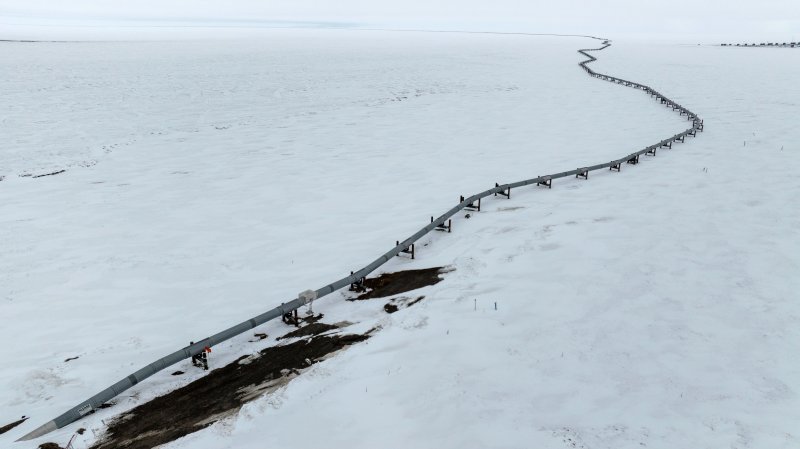
The Alaska gas pipeline project involves transporting natural gas extracted from the Prudhoe Bay gas field in northern Alaska via pipeline to an ice-free port near Anchorage, Alaska, where it would be liquefied and exported to Asia and other regions. To implement the project, Alaska would need to be crossed north to south by an approximately 1,297-kilometer-long pipeline, along with liquefaction terminals and other infrastructure. Initial capital investment is estimated at about 45 billion dollars (around 66 trillion won). Since last year, the Trump administration has been encouraging Asian allies such as the Republic of Korea, Japan, and Taiwan to participate in the project. It remains uncertain whether Trump’s remarks on the 20th mean that Korea’s investment in the United States will be directly tied to the Alaska project.
Tariffs and Greenland incorporation to continue
At the press conference, Trump also addressed the reciprocal tariffs whose legality is currently under review by the Supreme Court of the United States (U.S. Supreme Court). Beginning around February–March last year, he invoked the International Emergency Economic Powers Act (IEEPA) to impose a "fentanyl tariff" and reciprocal tariffs on countries around the world. In response, five U.S. companies and 12 state governments, including Oregon, that were harmed by the new tariffs filed suit against the administration last April, arguing that the measures were invalid, and they prevailed in the first and second instances. The U.S. Supreme Court began the third-stage proceedings with oral arguments on November 5 last year and has yet to issue a ruling.In his remarks on the 20th, Trump said, "I hope the Supreme Court makes the right decision for America," warning, "If they do not, it will be a really big problem." He argued, "Thanks to tariffs, more car plants are being built in the United States than ever before. If we eliminate tariffs, China will steal our industries." He added, "There are other ways, I suppose. I am not trying to scare anyone, but they are far more cumbersome and worse than this from a national security standpoint. The system we have now is perfect." Trump further emphasized that with the newly collected tariffs, "we will be able to pay out at least 2,000 dollars in dividends to every American and also pay down the national debt."
He also spoke about his aggressive foreign strategy. Trump, who since last year has insisted that the United States should take over Greenland from Denmark, stressed that Greenland "is needed for security purposes. It is needed for national security, and even for global security. It is very important." Asked what he would be willing to risk to obtain Greenland, he replied, "You will see." When questioned whether he could accept the collapse of the North Atlantic Treaty Organization (NATO) if the United States, by seizing the territory of Denmark, a fellow NATO member, were to trigger such an outcome, Trump answered, "I think something very good will happen for everyone." He added, "I think we will find a solution that will make NATO very happy and the United States very happy as well."
Meanwhile, Trump, who had previously hinted at possible U.S. military involvement in anti-government protests in the Islamic Republic of Iran, was asked about the prospect of future military operations against Iran and responded, "I do not know," adding, "We will see what happens in Iran."
[email protected] Park Jong-won Reporter