[Editorial] National Assembly of the Republic of Korea Should Heed Business Demands on the Third Commercial Act of the Republic of Korea Amendment
- Input
- 2026-01-20 18:08:39
- Updated
- 2026-01-20 18:08:39
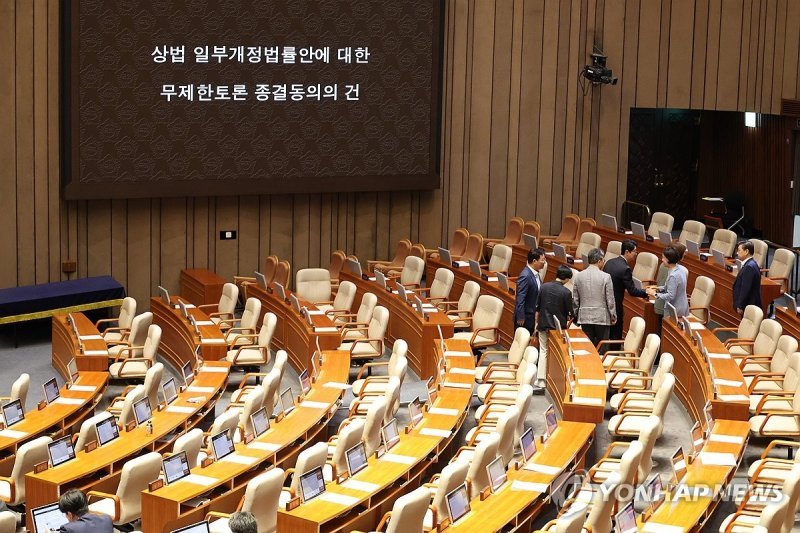
The business community explained that involuntary acquisition of treasury shares often occurs unavoidably during conversions into a holding company structure, a process encouraged by the Government of South Korea. They also warned that if companies in industries requiring restructuring are forced to cancel all treasury shares obtained through mergers and acquisitions (M&A), the pace of business reorganization will slow and industrial competitiveness could suffer.
This is already the third attempt by the Government of South Korea to revise the Commercial Act of the Republic of Korea in order to protect shareholder rights and reflect the spirit of the times. Some provisions, such as reducing criminal penalties, are helpful to companies and management, but others have sparked controversy over potential encroachment on management rights. Each time, the business sector has conveyed its views and positions to the National Assembly of the Republic of Korea and the Government of South Korea, yet these have rarely been accepted.
The issue of breach of duty is particularly emblematic. Politicians appeared to agree with the business community’s call to reform the breach-of-duty regime to ease concerns over criminal liability, but they have failed to act. Business groups stated, "Because reform of the breach-of-duty offense has been delayed, companies have no choice but to defer or avoid management decisions," and added, "To enable active investment and innovation, reforms of the breach-of-duty offense, including codifying the business judgment rule, must be expedited." In the third round of amendments, the voices of companies must be reflected.
The request to exclude involuntarily acquired treasury shares from the cancellation requirement is no different. As the business community argues, such a mandate could slow restructuring in sectors like petrochemicals. The National Assembly of the Republic of Korea should listen carefully to this argument and incorporate it into legislation.
The National Assembly of the Republic of Korea is pushing numerous legal amendments aimed at enhancing the status and rights of shareholders and workers. The Yellow Envelope Act will take effect in March. This law has been criticized for imposing an excessive burden on companies by effectively requiring parent firms to meet the demands of subcontracted workers. The business community raised objections with the National Assembly of the Republic of Korea and the Government of South Korea, but none were accepted.
The same is true for the amendments to the Commercial Act of the Republic of Korea. Despite numerous objections, the National Assembly of the Republic of Korea has largely ignored the corporate perspective, making only limited exceptions. Every bill inevitably has stakeholders. Legislation that tilts to one side undermines the value of fairness that the law should uphold. While the interests of shareholders and workers are important, a proper exercise of legislative power also requires taking into account the position of companies.
Companies are key economic actors operating on the front lines of the economy. Lawmakers should be relieving their burdens and resolving their difficulties, not infringing on management rights or obstructing business activities. If the National Assembly of the Republic of Korea and the Government of South Korea truly believe the economy comes first, they must not turn a deaf ear to the voice of the business community.