I Personally Tried the 'Dream Obesity Drug' Mounjaro (1) [Review Reporters]
- Input
- 2026-01-21 06:00:00
- Updated
- 2026-01-21 06:00:00
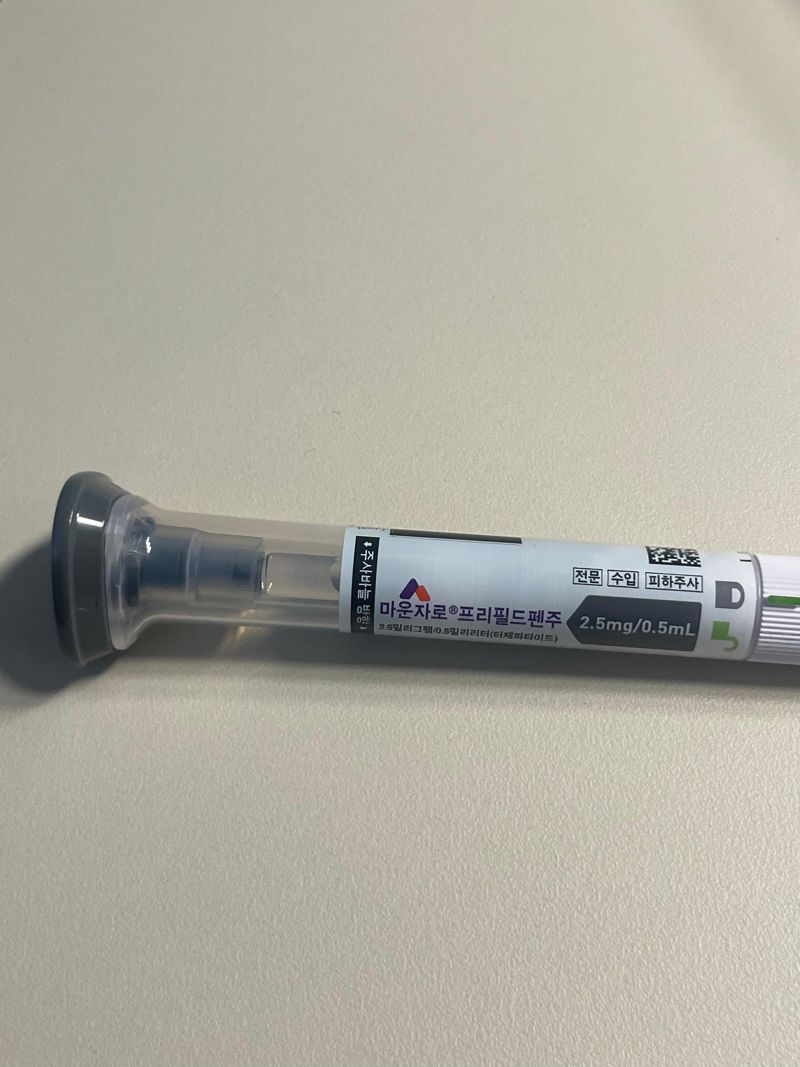
On the 19th, this reporter, who had been warned of metabolic syndrome risks due to being overweight, high blood sugar, and high blood pressure, received a prescription for Mounjaro and took the injection personally. As the product entered its fifth month on the Korean market, the initial shortage had eased, and it had become easy to get a prescription at almost any neighborhood clinic. So I went to the same local clinic I usually visit for common colds. I already know many acquaintances—easily enough to count on both hands—who have successfully lost weight with Mounjaro. I had heard multiple times how many kilograms they lost in one month, how much more in two months, and how much weight came back after stopping the drug. Given my own health red flags, such as blood sugar and blood pressure, my curiosity and expectations grew over whether I could gain not only weight loss but also other positive health effects. After all, this drug was originally developed to treat diabetes, not obesity.
Eager to see quick results, I mentioned my acquaintances’ experiences and said I wanted to start at 5.0 mg. However, the doctor firmly replied, "Do not break the standards established by countless physicians and global pharmaceutical companies." The doctor added that, even just for the body to adapt to the drug, the first month should be at 2.5 mg. Before prescribing, my height and weight were measured and my BMI was calculated. Unsurprisingly, the numbers clearly qualified me for treatment. My hemoglobin A1c was also checked and came out at 6.5, effectively in the diabetic range. Just a few months ago it had been 6.2, so I had reached a point where delaying treatment was no longer an option. I received a four-week supply of Mounjaro 2.5 mg and paid 320,000 won. Considering how much I have already spent on countless diets over the years, it even felt relatively reasonable.
Mounjaro works by acting on GLP-1 receptors, promoting insulin secretion when blood sugar is high and suppressing glucagon secretion, thereby controlling blood glucose levels. At the same time, it reduces appetite and slows gastric emptying, which leads to early satiety and a prolonged feeling of fullness. It also helps insulin secretion, regulates fat metabolism, and improves the efficiency with which the body uses energy.
The drug is administered by injecting it with a disposable pen into areas with more fat, such as the abdomen or thigh. I had already given myself insulin injections during a previous pregnancy complicated by gestational diabetes, so I had no fear of using an injectable. In fact, I barely felt anything and even wondered whether the needle had actually gone in properly. If I had not felt the intense wave of fatigue and the queasy, early-morning-sickness-like nausea just three hours later, I might still be thinking I had not injected it correctly.
Although individual responses vary widely, the effect of Mounjaro on me was dramatic. Even when it was time to eat, I did not feel hungry. The smell of food did not particularly stimulate my appetite. I have always eaten more than the average adult woman, but to my surprise, I had to stop eating before finishing three spoonfuls because I felt a tightness around my upper abdomen. Every food had a faint earthy taste. My sense of taste seemed dulled overall. The rice grains felt rough, and my jaw felt slightly awkward, as if the anesthesia after dental treatment had not fully worn off, making my chewing noticeably slower. Realizing that all of this was caused by a drug administered at just 2.5 mg once a week was almost frightening.
By the time I wrote this article, less than 24 hours had passed, but the drug’s effects were already clear. I became so sleepy that I went to bed before 9 p.m. the previous night, and after sleeping deeply without waking even once, I actually felt refreshed. Some Mounjaro users had described it as a "cure for insomnia," and I could fully understand why. At the same time, I began to worry that drowsiness might interfere with my daily activities.
On this point, Young Min Cho, a Professor in the Department of Endocrinology and Metabolism at Seoul National University Hospital, explained, "As your food intake decreases, your energy level can drop, and the feeling of drowsiness may be due to dehydration," recommending adequate fluid intake. He went on to stress, "Because your energy level becomes a negative balance compared to usual, your body naturally tries to conserve energy. As a result, muscle loss can accelerate, so it is essential to combine the drug with regular exercise."
[email protected] Jung Sang-hee Reporter