Trump’s claim that “foreigners pay the tariffs” collapses... U.S. consumers shoulder 96%
- Input
- 2026-01-20 10:53:56
- Updated
- 2026-01-20 10:53:56
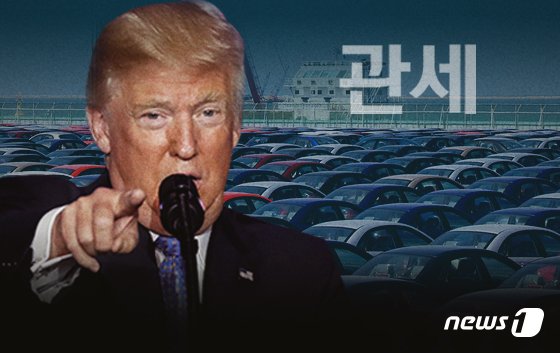
[Financial News] A new study finds that United States of America (U.S.) importers and consumers have borne most of the cost of the tariffs that President Donald Trump began imposing in earnest last year. Analysts say this contradicts Trump’s claim that foreign companies would absorb the tariffs and that prices in the U.S. would be unaffected.
The Kiel Institute for the World Economy reported on the 19th (local time) in a study titled “America’s Own Goal: Who Pays the Tariffs?” that, after analyzing 25 million trade records covering a total of 4 trillion dollars (about 5,895 trillion won) in trade, only 4% of the tariff burden was absorbed by exporters. The remaining 96% was passed on to U.S. buyers, and although trade volumes declined after the tariffs were imposed, export prices did not fall, the institute found.
As a concrete example, the report cited Brazil and India, which were hit with a steep 50% tariff last August over their trade with Russia. Their export volumes to the U.S. fell by as much as 24%, but their export unit prices barely changed. In other words, foreign firms did not offset the tariffs by cutting their prices.
This runs directly counter to the explanation Donald Trump has repeatedly offered. Since expanding tariffs on countries around the world starting in April of last year, Trump has insisted that “foreign companies will bear the cost of the tariffs, so there will be no increase in prices in the United States.” However, the Kiel Institute for the World Economy argues that tariffs function as a kind of consumption tax levied on imports, warning that “over the long term, corporate profit margins shrink and consumers face higher prices.”
The U.S. government raised roughly 200 billion dollars (about 295 trillion won) in additional tax revenue from its tariff policy last year. Even so, the institute stressed that “the claim that foreigners pay the tariffs is nothing more than a myth,” adding, “The data clearly show that the cost of tariffs is shifted into the U.S. economy rather than being borne by foreign exporters.” In effect, punitive tariffs end up squeezing U.S. consumers and businesses alike.
The Wall Street Journal (WSJ) commented on the findings, saying they “run counter to Trump’s core argument” and “suggest that the United States could find itself in a disadvantageous position as a renewed trade war with Europe unfolds.”
Indeed, Trump recently announced that, starting on the 1st of next month, he will impose an additional 10% tariff on eight European countries that oppose the annexation of Greenland, a territory of Denmark. If the plan goes ahead, this surcharge will be added on top of the reciprocal tariffs agreed last year, bringing the total tariff rate on exports from European Union (EU) member states such as France, Germany, and the Netherlands to 25%, and to 20% on products from the United Kingdom.
In response, German Chancellor Friedrich Merz said, “Tariffs are usually borne by consumers in the importing country—in this case, American consumers,” adding, “But of course they also harm Europe, and Germany in particular.” Merz warned that the tariffs could become a burden for both the U.S. and Europe.
#Trump #tariff_policy #US_consumers #tradewar #inflation
[email protected] Kim Kyung-min Reporter