[Editorial] Hyundai Motor Group’s Big Bet on Recruiting Global Talent
- Input
- 2026-01-19 18:05:00
- Updated
- 2026-01-19 18:05:00
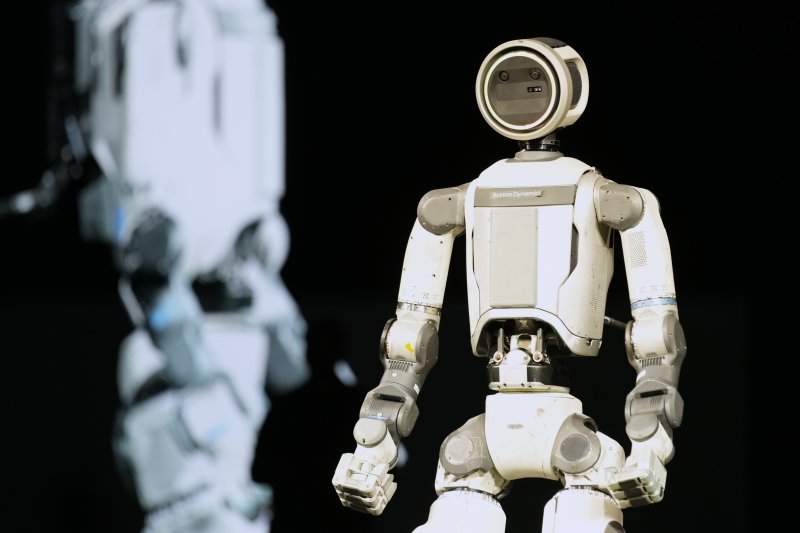
Hyundai Motor Group’s successive recruitment of key brains from global big tech companies is aimed at firmly securing leadership in future artificial intelligence (AI). In his New Year’s address this year, Chairman Chung Eui-sun declared that the group would stake everything on building the capabilities needed to seize the initiative in Physical AI. This can be seen as a declaration that the group will boldly shift its center of gravity from traditional manufacturing to Physical AI.
At the end of last year, Hyundai Motor Group also made a surprise move by bringing in German-born Manfred Harrer as president and head of its Research and Development (R&D) division. Harrer previously oversaw platform development at Ford Motor Company and Porsche. Following José Muñoz, a Spanish-American who last year became the company’s first foreign CEO since its founding, Harrer is the sixth foreign president. The fact itself drew attention, but what made even bigger waves was that the group filled the top R&D post—the brain of the organization—with overseas talent.
This personnel decision can be seen as an attempt to break the R&D organization’s characteristic closed culture and purity-focused mindset, and to pursue a fundamental overhaul of its structure. R&D investment is also hitting record highs every quarter. Last year, 40% of total investment went to R&D. It goes without saying that bringing in talent regardless of competitors and making large-scale R&D investments are the lifeblood of a company.
AI that once existed only inside computers and mobile devices has now begun to move through the real world in robotic bodies. The era of Physical AI is just beginning. With its solid manufacturing base and overwhelming volume of industrial data, South Korea is in a favorable position to become a leading nation in Physical AI. Humanoid robots and autonomous vehicles equipped with AI brains must become firmly established as Korea’s future core industries.
Hyundai Motor Group and many other domestic companies are struggling on this front. It is therefore encouraging that overseas media have praised Atlas, the humanoid robot Hyundai Motor Group recently unveiled at the Consumer Electronics Show (CES) in Las Vegas, the world’s largest home appliance and Information Technology (IT) exhibition. Atlas demonstrated humanlike walking capabilities while showing movements such as rotating its shoulder and elbow joints more than 180 degrees. A British tech outlet even reported that it is “the most advanced humanoid robot in the world.” Hyundai Motor Group says it plans to deploy Atlas for parts-handling work at its plant in Georgia (U.S. state) starting in 2028.
The government must move quickly to provide bold institutional support so that companies’ challenges and experiments can bear fruit at home. In reality, robots and new autonomous driving technologies are struggling to upgrade at the desired pace because of complex regulations, and this must be addressed without delay. Autonomous driving technology must not be held back by opposition from the transportation industry or by excessive safety regulations. Nurturing and effectively utilizing technology talent with near-genius capabilities is also a crucial task. The government needs to act far more proactively.