Like Kim Dong-sung, Who Sued His Ex-Wife for Defamation Instead of Paying Child Support: "Bad Laws Create Bad Fathers" [Reopened 'Yanghaedeul' 2]
- Input
- 2026-01-27 07:00:00
- Updated
- 2026-01-27 07:00:00
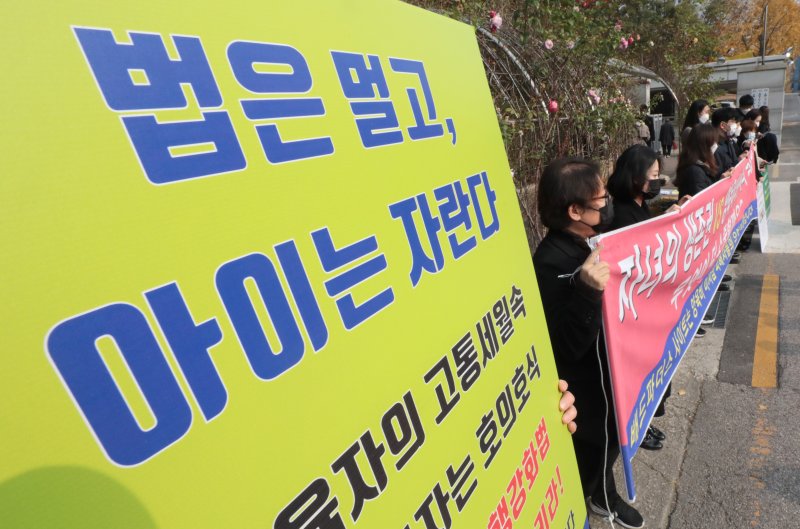
[The Financial News] In January 2024, the Supreme Court of Korea finalized a suspended sentence of a 1 million won fine for the operators of "Bad Fathers," recognizing them as guilty of defamation. The activists’ dominant feeling at the time was not helplessness but anger. An anonymous activist who runs "People Solving Child Support Issues (Yanghaedeul)" told this newspaper, "We were outraged that, just as sexual harassment cases—where the overwhelming majority of victims are women—are silenced as defamation by stating facts, non-payment of child support—where most of the victims are also women—is likewise gagged as defamation for stating facts." They summed up the current crime of defamation by stating facts in a single sentence."An evil law that silences victims of sexual harassment and child support non-payment."That is how they defined it.
A country where telling the truth is a crime: "Perpetrators stand taller than victims"
Article 307(1) of the Criminal Act of the Republic of Korea and Article 70(1) of the Act on Promotion of Information and Communications Network Utilization and Information Protection punish anyone who "defames another by publicly alleging facts."Even if the content is true, a person can face criminal punishment if defamation is deemed to have occurred.This distorted structure has created a paradox in which victims risk ending up with criminal records simply for bringing their experiences into the open.Among member states of the Organisation for Economic Co-operation and Development (OECD), South Korea and Japan are reportedly the only countries that criminally punish defamation based on true statements. The United Nations Commission on Human Rights (UNCHR) and various international human rights organizations have repeatedly recommended that the South Korean government abolish this offense, but change has been slow. In 2021, the Constitutional Court of Korea ruled that the provision on defamation by stating facts in the Criminal Act of the Republic of Korea was constitutional, and in 2023 it reached the same conclusion regarding the corresponding provision in the Act on Promotion of Information and Communications Network Utilization and Information Protection.
Last year, President Lee Jae Myung of South Korea personally instructed, during a Cabinet meeting, that the abolition of the crime of defamation by stating facts be reviewed, saying it should be handled through civil, not criminal, procedures. However, the Bill to Eradicate False and Manipulated Information—an Amendment to the Act on Promotion of Information and Communications Network Utilization and Information Protection submitted to a plenary session of the National Assembly of the Republic of Korea by the Democratic Party of Korea (DPK)—left the provision on defamation by stating facts intact. A clause that would have converted it into an offense prosecutable only upon complaint by the victim was also removed.

"They don’t pay child support, but they are quick to file complaints": A weapon for silencing victims
A large share of those harmed by non-payment of child support are women who shoulder primary responsibility for raising the children. In legal counseling settings, experts report that "perpetrators who refuse to pay child support but want to maintain the social mask of being a 'good father' are most afraid of having the facts exposed." A well-known example is the case in which the ex-wife of former Short Track Speed Skating national team member Kim Dong-sung was sued for defamation after she revealed that he had failed to pay child support.
Kim Dong-sung’s ex-wife, identified as A, was referred to the Prosecution Service last year on charges of defamation under the Act on Promotion of Information and Communications Network Utilization and Information Protection. A, who divorced Kim in 2018, provided his information to the operator of "Bad Fathers" around March 2020, saying she had not received the agreed child support. In January last year, Kim and his current wife filed a complaint accusing A of defamation by alleging false facts. The police concluded that A’s act of providing information to "Bad Fathers" and giving media interviews constituted defamation by stating facts, and referred the case to the Prosecution Service. She ultimately received a decision to suspend indictment.
In this way, defamation based on true statements becomes a powerful counterattack weapon for perpetrators. When victims disclose the non-payment, the other party sometimes contacts them and says, "If you agree to a settlement, I will withdraw the complaint," demanding a reduction or waiver of child support. This is why the operators of People Solving Child Support Issues (Yanghaedeul) call it an "evil law."
After his conviction was finalized, Koo Bon-chang, head of People Solving Child Support Issues (Yanghaedeul), filed a constitutional complaint through Open Net Korea, challenging the provision on defamation by stating facts in the Act on Promotion of Information and Communications Network Utilization and Information Protection. The aim is to question the constitutionality of a clause that chills public-interest whistleblowing more broadly. Son Ji-won, head of the Institute for Communication Law, who is serving as Koo’s representative in the constitutional case together with Open Net Korea, noted, "The UN is moving toward recommending the decriminalization of all forms of defamation, including those involving false statements." Son added, "The Constitutional Court of Korea may be waiting for the legislature to act. Since President Lee Jae Myung has already ordered a review of abolition, it is time for the National Assembly of the Republic of Korea to demonstrate a genuine will to abolish the offense by amending the Criminal Act of the Republic of Korea."
Slap-on-the-wrist penalties enable "bad parents": Other countries treat it as child abuse
Another problem with the current legal framework is that penalties for non-payment of child support are far too lenient.Prison sentences are extremely rare; most cases end with confinement in a detention facility or fines. This stems from the still-dominant view that non-payment of child support is merely a private matter of debt between individuals.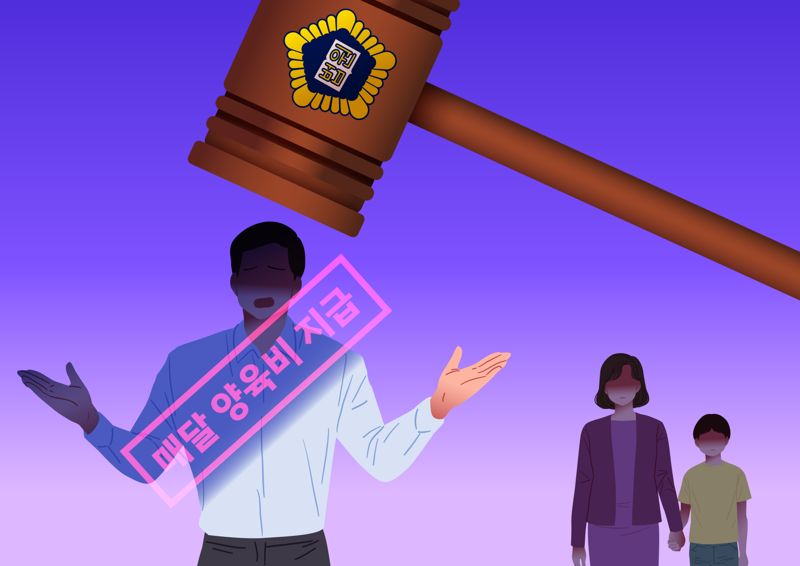
This is also why People Solving Child Support Issues (Yanghaedeul) argues that non-payment of child support should be treated not as simple debt but as child abuse, and that penalties should be significantly strengthened. The operators of People Solving Child Support Issues (Yanghaedeul) stressed, "Under the current law, bad parents can always find ways to avoid punishment as long as they consult a lawyer. The biggest problem is that there is nothing they are truly afraid of."
In the United States, federal law of the United States allows for the suspension or revocation of licenses held by those who fail to fulfill their child support obligations. As a result, not only driver’s licenses but also occupational and professional licenses—and in some states, firearm and business licenses—can be suspended or revoked. Rules for compulsory collection of child support are also strict, and in cases of long-term or habitual non-payment, offenders can be sentenced to imprisonment. Countries frequently cited as operating advance-payment or substitute-payment systems, such as Sweden, Germany, and France, have systems in which the state first pays a certain amount and later exercises a right of recourse against the non-custodial parent.
It is also notable that in Sweden and Germany, the amount is determined not by the income or assets of the custodial parent but by age brackets for the child. Drawing on such examples, the National Assembly Research Service (NARS) pointed out in a 2023 report—issued before Korea introduced its own advance child support payment system—that "none of the countries that have adopted substitute child support payment systems make the custodial parent’s poverty a condition for eligibility" and that "imposing such restrictive requirements is effectively inconsistent with the Convention on the Rights of the Child (CRC)."
The ultimate goal of "Yanghaedeul" is to shut down the site
The ultimate goal that People Solving Child Support Issues (Yanghaedeul) hopes for is the permanent closure of their website.Koo and the operators of People Solving Child Support Issues (Yanghaedeul) dream of the day when there is no longer any need to run the site and they can finally shut it down. To reach that point, they argue, stronger measures are needed, such as tougher criminal penalties and public disclosure of the faces of those who fail to pay child support. Although the government already operates a system for publishing the names of defaulters, its scope is narrow and access is limited, so questions about its effectiveness have never gone away.People Solving Child Support Issues (Yanghaedeul) insists, "Criminal penalties must be made tougher. There is no other way to make the system truly effective." However, some warn that if punishment for non-payment of child support is strengthened in isolation, it could have the unintended effect of shifting all responsibility for child-rearing back onto individuals. In the end, the argument goes, the state must step in as a mediator and take a more active role in resolving the problem. The very existence of the newly reopened People Solving Child Support Issues (Yanghaedeul) serves as a powerful warning, calling the state to account for its responsibilities.
[email protected] Reporter Kim Hee-sun Reporter