Waking Up From Anesthesia Speaking Fluent Spanish: American Man’s Rare Condition Draws Attention [Health Talk]
- Input
- 2026-01-19 11:16:56
- Updated
- 2026-01-19 11:16:56
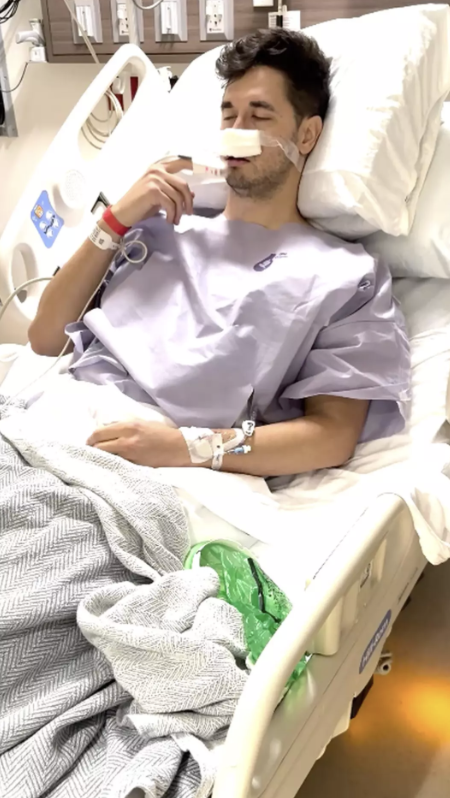
[The Financial News] A man in the United States has become a hot topic after waking up from surgery and speaking fluently not in his native English but in Spanish. The medical community has diagnosed him with a rare neuropsychiatric condition known as Foreign Language Syndrome (FLS).
Recently, foreign media outlets including The Economic Times and LADbible reported the story of Steven Chase from Utah in the US.
Chase first became able to speak Spanish when he was 19. While playing American football, he injured his right knee and had to undergo surgery, and when he woke up from anesthesia, fluent Spanish came out of his mouth.
Chase recalled, “My memory of actually speaking Spanish is very faint. I only clearly remember people around me telling me to speak in English, which left me confused.”
It was hard for him to accept the fact that he had suddenly become able to speak Spanish. Chase had only taken a few Spanish classes at school. The only Spanish he knew was a handful of words and how to count from one to ten.
“I never paid attention in Spanish class when I was in school, but just a few minutes after waking up from anesthesia I was able to speak in complete sentences in Spanish,” Chase said, adding, “I was convinced that something had definitely happened somewhere in my brain.”
Over roughly the next 10 years, Chase underwent several more surgeries, and each time he experienced further improvement in his Spanish. It is now reported that he has reached near-native fluency.
The U.S. National Library of Medicine has described Chase’s condition as Foreign Language Syndrome (FLS).
This syndrome, a type of rare disease, is a neurological disorder in which a person suddenly begins to speak in a different language or with a foreign accent instead of their original language or accent. Since it was first reported in the academic literature in 1907, only about 100 cases have been officially documented worldwide, underscoring how rare it is.
It often occurs acutely after serious brain damage caused by injury, stroke, or brain tumors, as well as after anesthesia or severe psychological stress, and is therefore distinguished from Foreign Accent Syndrome (FAS).
.
Chase believes he may have been influenced by Hispanic people he met throughout his life.
“I spent a lot of time at a close friend’s house, and his parents always spoke Spanish,” he said. “I never understood what they were saying, but the language itself felt familiar.”
[email protected] Seo Yoon-kyung Reporter