EU mulls deploying €93 billion ‘trade bazooka’ in retaliation to U.S. tariff threat on eight European countries
- Input
- 2026-01-19 06:00:31
- Updated
- 2026-01-19 06:00:31
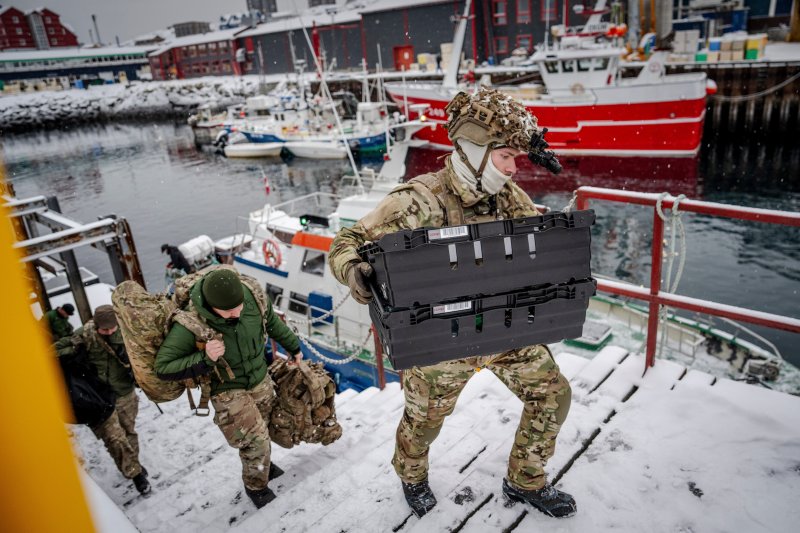
According to The Financial News, as United States President Donald John Trump has threatened to impose tariffs on European countries that sent troops to Greenland while also hinting at annexing Greenland, the European Union (EU) is moving toward triggering its Anti-Coercion Instrument (ACI), raising signs that a trade war across the Atlantic may be reignited.
On the 18th (local time), foreign media including Euronews reported that public opinion is growing that the European Union (EU) should deploy the Anti-Coercion Instrument (ACI) in response to President Trump’s threat to impose a 10% tariff on all imports from eight European countries, including the United Kingdom and Denmark, that are not part of the EU, starting next month.
French President Emmanuel Macron is strongly advocating the use of the ACI, which has been dubbed a “trade bazooka.”
The EU is also considering imposing retaliatory tariffs worth about €93 billion (approximately $107.7 billion, or 159 trillion won) on imports from the United States of America (U.S.), or restricting U.S. companies in the EU market, putting at risk the relationship between the two sides, which had reached a trade agreement last summer.
This move is being interpreted as an effort by European leaders to strengthen their bargaining power with President Trump ahead of the World Economic Forum (WEF) to be held in Davos, Switzerland, this week.
When it conducted trade negotiations with the U.S. last year, the EU had already drawn up a list of products on which to impose retaliatory tariffs, but it suspended implementation in order to avoid a full-scale trade war.
However, prompted by the latest threat from President Trump, ambassadors from the 27 EU member states held a strategy meeting in Brussels, Belgium, on the 18th and discussed reactivating these retaliatory tariffs.
The Anti-Coercion Instrument (ACI) is a measure that restricts trade in services, foreign direct investment, financial markets, public procurement, and intellectual property rights with third countries that economically threaten the EU or its member states. It was introduced in 2023 but has never been used.
The previous day, Bernd Lange, chair of the European Parliament (EP) Committee on International Trade, also called on the European Commission to trigger the ACI and suggested that the Greenland issue could be linked to the EP’s approval of the trade agreement.
The European Parliament (EP) plans to put the trade agreement with the U.S. to a vote on the 26th–27th of this month, but some are arguing that the vote should be postponed because of the Greenland issue.
German Deputy Foreign Minister Johann Wadephul told ARD (Consortium of public broadcasters in Germany), “It does not seem that this agreement is possible under the current circumstances.”
Many EU member states support examining how the ACI could be used against the U.S., but most would prefer to talk first, and diplomats added that the upcoming Davos forum will be crucial.
Another EU diplomat said, “Since (Trump’s tariff threat) is clearly coercive, it justifies the use of the ACI, but we want to give it time until February 1 to see whether Trump is willing to back down.”
Meanwhile, key European leaders are attempting to engage President Trump in dialogue.
Italian Prime Minister Giorgia Meloni, whose country did not send troops to Greenland, held a phone call with President Trump and told reporters that the tariff threat is a grave mistake and appears to reflect a problem in communication among North Atlantic Treaty Organization (NATO) member states.
British Prime Minister Keir Starmer also spoke with President Trump by phone, and according to the Prime Minister’s Office, he reiterated his position that imposing tariffs on the grounds of NATO allies’ pursuit of collective security is wrong.
NATO Secretary General Mark Rutte wrote on the social media platform X (formerly Twitter) that he had a phone call with President Trump and discussed the security situation in Greenland and the Arctic.
He added, “We will continue to work on this issue,” and “I look forward to meeting him in Davos.” Rutte did not disclose further details of the conversation.
On the 17th, President Trump announced via social media that, starting February 1, he would impose a 10% tariff on imports from eight EU countries that sent troops to Greenland, and that if a deal to “purchase” Greenland is not reached by June 1, the tariff rate would be raised to 25%.
[email protected] Yoon Jae-jun Reporter