U.S. Semiconductor Tariffs Take Shape... Cheong Wa Dae Vows to Negotiate on Principle of “No Less Favorable Treatment”
- Input
- 2026-01-18 16:06:35
- Updated
- 2026-01-18 16:06:35
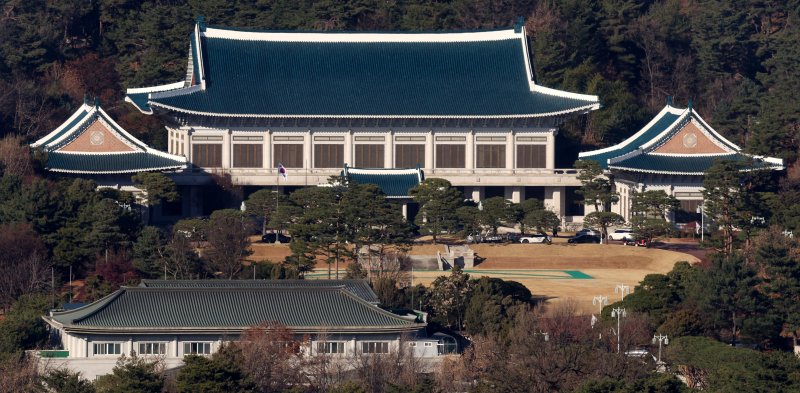
[The Financial News] As the Federal government of the United States signals the introduction of long-delayed “semiconductor tariffs,” the Korean government is moving quickly in response. In particular, with the administration of Donald John Trump preparing a presidential proclamation on semiconductor-related tariffs, Cheong Wa Dae stressed that it will proceed with consultations so that the impact on Korean companies is minimized, in line with the “no less favorable treatment” principle set out in the Joint Fact Sheet (the U.S.–Korea joint explanatory document).
On the 18th, an official at Cheong Wa Dae, referring to the U.S. move on semiconductor tariffs, said, “In last year’s United States–Korea Tariff Negotiations, the two countries specified in the Joint Fact Sheet that semiconductor tariffs would be applied under conditions ‘no less favorable than those for major countries.’” The official added, “We will continue to verify the specifics in the course of consultations with the U.S. side, and we will negotiate so that the impact on our companies is kept to a minimum.”
Kyuyoun Lee, Senior Secretary to the President for Public Communication at Cheong Wa Dae, also told reporters that day, “Regarding semiconductor tariffs, the Fact Sheet stated that the process would proceed under conditions no less favorable than those for major countries,” and went on, “We expect this policy line to continue going forward, and that consultations will be conducted under this framework.”
Earlier, on the 14th (local time), President Donald John Trump signed a presidential proclamation imposing a 25% tariff on semiconductors imported into the United States and then re-exported to other countries. In response, the Ministry of Trade, Industry and Energy, the competent ministry, immediately convened an emergency meeting chaired by Minister Kim Jung-kwan to discuss countermeasures, and separately held an emergency consultative meeting with industry to hear their views and discuss the future response direction.
To assess the impact on Korean companies, Yeo Han-koo, Minister for Trade (Head of Trade Negotiations), Ministry of Trade, Industry and Energy of the Republic of Korea, postponed his return schedule from the United States and monitored the situation on the ground. In an interview on his way back the previous day, he said, “The first-stage measures currently announced by the United States focus on two types of advanced chips from Nvidia Corporation and Advanced Micro Devices (AMD), and the memory chips that our companies mainly export are excluded,” adding that he expects the impact on Korean companies such as Samsung Electronics and SK hynix to be limited. However, he cautioned, “We still cannot be at ease, because we do not know when and in what form the second-stage measures will be expanded.”
Cheong Wa Dae is particularly planning to closely analyze the recently concluded semiconductor agreement between the United States of America (US) and Taiwan. On the day after the signing of the “semiconductor proclamation,” the United States and Taiwan finalized their tariff negotiations on the 15th, agreeing to lower the mutual tariff rate on Taiwanese goods from the existing 20% to 15%, in return for Taiwanese companies and the government providing investments and credit guarantees of 250 billion dollars each in the United States.
The mood within the Korean semiconductor industry itself is also complex. From a trade perspective, the prevailing view is that U.S. semiconductor tariffs will place a heavy burden on U.S. Big Tech companies, which in turn will make the United States cautious. The concern, however, is Taiwan Semiconductor Manufacturing Company Limited (TSMC). As TSMC has declared that it will build five additional semiconductor plants in Arizona on top of its existing Arizona facility, pressure is mounting on Korea’s semiconductor industry.
Korea’s semiconductor industry is primarily focused on memory semiconductors, while TSMC is in the foundry business, so it is difficult to place the two on exactly the same footing. Nevertheless, since the two countries are pillars of global semiconductor production, TSMC’s aggressive investment drive in the US is bound to become a burden on the Korean semiconductor sector. Consequently, in relation to additional investment in the United States, voices are being raised that, through semiconductor negotiations, Korea should explain to the United States not only the Korean semiconductor industry’s efforts to invest directly in the US, but also how these efforts are linked to various domestic data center investments and business cooperation projects being pursued by U.S. Big Tech companies.
[email protected] Jonggeun Choi, Eunhyo Cho Reporter