Korean firms filed record 13 anti-dumping petitions last year, actively seeking trade remedies
- Input
- 2026-01-18 13:55:19
- Updated
- 2026-01-18 13:55:19
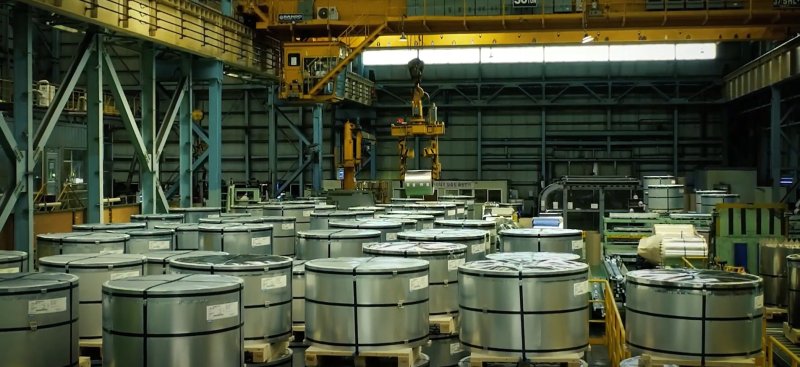
According to The Financial News, Korean companies filed a record 13 anti-dumping investigation petitions with the government last year. This surge is seen as the result of domestic firms turning more actively to trade remedy mechanisms amid the Trump administration’s strengthened America-first policies in the United States of America (U.S.) and the weakening of the dispute settlement function of the World Trade Organization (WTO).
According to trade remedy statistics from the Korea Trade Commission under the Ministry of Trade, Industry and Energy on the 18th, Korean companies filed a total of 13 anti-dumping investigation petitions with the Korea Trade Commission last year. This is the highest number since 2002.
By country, 9 of the 13 cases targeted companies in China, followed by 3 cases involving companies in the European Union (EU) and 1 case involving a company in Japan. Of these, the Korea Trade Commission initiated 10 anti-dumping investigations last year. By product category, steel, non-ferrous metals, and other related products accounted for 4 cases, the largest share, followed by 3 cases involving chemical products.
Of the 10 cases investigated by the Korea Trade Commission, preliminary determinations were issued in 5. The remaining 5 cases are still under anti-dumping investigation.
Last year, in an anti-dumping investigation requested by Hyundai Steel on hot-rolled carbon steel and alloy steel products from Japan and China, the Korea Trade Commission found that dumped imports had caused material injury to the domestic industry. Based on this finding, it issued a preliminary determination to impose anti-dumping duties ranging from 28.16% to 33.57% on those products.
The Korea Trade Commission also issued a preliminary determination to impose anti-dumping duties of up to 42.81% on imported polyvinyl chloride (PVC) paste resin (PSR) products in a case brought by Hanwha Solutions Corporation. On this basis, it resolved to impose a 42.81% anti-dumping duty on products from Westlake Vinnolit and its affiliates in Germany, 37.68% on products from Kem One France and its affiliates, 25.79% on products from INOVYN Europe (Norway) and its affiliates, and 28.15% on products from Sweden Inovyn Trade and its affiliates.
In high-tech industrial sectors as well, Korean companies moved to counter foreign competitors. Acting on a petition from HD Hyundai Robotics, the Korea Trade Commission conducted anti-dumping investigations into two Japanese companies and three Chinese companies, concluded that there was a causal link between dumped imports and injury to the domestic industry, and decided to impose provisional anti-dumping duties ranging from 21.17% to 43.60%.
The products for which HD Hyundai Robotics requested anti-dumping investigations are industrial robots with four or more axes in a vertical articulated configuration, a high-tech product group used for tasks such as automobile body assembly and welding, logistics packaging and automated sorting, and metal cutting and drilling. The companies found to have engaged in dumping are two Japanese firms—Yaskawa Electric Corporation and FANUC Corporation—and three Chinese firms—ABB Engineering (Shanghai) Ltd., KUKA Robotics Guangdong, and Kawasaki Heavy Industries, Ltd. (KHI).
In addition, the Korea Trade Commission determined that dumped imports of fiberboard from Thailand had injured the domestic industry and decided to impose provisional anti-dumping duties ranging from 11.92% to 19.43%, among other measures to protect domestic industries.
[email protected] Seo Young-jun Reporter