"If Growth Stops, Young People Will Leave" – Chairman Chey Tae-won Says Policy Paradigm Must Change
- Input
- 2026-01-18 10:54:32
- Updated
- 2026-01-18 10:54:32
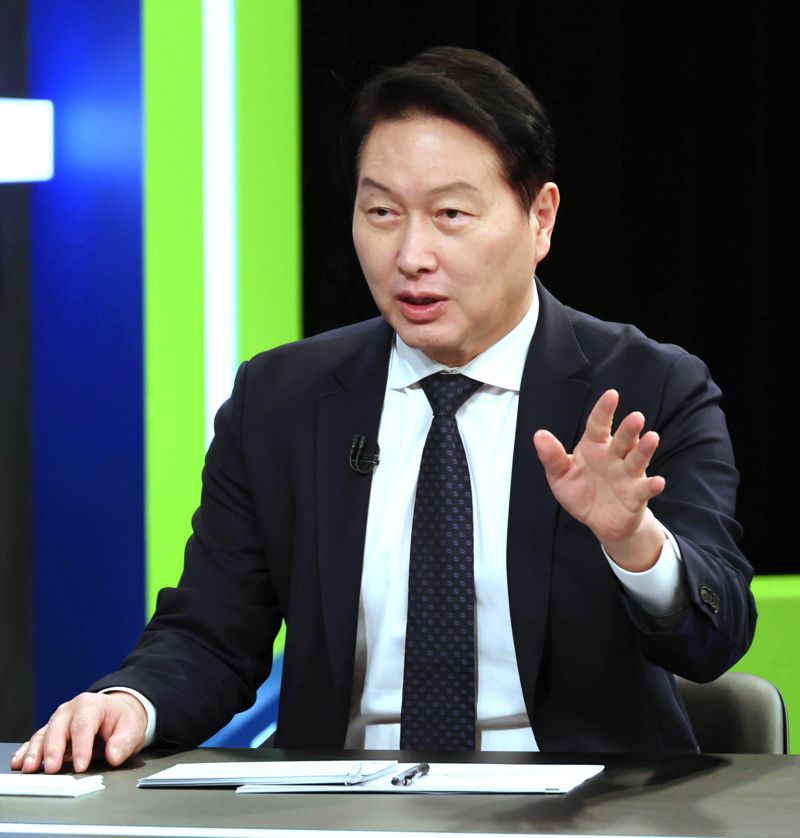
Chey Tae-won, chairman of the Korea Chamber of Commerce and Industry (KCCI) and chairman of SK Group, appeared on Sunday Diagnosis, broadcast on the 18th, and said, "An economy where growth has stopped is like a bicycle with the brakes on: it takes much more effort to get moving again. The Korean economy is already in a situation where the spark of growth is fading." He framed economic growth not as a mere number or indicator, but as an issue that determines the sustainability of society as a whole, stressing that "economic growth is directly linked to the future hope of the younger generation as they ask themselves, 'Is it okay to keep living in this country?'" He added that if growth stops and a country becomes a place where there is little or no sense of hope, dissatisfaction and the exodus of young people are bound to increase.
Chey also voiced concern that a halt in growth could lead to a backsliding of democratization. He noted, "Korea is almost the only country that has achieved both economic growth and democratization at the same time," and pointed out that "if growth stops, the resources available for distribution shrink, social conflict intensifies, and the sustainability of democracy itself comes under threat."
Korea's economic growth rate has fallen by about 1.2 percentage points every five years, and the current potential growth rate has dropped to around 1.9%. The actual growth rate is stuck at around 1%, even lower than that. Chey said, "The fact that the actual growth rate is lower than the potential growth rate means that we have the potential, but policies and actions have not been sufficiently translated into real outcomes," identifying the gap between potential and actual growth as a core problem.
Chey cited an institutional environment that becomes more disadvantageous as companies grow as the biggest reason why businesses find it hard to focus on growth. "When a company grows, the benefits should increase," he said, "but in reality, as the size of its assets grows, regulations and obligations rise sharply." He pointed out that this so-called "stepwise regulation" is undermining companies' willingness to grow, and that the current "size-based regulation" imposed on large corporations is discouraging their growth ambitions. Chey reiterated, "Because the regulations and risks that must be borne as a result of growth become greater than the fruits of growth, many companies end up choosing to maintain the status quo. In this structure, corporate growth cannot translate into national growth." He also mentioned the example of Taiwan: "Just as Taiwan created a Sovereign Wealth Fund (SWF) and, through strategic investments, built what is now Taiwan Semiconductor Manufacturing Company Limited (TSMC), growth will come when many large companies enter, invest and compete."
On the issue of criminal penalties for economic activities, he suggested that it needs to be addressed, saying, "Investment decisions are made by weighing returns against risks, but criminal punishment represents a level of risk that companies cannot bear or even calculate."
Identifying Artificial Intelligence (AI) as the next growth engine, Chey emphasized, "There are limits to AI infrastructure that is used only within Korea. To ensure sustainable growth and investment in the AI industry, we must aim for global infrastructure that can be utilized worldwide."
[email protected] Cho Eun-hyo Reporter