Political Turmoil over Announced ‘Prosecution Reform’ [Legal Insight]
- Input
- 2026-01-18 15:49:55
- Updated
- 2026-01-18 15:49:55
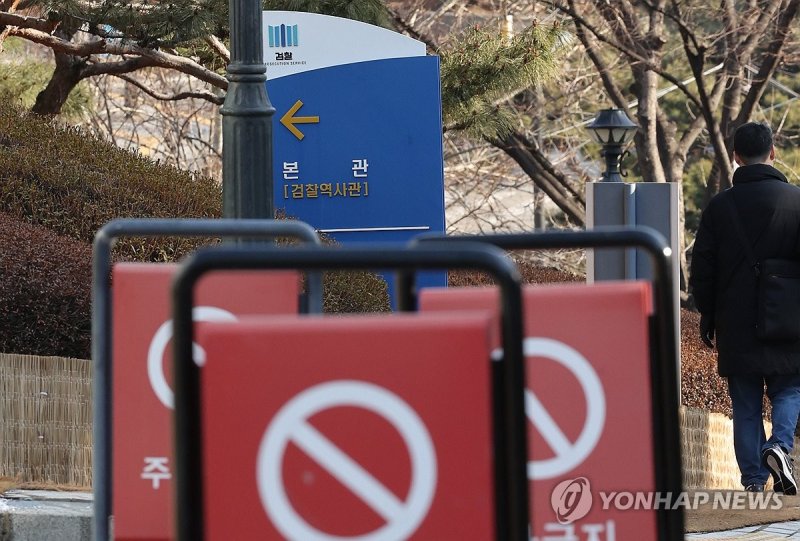
According to the legal community and other sources on the 18th, the Prosecutorial Reform Task Force under the Prime Minister's Office and the Ministry of the Interior and Safety (MOIS) are reviewing revisions to the draft Serious Crimes Investigation Agency Act, which was pre-announced on the 12th. This comes amid mounting criticism of the proposed dual-track structure.
Under the Serious Crimes Investigation Agency Act unveiled by the government on the 12th, the new agency would be staffed not with prosecutors but with judicial police officers, whose positions would be divided into two tracks: “investigative judicial officers” and “specialized investigators.” The bill also designates nine categories of crimes to fall under the agency’s jurisdiction: corruption, economic crimes, election crimes, crimes by public officials, defense procurement crimes, major disaster crimes, drug crimes, crimes against national security (treason and foreign aggression), and cybercrimes. The Commissioner of the Serious Crimes Investigation Agency would also be empowered to request that heads of other investigative bodies transfer cases falling within these categories.
The main focus of the current controversy is this dual-track structure. Because the division between investigative judicial officers and specialized investigators closely resembles the existing prosecutor–investigator hierarchy within the prosecution service, critics argue that the Serious Crimes Investigation Agency will in effect become a “second prosecution service.” In particular, as the Prosecutorial Reform Task Force under the Prime Minister's Office has limited eligibility for investigative judicial officers to those holding a lawyer’s license or possessing equivalent legal expertise, and has explained that the introduction of investigative judicial officers is intended as a form of preferential treatment to attract former prosecutors to the new agency, the criticism that it would create a “second prosecution service” has gained further traction.
As criticism mounted, the government issued a press release on the 13th stating, “We take these concerns very seriously,” and adding, “We will do our utmost to finalize the bill through continued consultations with the ruling party and broad collection of opinions.”
However, the backlash has not subsided easily. On the 14th, six of the 16 advisory committee members to the Prosecutorial Reform Task Force under the Prime Minister's Office tendered their resignations in protest against the government’s proposal. President Lee Jae-myung has reportedly instructed government officials to “heed the party’s views.” At the general assembly of lawmakers of the Democratic Party of Korea (DPK) held on the 15th, numerous members were also said to have voiced opposition to the government’s legislative plan. DPK leader Jung Chung-rae likewise hinted at possible revisions, saying, “The government’s proposal is not a finalized bill but merely a draft.”
The Prosecutorial Reform Task Force under the Prime Minister's Office has sought to justify the dual-track structure for judicial police officers at the Serious Crimes Investigation Agency by pointing to the gravity of the cases it will handle. At a press briefing on the 12th, Noh Hye-won, deputy head of the task force, stated, “By their very nature, serious crime cases require both investigative expertise and legal analysis to be carried out simultaneously,” adding, “There will be no powers, such as applying for warrants, that are exercised exclusively by investigative judicial officers as opposed to specialized investigators; it is simply a matter of functional division of labor.”
Nevertheless, these explanations appear insufficient to quell criticism over the dual-track system for judicial police officers at the Serious Crimes Investigation Agency. At a supreme council meeting of the DPK held on the 14th, party leader Jung Chung-rae publicly denounced the plan, asking, “Why should we introduce a caste-like status system reminiscent of the ancient bone-rank system?”
The public comment period for the draft Serious Crimes Investigation Agency Act runs until the 26th. On the 20th, the DPK plans to hold an expert public hearing on the Serious Crimes Investigation Agency Act and the Indictment Agency Act, and is expected to undertake a sweeping review of the bills, including the proposed dual-track structure for the Serious Crimes Investigation Agency.
[email protected] Kim Dong-gyu Reporter