China and Russia Accounted for 90% of New Nuclear Power Projects Last Year, Expanding Influence in Emerging Economies
- Input
- 2026-01-18 08:35:32
- Updated
- 2026-01-18 08:35:32
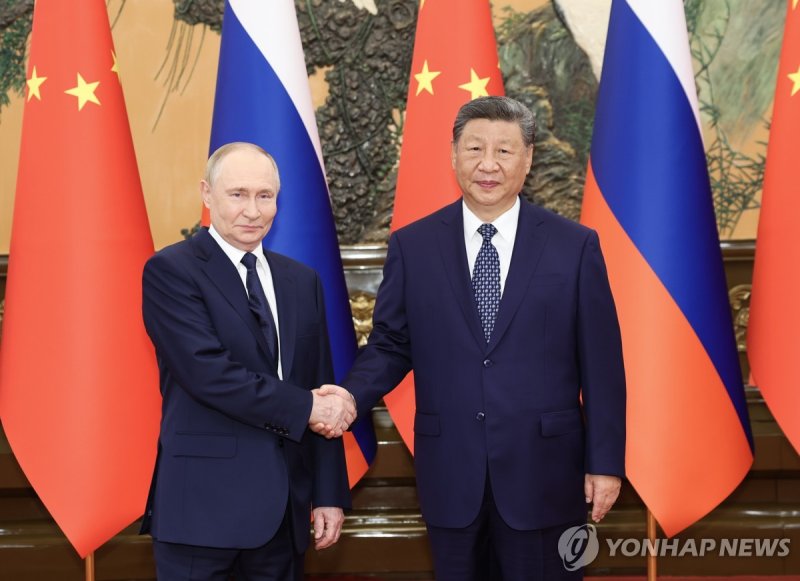
The Financial News correspondent in Tokyo, Seo Hye-jin, reports that China and Russia accounted for 90% of new nuclear power projects launched last year, securing an upper hand in the global nuclear power generation market, Nikkei Asia reported on the 18th. The two countries are expanding their influence by promoting state-led nuclear power plant construction, developing new power sources, and exporting reactors to emerging economies.
According to the World Nuclear Association (WNA) and the International Atomic Energy Agency (IAEA), of the nine large nuclear reactors whose construction started last year, seven are located in China, one in Russia, and one in South Korea.
Nikkei Asia reported, "Over the past decade, China and Russia have effectively led the nuclear power industry," adding, "Since 2016, more than 90% of the 63 reactors that began construction worldwide have been Chinese- or Russian-built." Outside China and Russia, new nuclear power plants have been limited to five in South Korea and a few in the United Kingdom.
According to the Ministry of Ecology and Environment of the People’s Republic of China (MEE), 27 reactors are currently under construction in China. An industry association under the Chinese government projects that the country’s nuclear power generation capacity will reach 110 GW by 2030, making China the world’s largest nuclear power producer, overtaking the United States of America (U.S.).
In April last year, the Chinese government approved plans to build a total of 10 reactors across five regions. The share of nuclear power in the country’s energy mix is expected to rise from less than 5% in 2024 to around 10% by 2040.
Chinese media report that about 60 nuclear reactors are currently in operation in China, including those under maintenance, with a generation capacity of around 64 GW, a scale comparable to that of France, the world’s second-largest nuclear power producer. Unit 1 of the Zhangzhou Nuclear Power Plant in Fujian Province began commercial operation in January last year, and Unit 2 started operation this year.
Most of the reactors that had entered commercial operation by last year are of the "Hualong One nuclear reactor design," which China claims to have developed independently. Six Hualong One reactors are operating in China, and two have been installed in Pakistan.
China is also developing small modular reactors (SMR), which require less investment than large-scale nuclear power plants. According to China National Nuclear Corporation (CNNC), the Linglong One small modular reactor under construction in Hainan Province successfully completed its cold testing in October last year. It has an output of 125 MW and is scheduled to begin operation this year.
Russia, for its part, is focusing on exports to emerging economies. Over the past decade, 19 Russian-designed reactors have broken ground overseas. State Atomic Energy Corporation Rosatom is building nuclear power plants in the Republic of Türkiye (Türkiye), the People’s Republic of Bangladesh and other countries, and in November last year it installed the reactor pressure vessel at the El Dabaa Nuclear Power Plant in Egypt.
Russia is also pushing ahead with the development of small modular reactors. At an international conference in November last year, Russian President Vladimir Putin stressed Russia’s proprietary technology, saying that small reactors "will move into the mass-production stage."
In the United States of America (U.S.), no new commercial nuclear power plants had been built since 2013, but under the second Donald Trump administration, an expansion of nuclear power is now being pursued. In May last year, President Donald Trump signed an executive order to start construction of 10 large reactors by 2030. Westinghouse Electric Company has been mentioned as one of the potential suppliers.
The U.S. is also focusing on the development of small modular reactors (SMR). In December last year, the Trump administration announced 400 million dollars in support for the Tennessee Valley Authority (TVA) and other entities.
TVA, a federally owned power utility established during the Great Depression to carry out public works projects, is seeking to introduce an SMR developed by a joint venture between GE Vernova and Hitachi. It aims to begin operation around 2032.
TVA is also considering the introduction of the NuScale Power Corporation (NuScale Power) SMR. In September last year, TVA and NuScale Power Corporation signed a memorandum of understanding to study the potential deployment of about 70 units with a total capacity of 6 GW.
In the U.S., electricity demand was virtually flat throughout the 2010s, but has recently begun to rise due to the expansion of the Artificial Intelligence (AI) industry. Data centers require power around the clock, and it is difficult to meet this demand with renewable energy alone, making the expansion of nuclear power essential.
Nikkei Asia noted, "In Europe, the U.S. and Japan, a nuclear renaissance emerged in the 2000s and 2010s amid efforts to decarbonize, but public confidence in nuclear safety collapsed after the Fukushima Daiichi nuclear disaster in 2011," adding, "Now, with the advancement of AI, a second nuclear renaissance is coming into view."
[email protected] Seo Hye-jin Reporter