"If We Just Beat Japan, Everything Will Be Forgiven"... Can Lee Min-sung, the Man Who Brought Down Mount Fuji, Turn His Life Around Again?
- Input
- 2026-01-18 12:00:00
- Updated
- 2026-01-18 12:00:00

[Financial News] From hell to heaven, and now he stands on a narrow bridge of fate.
Lee Min-sung, who had been under a barrage of criticism throughout the group stage for what many called colorless, identity-less tactics, has turned the tide of public opinion with a single victory over Australia. But he has not yet earned complete absolution. One final hurdle remains—a chance to turn all criticism into praise in an instant: archrival Japan.
The South Korea national under-23 football team led by Lee Min-sung defeated a formidable Australia 2–1 to reach the semifinals. It was a perfect win that delivered both performance and result, but Lee Min-sung’s team already has its eyes fixed on Japan in the semifinal to be played on the 20th.
For football fans, the name Lee Min-sung carries special meaning. In the 1998 FIFA World Cup qualification (AFC) match held at Tokyo National Stadium in 1997, he scored the dramatic winning goal that gave birth to the legendary commentary line, "Mount Fuji is collapsing!"
Now, 29 years later in 2026, he once again takes aim at the heart of Japan, this time not as a player but as a head coach. The situation is almost poetic: having been driven into a corner by poor group-stage performances, he has clawed his way back—only to find Japan waiting for him.
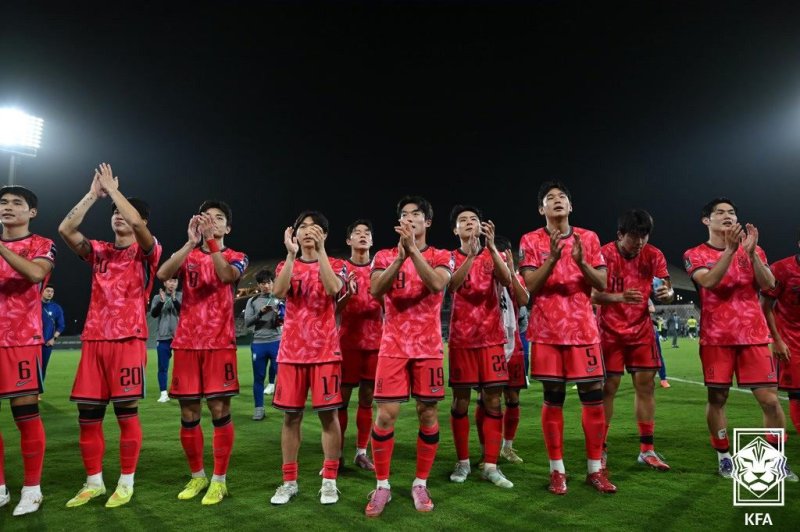
For the fans, it is simple: no matter how the team has played up to now, if they beat Japan, everything will be forgiven. Lose, and even the win over Australia will lose its shine. No one understands this better than Lee himself—that is why his face after the Australia match showed both relief and grim determination.
The key will be tactics. Against Australia, Lee Min-sung abandoned his previous stubbornness and opted for a bold shake-up. He scrapped the 4-4-2 he had used throughout the group stage and switched to a 4-5-1, deploying Baek Ga-on of Busan Metropolitan City as a surprise lone striker. It was a victory born of an ultra-specific game plan tailored meticulously to the opponent.
Another bold tactical gamble is expected against Japan. Japan went through a gruelling 120-minute battle against Jordan in the quarterfinals and only scraped through on penalties, leaving them at a clear physical disadvantage. Even if South Korea concede possession, they will need one decisive blow to exploit Japan’s tired legs.
Attention now turns to whether Lee will once again pull out the razor-sharp "defend first, then hit on the counter" approach he used against Australia, or instead choose to fight fire with fire by pressing a fatigued Japan aggressively from the opening whistle.
Lee Min-sung has vowed, "We will show an even better performance in the semifinals." It is more than a simple promise; it is a clear statement of intent aimed at nothing less than victory over Japan.
If player Lee Min-sung saved Korean football in Tokyo in 1997, then coach Lee Min-sung will stake his entire footballing career on the line in Jeddah in 2026. The moment he beats Japan, all the criticism over their poor group-stage performances will be reinterpreted as a necessary build-up toward the title.
Can Lee Min-sung, the born competitor, bring down Mount Fuji once again? The die has been cast.
jsi@fnnews.com Jeon Sang-il Reporter