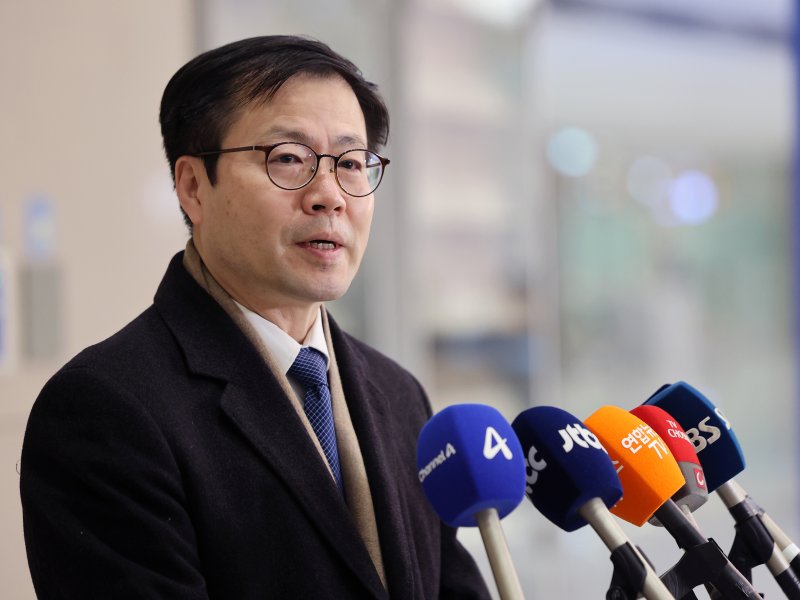
Yeo Han-koo says U.S. semiconductor proclamation will have limited impact on Samsung and SK hynix, but warns it is too early to be reassured
- Input
- 2026-01-17 10:00:49
- Updated
- 2026-01-17 10:00:49
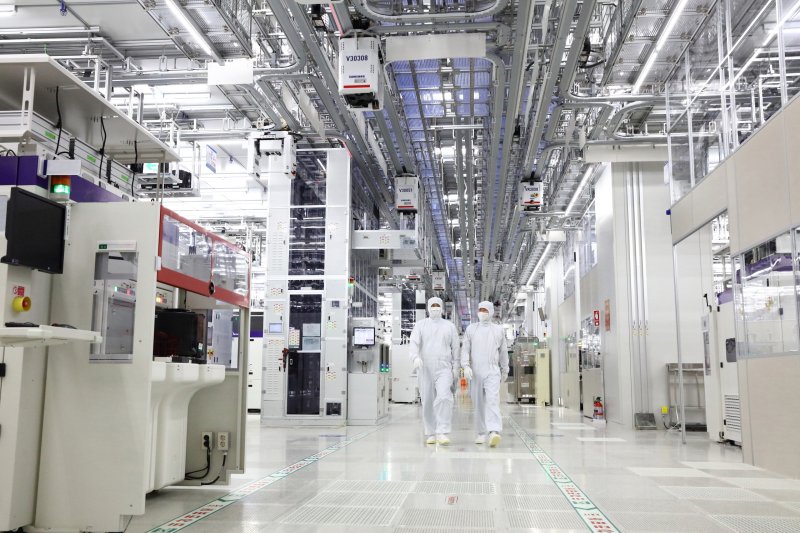
Yeo said, “The first-phase measures that the United States has announced so far are focused on two types of advanced chips produced by Nvidia Corporation and Advanced Micro Devices (AMD), and the memory chips that our companies mainly export are excluded,” adding that the impact on Korean firms such as Samsung Electronics and SK hynix is expected to be limited.
He continued, “That said, we do not know when and in what form the second-phase measures will be expanded, so it is not yet a stage where we can feel reassured.” He added, “Industry and government will continue to work closely together so that the best possible outcome can be achieved for our companies.”
Earlier, on the 14th (local time), U.S. President Donald John Trump signed a proclamation at The White House imposing a 25% tariff on semiconductors such as Nvidia’s artificial intelligence (AI) chip, the NVIDIA H200 GPU, that are imported into the United States and then re-exported to other countries.
The White House then stated in a fact sheet that “President Trump may, in the near future, impose broader tariffs on imports of semiconductors and derivative products in order to encourage manufacturing in the United States, and may introduce corresponding tariff offset programs,” effectively signaling a forthcoming “second-phase” of measures.
Yeo noted, “In last year’s tariff negotiations, when we reached an agreement with the United States based on the fact sheet, we secured an understanding that, in the semiconductor sector, we would not be treated less favorably than other major countries,” and added, “Now that the outcome of the talks between the United States and Taiwan has been released, we need to refer to that and move forward with additional, concrete consultations where necessary.”
On the 14th, President Trump also signed a separate proclamation directing the launch of negotiations with U.S. trading partners to ensure that imports of critical minerals are conducted in a manner consistent with U.S. national security.
Regarding questions about this “critical minerals proclamation,” Yeo said, “The U.S. government is making significant efforts to diversify critical mineral supply chains, and we understand that this is the backdrop for the proclamation under Section 232 of the Trade Expansion Act of 1962 concerning critical minerals,” adding, “We will continue to monitor this area closely and hold further discussions with the U.S. government as needed.”
A bilateral consultative body to address non-tariff barrier issues between South Korea and the United States had been scheduled for December last year but has been postponed to date. On this, Yeo responded, “This is not something that should be rushed simply because of time pressure.”
Yeo explained, “The scope of non-tariff issues is extremely broad. During this trip to the United States, I met several times with the Office of the United States Trade Representative (USTR) for discussions, and we are in contact on an ongoing basis,” adding that the two sides are operating a standing channel and narrowing differences where they exist.
However, the Trump administration has reaffirmed its position that the semiconductor tariffs to be imposed on each country going forward, as well as the criteria for exemptions, will be determined through country-by-country negotiations. It has been reported that Washington does not intend to apply to South Korea the same exemption criteria it agreed with Taiwan.
On the 16th (local time), when asked by Korean media whether “the United States will apply to South Korea the same criteria for semiconductor tariff exemptions that it agreed with Taiwan,” an official in the Trump administration replied that it would pursue “separate agreements by country.” This is interpreted to mean that the United States will not simply apply to South Korea the standards it uses for Taiwan, but will instead determine the details through separate negotiations. The Korean government has so far stated that, by concluding its trade negotiations with the United States earlier than Taiwan, it secured a commitment that Korea would not be placed at a disadvantage to Taiwan in terms of semiconductor tariffs.