Iran Protests Subside After Harsh Crackdown, but Calm Amid Economic Crisis Seen as a ‘Castle Built on Sand’
- Input
- 2026-01-17 04:36:06
- Updated
- 2026-01-17 04:36:06
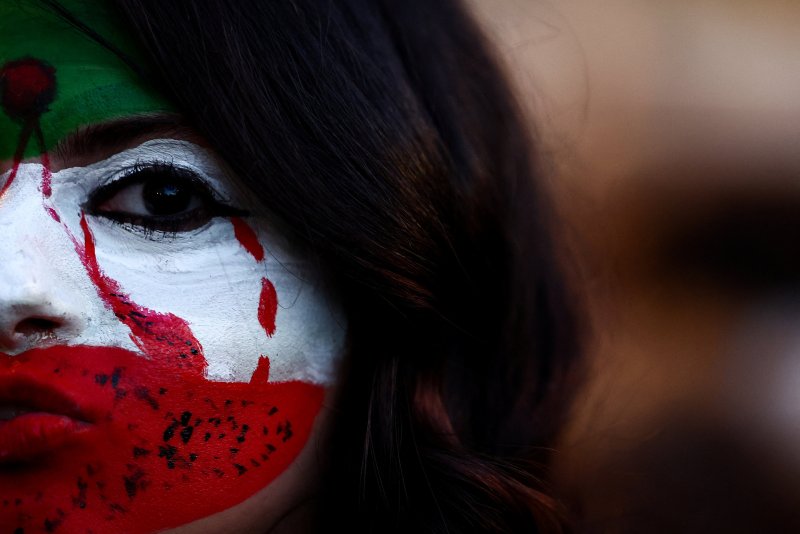
The wave of protests in the Islamic Republic of Iran has entered a lull.
As the Iranian regime has suppressed demonstrations with a hard-line response, including the use of live ammunition, and as United States of America President Donald Trump, who had hinted at possible military intervention, has shifted to a wait-and-see stance, the protests have subsided.
However, experts stress that public resistance is far from over, noting that even core supporters of the Iranian regime have already turned away, and predicting that once a spark is lit, unrest will again spread like wildfire.
According to the Institute for the Study of War (ISW) and the Critical Threats Project (CTP), two think tanks based in Washington, D.C., there were no protests underway in the Islamic Republic of Iran as of the 16th (local time). Demonstrations have been in a lull for three consecutive days.
The two think tanks are currently publishing an “Iran Crisis Update,” providing daily analysis of the protest situation in the Islamic Republic of Iran.
Their report states that there were no organized street protests across any of the country’s 31 provinces.
In particular, it was assessed that security forces have taken control of the streets and imposed an eerie calm even in Tehran, Kurdistan, and Sistan and Baluchestan Province, which had been the epicenters of the protests.
According to CTP, Iranian security forces have now moved beyond the stage of dispersing protests and are focusing on identifying and detaining ringleaders in what it describes as a “cleansing operation.”
With at least several thousand and possibly tens of thousands reported killed in the unrest, ISW analyzes that citizens are too terrified to leave their homes, and that this is only a temporary pause brought about by the security forces’ “extreme violent occupation” of public spaces.
According to Amnesty International, the Iranian authorities are forcing bereaved families to sign gag orders when handing over the bodies of protesters. To receive the remains, families must sign a document stating that the deceased was a “terrorist instigated by foreign powers”; if they refuse, the authorities withhold the body and carry out secret burials, Amnesty International reports.
Trump’s decision to step back has also been one of the decisive factors that have quieted the protests.
At a briefing at The White House on the 15th, Trump said he had been informed that executions in the Islamic Republic of Iran had stopped, and he credited his own warnings with having an effect.
That does not mean Trump has completely withdrawn from the situation.
According to Fox News, Trump has, for the time being, put aside the option of an “immediate” military strike, but is maintaining his maximum-pressure strategy.
The Wall Street Journal (WSJ), citing officials at the United States Department of Defense (DoD), reported that the USS Abraham Lincoln (CVN-72) carrier strike group has been forward-deployed near the Strait of Hormuz.
Military experts say that, given the movement of the United States of America carrier strike group and other factors, it cannot be ruled out that Trump might lull the Iranian regime into a sense of security and then launch a surprise attack.
In particular, according to WSJ, a DoD official said the latest carrier deployment is not merely defensive, but preparation to unleash overwhelming firepower at a decisive moment.
The fundamental reason it is difficult to expect the protests in the Islamic Republic of Iran to remain subdued is that it is virtually impossible to resolve the economic crisis that triggered the current unrest.
Under United States of America sanctions, severe inflation continues, and public discontent has already passed the breaking point.
In this sense, the current peace on the streets of the Islamic Republic of Iran is nothing more than a castle built of sand.
[email protected] Song Kyung-jae Reporter