Hyundai’s Motional vs. Amazon’s Zoox: Which Driverless Robotaxi Comes Out on Top? [FN Mobility]
- Input
- 2026-01-17 08:00:00
- Updated
- 2026-01-17 08:00:00

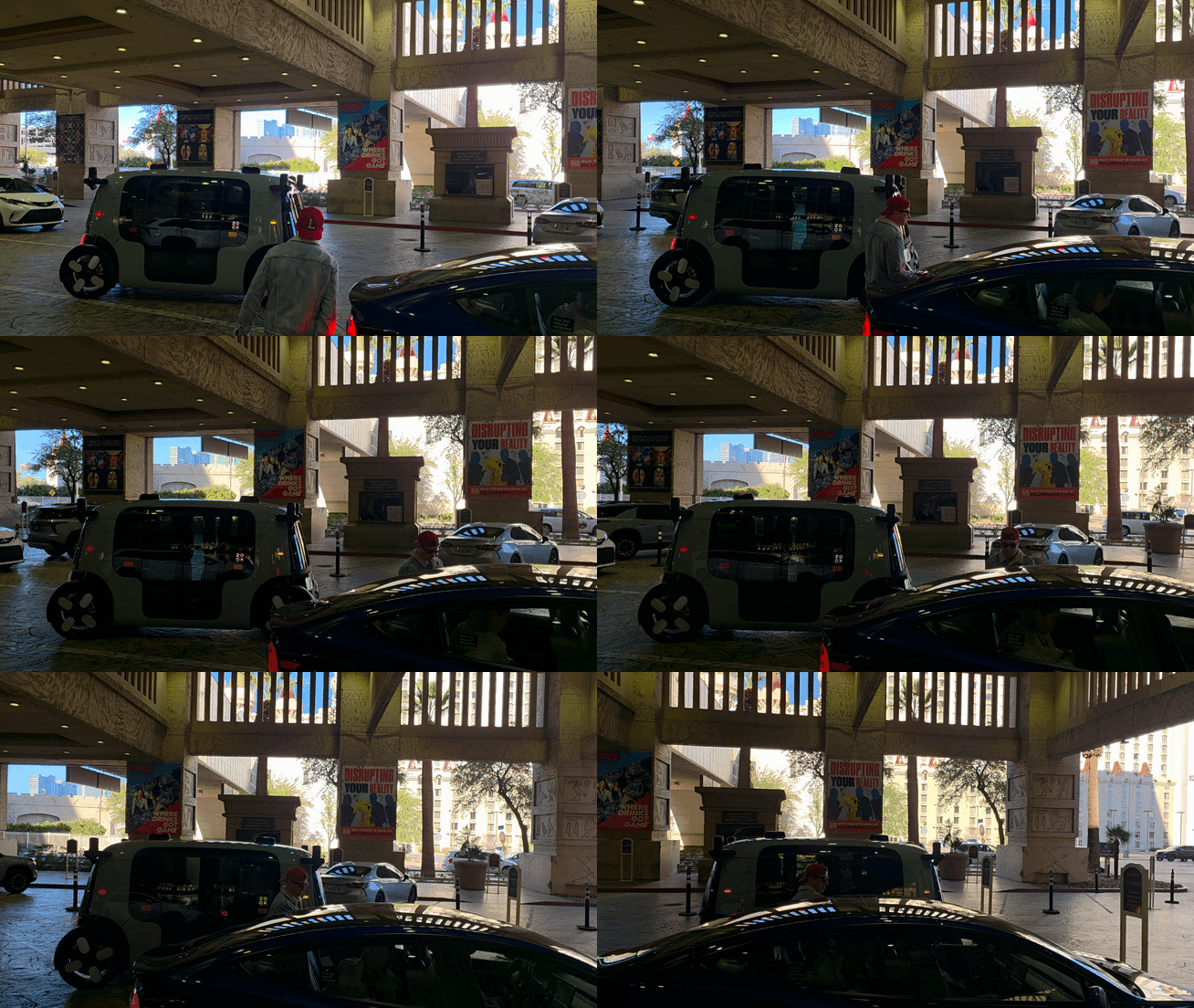
In Las Vegas, both Motional, Hyundai Motor Group (HMG)’s autonomous driving joint venture, and Amazon’s Zoox are piloting driverless robotaxis at a limited Level 4 autonomous driving capability. After riding in both robotaxis, it was clear that Motional and Zoox are steadily strengthening their competitiveness.
In terms of handling the most critical unexpected situations, both Motional and Zoox responded adequately, but Motional showed somewhat better agility when confronted with truly unforeseen scenarios.
Ride comfort was stable in both Motional and Zoox. From a user-experience standpoint, however, it was difficult to make a direct comparison because Motional’s service has not yet been fully commercialized.
Zoox, on the other hand, required more than an hour of waiting time even after making a reservation through its ride-hailing app, only to provide a short 12-minute driverless autonomous ride, and passengers could disembark only at designated locations, which was inconvenient.
Compared with Motional’s Hyundai Ioniq 5 robotaxi, which has a steering wheel and pedals like a conventional vehicle, the Zoox robotaxi, whose cabin is devoid of such controls, was eye-catching enough to spark people’s curiosity, but it ultimately felt more like a “subway running on the street.”
In the case of the Zoox robotaxi, on January 5 (local time) it traveled about 5 kilometers in 12 minutes in fully driverless mode from the lobby area of the Luxor Hotel & Casino to the Nordstrom department store in Las Vegas.
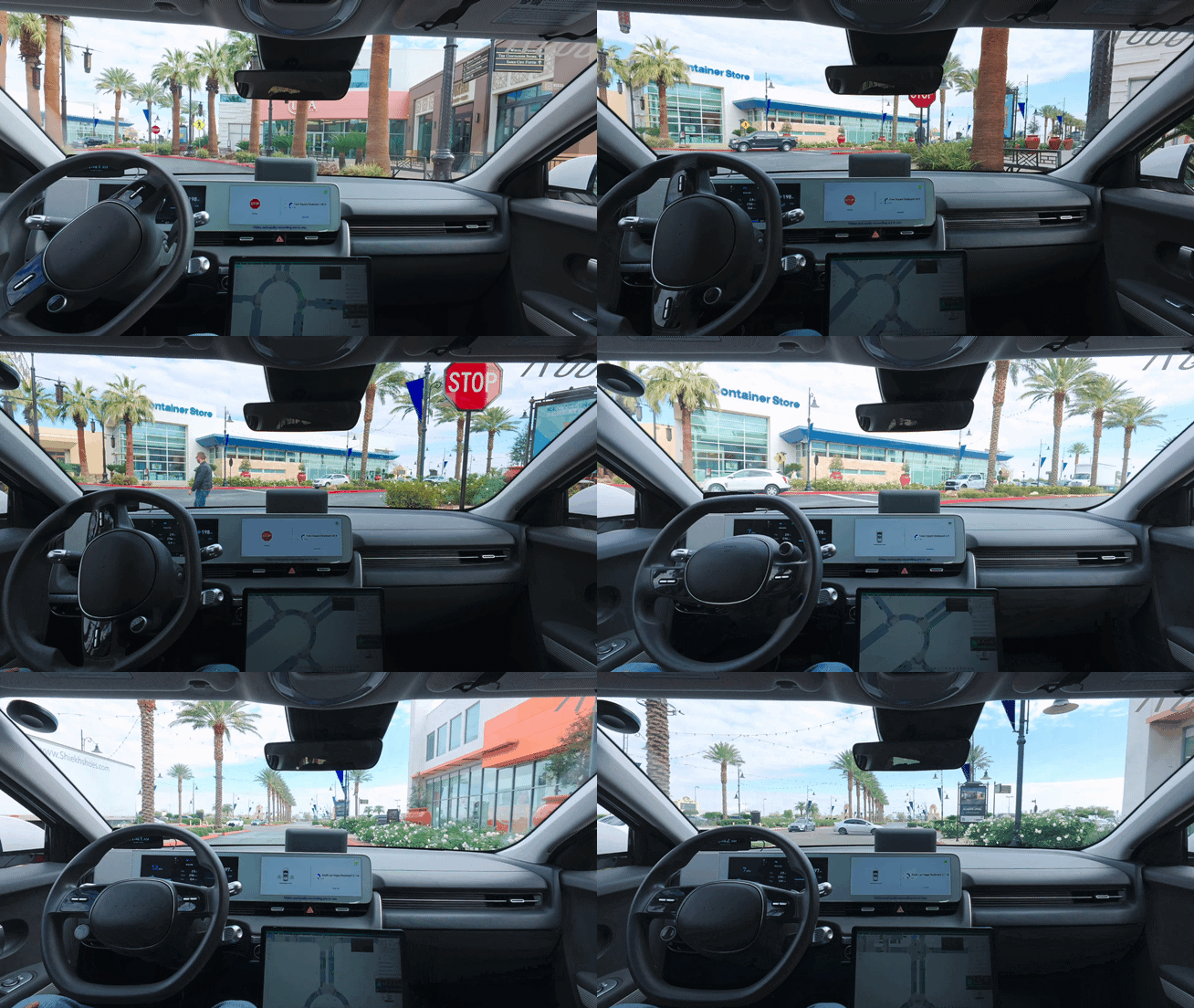
With the Motional Hyundai Ioniq 5 robotaxi, on January 8 I rode for roughly 30 minutes over a distance of about 15 kilometers, from Motional’s Las Vegas Technical Center through downtown commercial districts, major tourist areas, and stretches lined with large hotels.
■ Faster response to unexpected situations: Motional pulls ahead
Both Motional and Zoox handled sudden situations without major issues, but in terms of pure reaction speed, Motional appeared to be quicker.
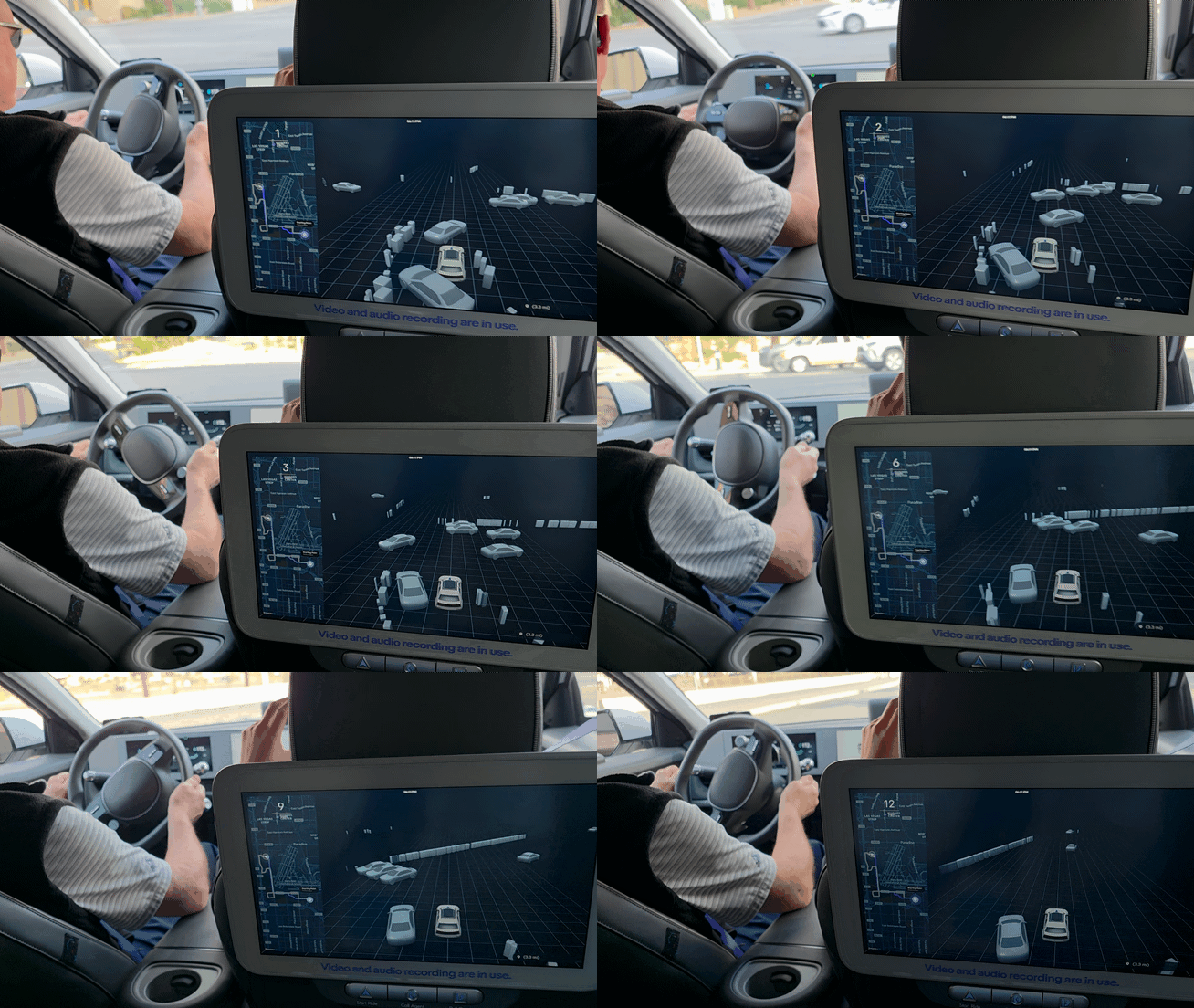
Upon reaching Town Square, an area dense with large shopping malls, the in-vehicle monitor showed surrounding vehicles and pedestrians being detected. Even as the paths of cars entering and exiting parking lots intersected with those of pedestrians, the Motional robotaxi slowed down as soon as it entered the area and maintained a safe distance from nearby vehicles while proceeding.
After entering the Las Vegas Strip, when the system suddenly detected stacked obstacles while passing through an intersection, the Motional robotaxi continued to move smoothly without any abrupt steering inputs or harsh deceleration.
As the vehicle approached the lobby of the Mandalay Bay Hotel and Casino, where tourists, shuttle buses, and numerous taxis created a congested environment, the Motional robotaxi reduced its speed, recognized the surrounding vehicles, and glided past the lobby area. When a taxi ahead suddenly changed direction, the Motional robotaxi detected this on its monitor and altered its own course without changing speed, continuing its drive. It was impressive to see the system handle the complex environment in front of the hotel as one continuous, seamless path, without abrupt maneuvers or hesitation.
Even when judging the right moment to merge into a straight road after exiting the hotel, the cautious Motional robotaxi waited until traffic thinned out and then merged swiftly, maintaining safe operation.
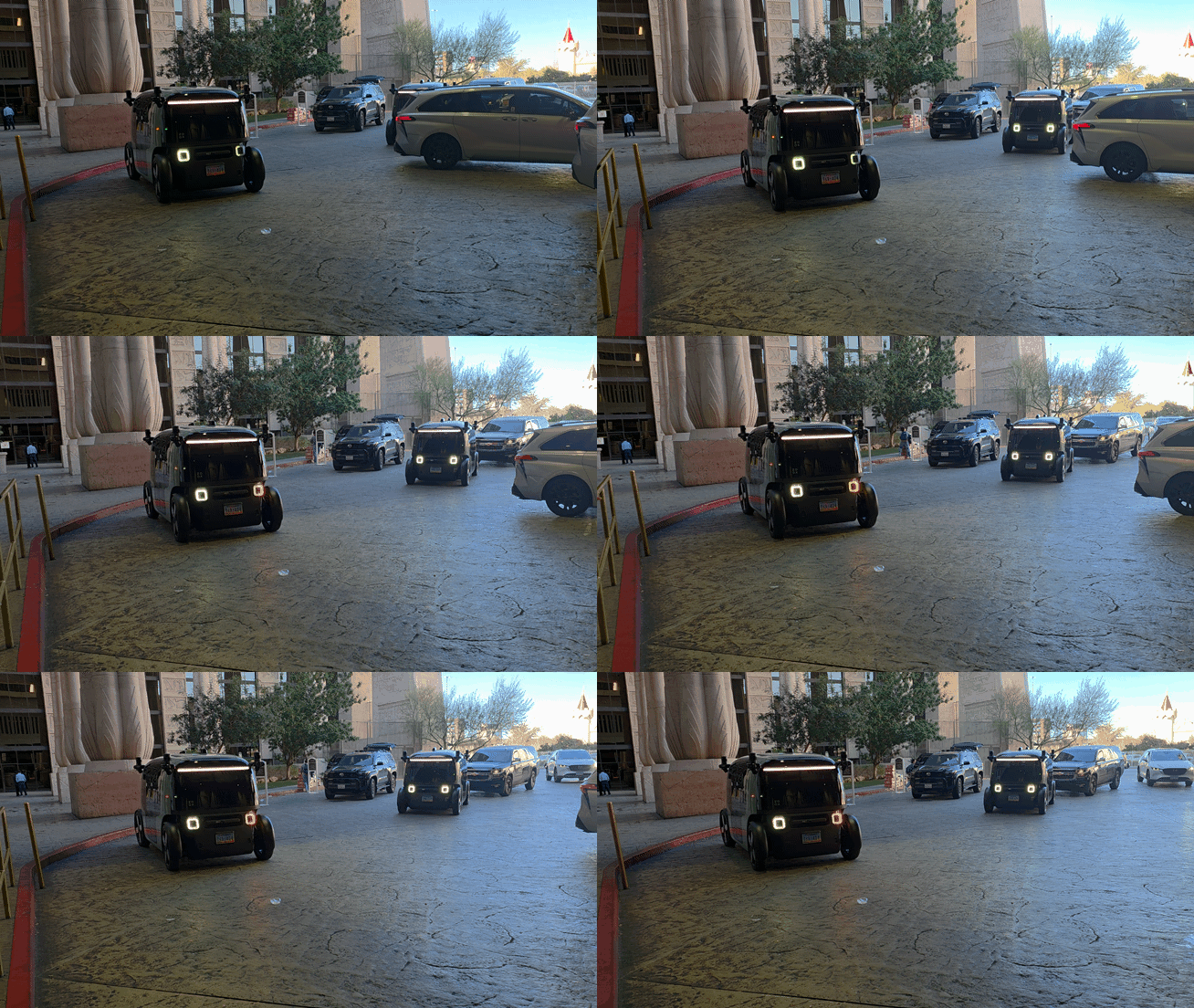
The Zoox robotaxi also repeatedly demonstrated its ability to recognize people walking nearby in the busy hotel lobby area and to come to an immediate stop.
However, in heavy traffic, there were moments when Zoox’s response speed was less than ideal. In one instance, even about five seconds after a vehicle in front had passed, the Zoox robotaxi remained motionless. It only resumed driving after the driver of the car behind honked the horn several times.
In another case, after detecting a signboard in front of the hotel, the Zoox robotaxi stayed still for quite some time without moving at all, until a hotel guest physically moved the sign out of the way. Only then did the Zoox robotaxi resume driving on its own.
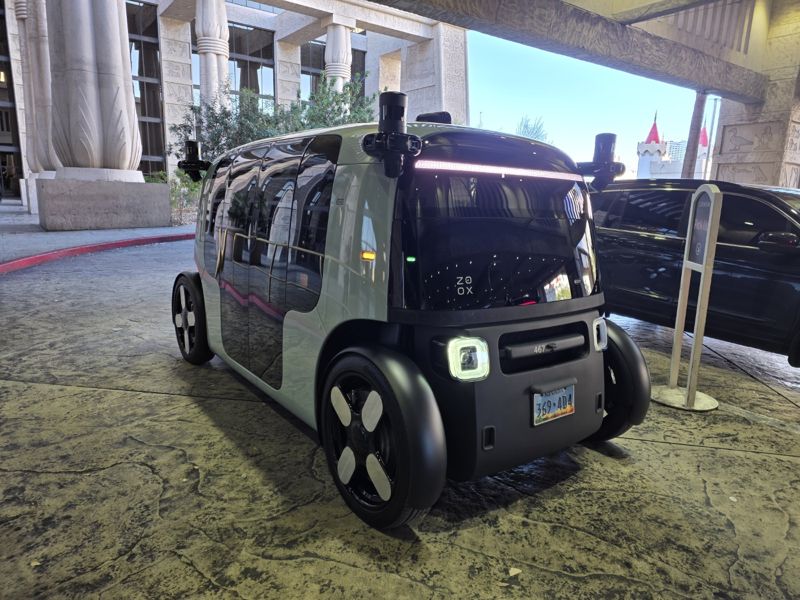
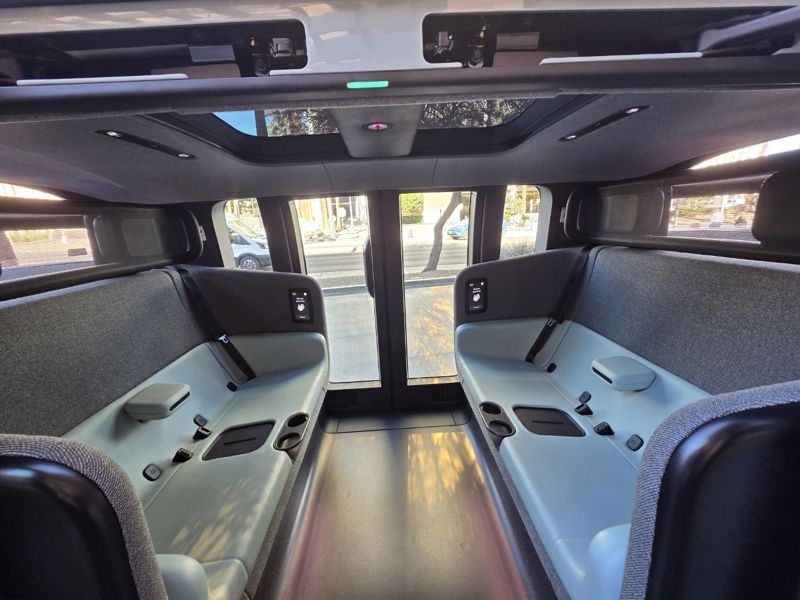
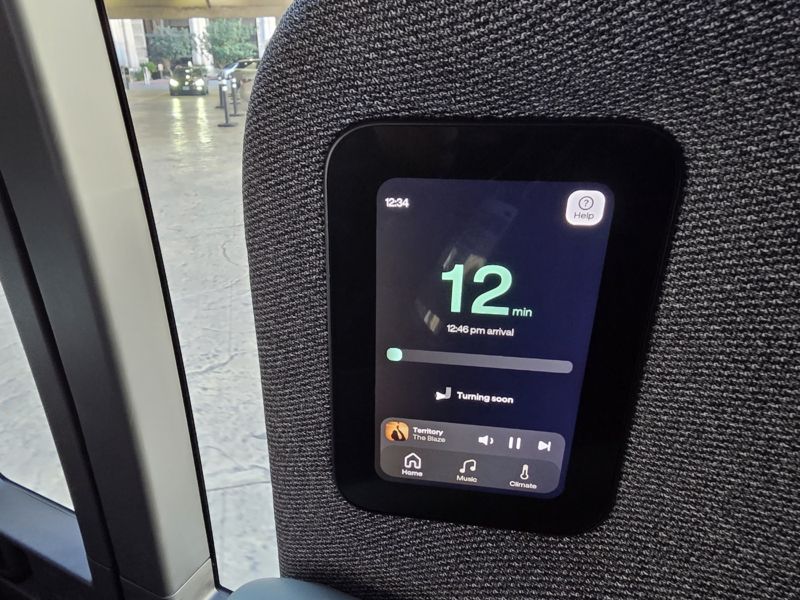
■ Both offer solid ride comfort, but Zoox’s short trip distance is a drawback
During driverless autonomous operation, both Motional and Zoox provided a generally comfortable ride.
When you board the Zoox robotaxi, a voice first prompts you to fasten your seat belt, and a notification reading “Estimated arrival time: 12 minutes” appears on the upper side of the seat. A message then instructs you to close the door, and music begins to play as the vehicle sets off. The cabin is notable for having virtually nothing inside other than a space to charge your mobile phone. As soon as it started, Zoox began maneuvering around the vehicle in front at a low speed, and the driving feel was stable.
After passing through an indoor passageway and entering the public road, the speed felt relatively faster, but there was little body roll or shaking. Upon arriving on time, a message reading “Finding the best place to stop” appeared on the monitor next to the seat, and the doors opened, lending an impression of a courteous, fully automated taxi service.
The short trip distance, however, was disappointing. Even when trying to book a ride through the Zoox ride-hailing app, you had to go near a designated stop-like boarding point, and for drop-off you could not choose any location you wanted but had to select from predefined zones, which added to the inconvenience.
True to Motional’s safety-first principles, the Motional robotaxi maintained cautious driving behavior. It kept its speed below roughly 50–60 kilometers per hour and slowed down even further over speed bumps, yet there were almost no instances during the ride where it had to brake sharply or reduce speed abruptly.
[email protected] Kim Hak-jae Reporter