Additional Tax Credits to Be Granted for Ultra-Innovative Technologies Such as Power Semiconductors [Revision of Tax Enforcement Decrees]
- Input
- 2026-01-16 11:06:06
- Updated
- 2026-01-16 11:06:06
[Financial News] Next-generation power semiconductor packaging, eco-friendly ship transport, and liquefied natural gas (LNG) carrier cargo containment technologies will be designated as national strategic and new growth technologies, making them eligible for research and development (R&D) tax credits. For households with three or more children, the scope of housing eligible for income tax credits on monthly rent will be expanded. Young people who subscribe to Youth Future Savings, which will be launched in June, will not have to pay tax on the interest income. When multi-homeowners purchase homes priced at 900 million won or less in population-decline areas, those homes will be excluded from the home count, thereby reducing their burden of Comprehensive Real Estate Holding Tax and capital gains tax. Liquor taxes on low-alcohol mixed beverages such as Highball will be partially reduced.
'R&D Tax Credits' Expanded to 284 New Growth and Core Technologies
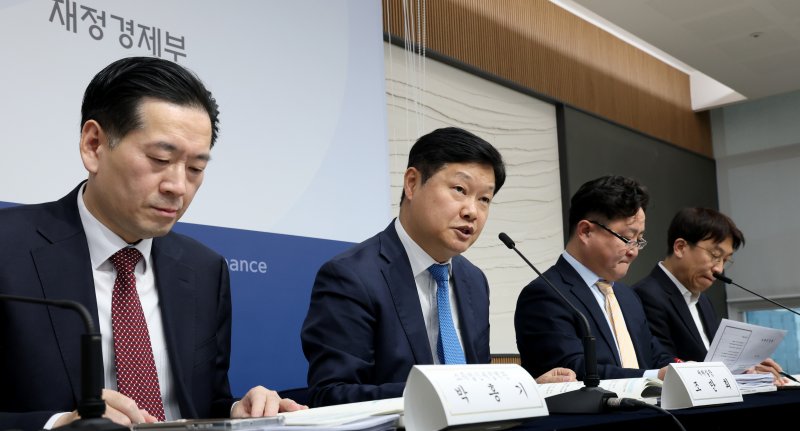
On the 16th, the Ministry of Finance and Economy announced this draft revision to the enforcement decrees following the tax reform.
The latest tax reform is being pursued under three main pillars: supporting a major economic leap, stabilizing people’s livelihoods, and rationalizing the tax system. Under this broad framework, 204 provisions across eight areas, including strengthening support for future strategic industries and revitalizing capital markets, will be revised in the enforcement decrees. The related legislation covers 21 laws, including the Framework Act on National Taxes and the Income Tax Act. The government will conduct a public notice and comment period from the 19th until the 5th of next month and promulgate the revisions at the end of next month.
According to the revised tax enforcement decrees, support for future strategic high-tech industries will first be strengthened by subdividing and expanding the scope of national strategic technologies. These are ultra-innovative growth technologies that the Lee Jae-myung administration is actively promoting.
Cho Man-hee, Director General for Tax Policy at the Ministry of Finance and Economy, said, "We have pursued the enforcement decree revisions with a focus on supporting an ultra-innovative economic leap and stabilizing people’s livelihoods," adding, "We have expanded the scope of national strategic technologies and new growth technologies eligible for R&D tax credits under projects that lead the innovation economy."
Newly added areas under national strategic technologies include: development technologies for new material components related to next-generation multi-chip modules (MCMs); and transport and propulsion technologies for eco-friendly ships, including cargo containment systems for liquefied natural gas (LNG) carriers, as well as digital design, production, and operation technologies. For next-generation power semiconductors that improve energy efficiency, packaging technologies have been added to the existing design and manufacturing technologies.
In addition, 11 technologies that support key industries such as steel and petrochemicals have been newly added as new growth and core technologies, including manufacturing and process technologies for graphene-based next-generation electronic devices and composite materials for energy systems.
As a result, the number of new growth and core technologies eligible for R&D tax credits will increase to a total of 284 technologies across 14 fields.
Furthermore, expenditures on purchasing training data for artificial intelligence (AI) will also be recognized as R&D expenses and become eligible for income tax deductions.
Corporate taxation rules will also be rationalized.
The age criterion for young workers eligible for the integrated employment tax credit will be relaxed to slightly above 34. This tax credit provides preferential credits of 2 million to 7 million won for young people aged 15 to 34, persons with disabilities, and those aged 60 or older. In the case of young workers, employees who are 34 or younger at the time of signing their employment contract will be regarded as young for four years from the contract date (three years for large corporations), and the tax benefits will continue during that period.
No Tax on Interest from Youth Future Savings Launching in June
Dividend income from high-dividend companies will be subject to a special separate taxation regime under which it is excluded from the comprehensive income tax base. Eligible companies are those with a dividend payout ratio of at least 40%, or those with a payout ratio of at least 25% and whose cash dividends have increased by 10% or more compared with the previous year. The dividends must be cash dividends, including interim, quarterly, special, or year-end dividends. Funds and Real Estate Investment Trusts (REITs) and other securitization vehicles are excluded.
The separate tax rates are 14% for a tax base of up to 20 million won, 20% for up to 300 million won, 25% for up to 5 billion won, and 30% for amounts exceeding 5 billion won.
Tax support for venture investment will be expanded.
The income deduction limit for investments in KOSDAQ Venture Funds will be expanded from the current cumulative 30 million won per person to 20 million won per year. If the investment is held for at least three years, 10% of the investment amount can be deducted from taxable income, and the scope of this benefit will be broadened.
The method for valuing Virtual Assets held by corporations will be improved from the existing first-in, first-out method to the weighted-average method. This change takes into account the characteristics of virtual assets, such as frequent short-term trading and the ability to value them based on market transaction prices.
Tax support for young people and multi-child households will also be strengthened.
Tax benefits for young people aged 19 to 34 will be increased. Young people who subscribe to Youth Future Savings, which will be launched in June, will receive a tax exemption on interest income. To qualify, young people with annual earned income of 75 million won or less, or comprehensive income of 63 million won or less, must subscribe to Youth Future Savings and maintain the account for at least three years. The annual contribution limit is 6 million won.
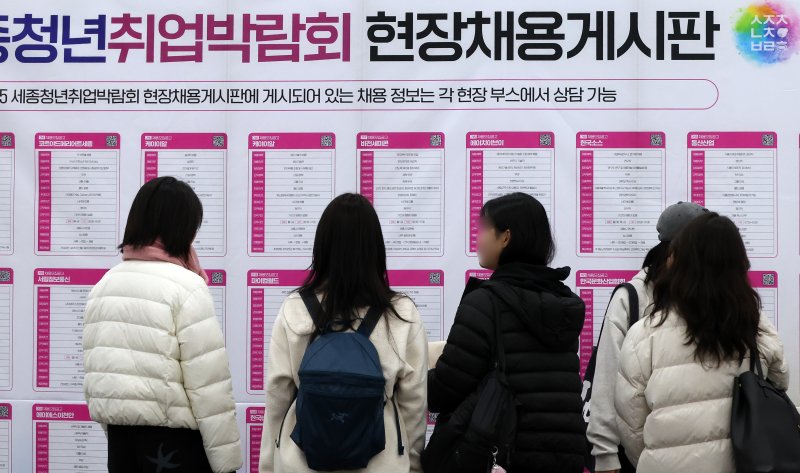
For households with three or more children, the scope of housing eligible for monthly rent tax credits will be expanded. The current size limit of 85 square meters or less (100 square meters or less outside the Seoul metropolitan and urban areas) will be unified and expanded to 100 square meters or less nationwide.
Weekend couples who live apart due to work or other reasons will be able to receive additional tax credits for monthly rent. Weekend couples are defined as those whose spouse’s registered address is in a different city, county, or district from the head of household, or where the spouse and cohabiting lineal ascendants or descendants are without a home of their own.
Tax Benefits for One-Home Households with Jointly Owned Property
Tax incentives to revitalize regional economies will also be expanded.
When multi-homeowners purchase homes priced at 900 million won or less in population-decline areas or areas of concern for population decline, those homes will be excluded from the home count. This will reduce their burden of capital gains tax and Comprehensive Real Estate Holding Tax.
For single-homeowners who acquire unsold newly built homes outside the Seoul metropolitan area after completion, the value threshold for special treatment on capital gains tax and Comprehensive Real Estate Holding Tax will be raised from 600 million won to 700 million won.
A new special rule will be introduced for one-home households with jointly owned property. Regardless of the ownership share, the couple will be allowed to choose which spouse is the taxpayer, and if either spouse acquires a qualifying special home, the household will be eligible for the one-household-one-home special treatment under the Comprehensive Real Estate Holding Tax.
To support small business owners, liquor taxes on low-alcohol mixed beverages such as Highball will be reduced.
From April this year until the end of 2028, a 30% liquor tax reduction will apply to mixed alcoholic beverages with an alcohol content of 8.5% or less and a non-volatile extract content of at least 2 degrees. The reduction will be capped at an annual shipment or import volume of 400 kiloliters.
To help former small business owners make a fresh start after closing their businesses, a new special rule will extinguish tax payment obligations on uncollectible tax arrears of 50 million won or less.
[email protected] Jung Sang-geun, Kim Chan-mi, Choi Yong-jun Reporter