"Even if it's small, it's still Gangnam; we're moving up to prime areas"—a 56 m2 apartment sold for 1.9 billion won
- Input
- 2026-01-16 09:47:31
- Updated
- 2026-01-16 09:47:31
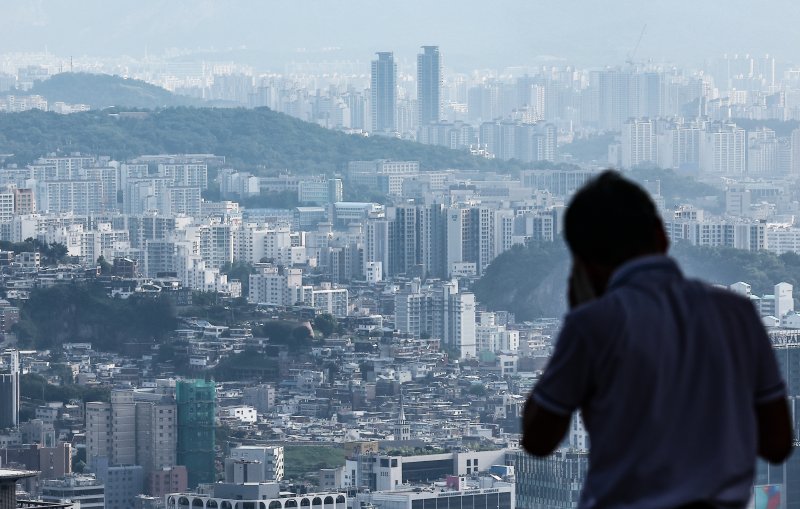
[Financial News] Recently, it has been found that small apartments of around 10 pyeong in major prime areas such as the Gangnam 3 Districts (Gangnam, Seocho and Songpa Districts) have been setting successive record-high transaction prices. Typically, "10-pyeong" apartments refer to two-room units (with two bedrooms) consisting of a living room, master bedroom, bathroom and kitchen.
A 40 m2 unit in Songpa District sold for 1.76 billion won... small units in prime areas of Gyeonggi Province also reaching ultra-high prices
According to actual transaction data from the Ministry of Land, Infrastructure and Transport (MOLIT) on the 16th, a 39 m2 (approximately 17 pyeong) unit in Daechi 2nd Apartment Complex in Gangnam District was traded at 1.9 billion won, up 200 million won from the previous month, setting a new record high. In November last year, two 33 m2 (about 14 pyeong) units in the same complex were each sold for 1.6 billion won, also marking record prices.
In Gangnam District, a 26 m2 (about 12 pyeong) unit in Samseong Hillstate Apartment Complex 1 was also sold for 1.297 billion won last month, setting a new record. In Songpa District, small apartments remain strong as well, with a 37 m2 (about 12 pyeong) unit in Richenze Apartment Complex trading at 1.76 billion won last month and a 39 m2 (about 18 pyeong) unit in Helio City changing hands for 1.79 billion won, both rewriting their previous highs.
Preference for small-sized units is also clear in prime areas of Gyeonggi Province. In Bundang District, a 35 m2 (about 14 pyeong) unit in Yangji 5th Complex Hanyang Apartment was sold for 1.145 billion won last month, while a 42 m2 (about 19 pyeong) unit in Hansol Village Jugong 5th Complex traded for 1.245 billion won, both setting new record highs.
This upward trend is largely attributed to a series of mortgage loan regulations implemented last year. As access to mid- to large-sized homes has become more difficult, demand has shifted to small units in prime locations, where the loan burden is relatively lighter—a so-called "balloon effect."
Since the June 27 mortgage loan regulation, lending standards have tightened, and it appears that more buyers are trying to purchase apartments in core areas even if the units are small. Under the June 27 measures, mortgage loans for homes priced over 600 million won were restricted, and following the October 15 Real Estate Policy, the loan limit for homes priced between 1.5 billion and 2.5 billion won was reduced to a maximum of 400 million won, and to a maximum of 200 million won for homes over 2.5 billion won.
Statistics also show a pronounced rise in prices for small apartments in the greater Gangnam area. According to KB Real Estate, the sales price index for small apartments (under 40 m2 of exclusive area) in Seoul rose from 59.3 in December 2016 to 97.7 in December last year, an increase of 64.7% over 10 years. In particular, the 11 Gangnam districts climbed from 61.5 to 104.6 over the same period, a rise of 70.1%.
Loans are blocked, but people still want prime areas... so they end up choosing small units
This is 29.5 percentage points higher than the Seoul average, suggesting that the strength of small apartments is likely to continue for the time being. Kim In-man, head of the Kim In-man Real Estate Research Institute, told News1, "As loan limits have been tightened, there is a clear trend of people downsizing in floor area in order to move into core areas like Gangnam," adding, "This reflects the growing perception that even if a home is small, if it is in a good location, it has strong price resilience and greater potential for appreciation."
Park Won-gap, senior real estate expert at KB Kookmin Bank, also said, "The newly built apartments in the 10-pyeong range that are setting record prices recently are, in effect, structured much like studio units," explaining, "They offer access to large-complex community facilities and are located in core areas where price growth has been pronounced, so demand from one- to two-person households remains steady."
[email protected] Kim Hee-sun Reporter