China leads the world in physical AI patent competitiveness, surpassing the US, South Korea, and Japan.
- Input
- 2026-01-16 10:19:27
- Updated
- 2026-01-16 10:19:27
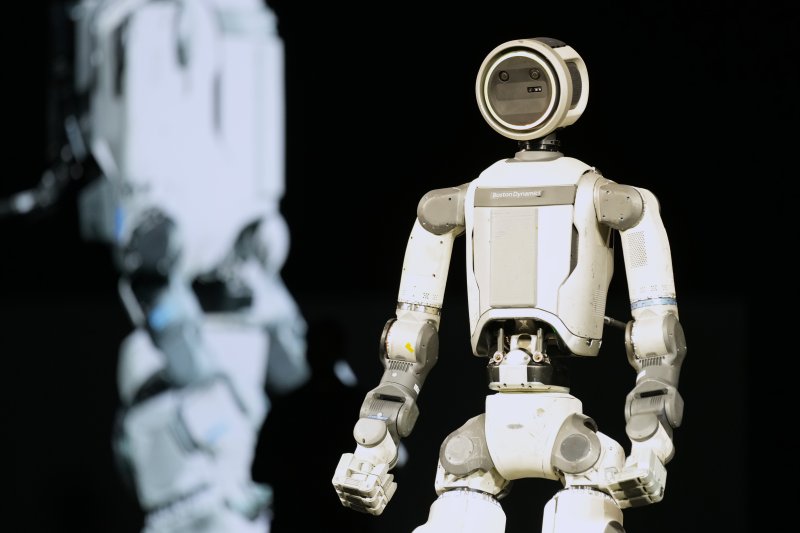
[Financial News Tokyo = Correspondent Seo Hye-jin] The Nihon Keizai Shimbun (Nikkei) reported on the 16th that China ranked first in the world in physical artificial intelligence (AI) patent competitiveness. Five of the top 10 companies and organizations in terms of physical AI patent competitiveness were found to be Chinese companies and organizations. The United States ranked second with three companies on the list, and South Korea also had two companies on the list, including Samsung Electronics and LG Electronics.
According to Nikkei, Nikkei Business analyzed physical AI patent competitiveness with the help of U.S. intellectual property information company RecsysNexis, and found that China ranked first in comprehensive competitiveness by country and region where related patents were filed. The United States ranked second by a narrow margin.
The ranking was calculated by giving a comprehensive score of total asset value, reflecting the quantity and quality of valid patents related to robotics, machine learning, and AI.
Five companies and organizations from China made it to the top 10. Baidu (4,126 points), Huawei (3,645 points), and Tencent (3,043 points) swept the top three spots, while Ping An Insurance (1,891 points) and the Chinese Academy of Sciences (835 points) took sixth and tenth place, respectively.
Three companies from the United States were included in the top 10. These include Nvidia (5th, 2154 points), Intel (7th, 1543 points), and Alphabet (9th, 1325 points). Chinese companies are evaluated to be somewhat lower in terms of ‘quality’ compared to these American companies, but Huawei was confirmed to be approaching the level of American companies.
South Korea had Samsung Electronics (4th, 2734 points) and LG Electronics (8th, 1393 points) in the top ranks, but overall there was a large gap with the US and China.
Among Japanese companies, FANUC ranked highest at 13th. Nikkei said, “As the center of technological competition in the machinery field, where Japan has had an advantage, is shifting to AI, Japanese companies are being asked to respond in new ways.”
In industries where technology is a key competitive edge, the accumulation of patents is considered ‘basic strength.’ Nikkei pointed out that leading indicators showing the potential for industrial growth have revealed that China is securing an advantage in the field of physical AI.
Physical AI is currently one of the most notable fields in the global technology development competition, with American company Tesla and Chinese companies competing to develop technology and establish business models. The Chinese Communist Party is also focusing on physical AI in the draft of its 15th Five-Year Plan (2026-2030).
At CES, the world's largest information technology (IT) exhibition held in Las Vegas this month, tech companies from the United States, China, and Korea competed to showcase physical AI technologies such as humanoids.
Rai Jarman of venture capital firm First Light Capital analyzed, "Physical AI is recognized as the next-generation US-China technology war, and China is strongly pushing it as a national strategy."
[email protected] Seo Hye-jin Reporter