K-radiation safety standards lead the way: Export success to Thailand following South Africa
- Input
- 2026-01-16 09:22:36
- Updated
- 2026-01-16 09:22:36
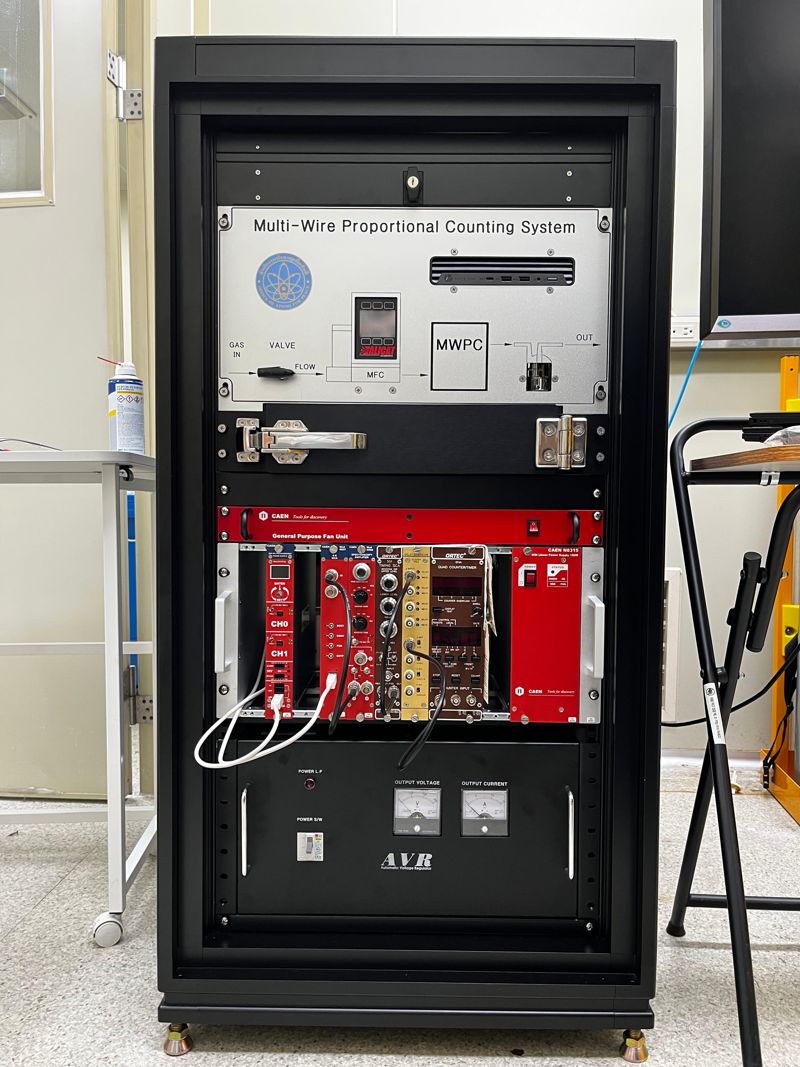
[Financial News] The Korea Research Institute of Standards and Science (KRISS) has successfully exported a radiation measurement standard instrument developed with its own technology to Thailand. This export is expected to serve as an opportunity for Korea’s measurement standards to gain recognition for their technological prowess and to become a benchmark for radiation safety management in the Asia-Pacific region. On the 16th, KRISS announced that it had signed a 270,000-dollar export contract with the Office of Atoms for Peace for a “Primary Standard for Measuring the Surface Emission Rate of Large Area Sources (primary standard for large area sources)” and had successfully completed the installation of the equipment and transfer of technology on site.
The primary standard for large area sources exported this time is the highest-level reference instrument that guarantees the reliability of surface contamination monitors, which are radiation detectors. Surface contamination monitors are used in medical, research, and industrial settings to check whether workers, equipment, and work environments are contaminated with radiation. These instruments must be periodically calibrated using an area source, a reference material whose radiation emission rate has been accurately characterized. The primary standard is the core infrastructure of the national radiation safety management system that ultimately verifies the accuracy of this area source.
The primary standard for large area sources developed by the KRISS Ionizing Radiation Measurement Group boasts world-class precision, with a measurement uncertainty of less than 1%. To fundamentally eliminate measurement losses caused when radiation particles are blocked by the detector cover, the research team newly developed a windowless-type radiation detector using a multi-wire proportional counter and applied a signal-processing unit that minimizes noise, thereby achieving both miniaturization and high precision of the instrument. The multi-wire proportional counter is one of the components of the primary standard for large area sources; it is a high-sensitivity radiation detector that places multiple thin wires inside a gas-filled chamber and amplifies the electrical signals generated as radiation passes through for measurement.
In 2016, KRISS exported this instrument to the South African Bureau of Standards (SABS), and with this latest success in the Asian market, it has once again demonstrated its world-class radiation measurement technology. In particular, this achievement is highly significant in that it has laid the groundwork for Korea’s radiation measurement technology to be operated as a standard in the Asia-Pacific region.
Kim Byeong-cheol, Head of the Ionizing Radiation Measurement Group at KRISS, said, “If Thailand participates in a key comparison (KC) using the equipment established through this project and gains international recognition for the reliability of its national measurement standards, Korea’s technological standing will be further elevated,” adding, “Building on this achievement, we will continue to expand export channels to various Association of Southeast Asian Nations (ASEAN) member countries.”
[email protected] Yeon Ji-an Reporter