“Chinese-made car offensive is shaking legacy automakers”... Warning from Hyundai Motor Group’s think tank
- Input
- 2026-01-16 10:00:00
- Updated
- 2026-01-16 10:00:00
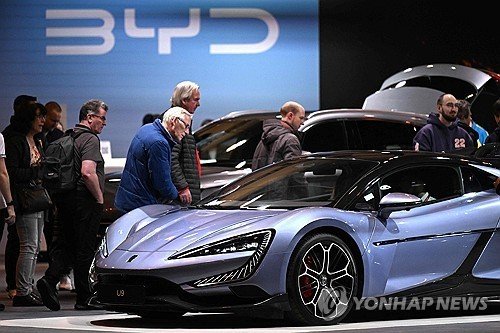
Yang Jin-su, Head of the Mobility Industry Research Office at the HMG Management Research Institute, Hyundai Motor Group’s think tank, said in a presentation at the Korea Automobile Journalists Association’s New Year Seminar held on the 16th at the Automobile Hall in Seocho District, Seoul, “The accelerated overseas expansion of Chinese companies will bring the structural crisis of legacy automakers to the forefront,” adding, “As they strengthen price competitiveness and establish local production systems, the burden on existing automakers will grow.”
According to the HMG Management Research Institute, sales of Chinese-made cars in global markets this year are projected to reach 24.47 million units, up 0.5% from the previous year. This is more than five times higher than the 4.82 million units expected in India, the world’s third-largest auto market. Chinese manufacturers are expanding beyond their domestic market into the Association of Southeast Asian Nations (ASEAN), Western Europe, and Latin America, steadily broadening their market reach.
Yang noted, “Intensifying competition in the Hybrid Electric Vehicle (HEV) market, which has rapidly emerged as an alternative amid slowing EV market growth, will also make it harder for incumbent players to protect their profitability,” and added, “Even Chinese companies, which had been focused on EVs, are accelerating their entry into the HEV segment through technology transfers and other means, and this will further intensify competition.”
Another key variable cited was the spread of smart car technologies—once limited to a handful of premium models—into low-priced vehicles, driven largely by Chinese manufacturers. Yang predicted, “A new phase of competition will unfold in which the speed at which legacy automakers respond on the software front will determine their very survival.”
Meanwhile, the United States of America (US), the world’s second-largest auto market after China, is expected to see a slowdown. With the phaseout last year of EV tax credits under the Inflation Reduction Act of 2022 (IRA) and the easing of fuel-efficiency regulations, major automakers are moving to recalibrate the pace of electrification, weakening the growth momentum of EVs on both the demand and supply sides.
Yang said, “In the US, gradual interest-rate cuts and tax credits on auto loan interest are expected to ease the burden of car installment payments,” but cautioned, “At the same time, higher vehicle prices and insurance premiums driven by the imposition of tariffs on certain items will act as a drag, offsetting these favorable factors, and as a result the auto market is likely to contract to around 15 million units, shrinking for the first time in three years since 2023.”
[email protected] Kim Dong-chan Reporter