"Every Night, Do You Maybe Do This? This Habit Burns the Retina and Kills the Optic Nerve," Ophthalmologist's Warning [Health Issue]
- Input
- 2026-01-16 04:20:00
- Updated
- 2026-01-16 04:20:00
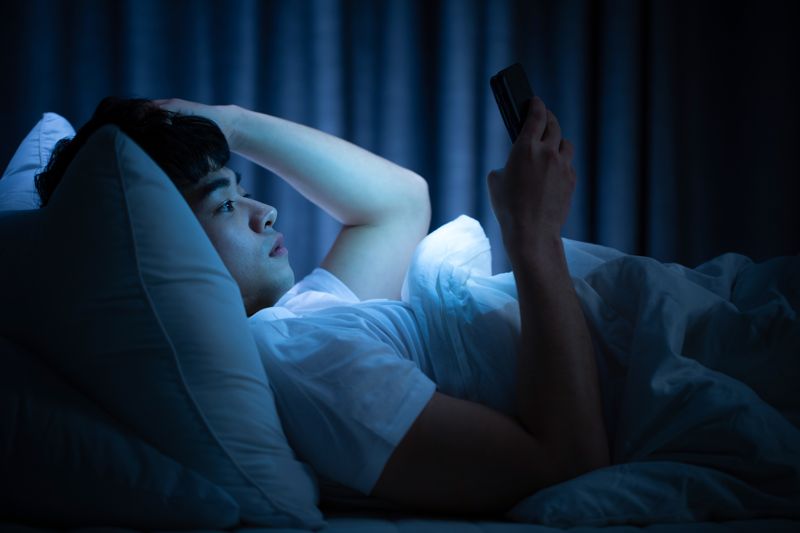
[Financial News] An ophthalmology specialist has warned that the habit of looking at a smartphone in a dark room can have a seriously harmful impact on eye health.
On the 12th, Ophthalmologist Lee Sang Jung, director of SNU Eye Clinic, appeared on the YouTube channel Geonnamul TV and discussed everyday habits that can easily damage eye health, highlighting in particular the habit of using a smartphone in the dark.
Lee Sang Jung explained, "The habit of looking at your smartphone in a dark room before falling asleep can be no different from burning the retinal tissue," adding, "In the dark, the pupils can dilate up to three times their normal size to take in more light. In terms of area, that means up to nine times more light is pouring into the eye."
The problem, he noted, is that when strong blue light from the smartphone enters through these dilated pupils without being filtered, it reacts with waste products accumulated in the retinal cells and explosively generates reactive oxygen species, harmful oxygen that attacks the cells.
Lee Sang Jung warned, "This can rapidly amplify oxidative stress, leading to the death of optic nerve cells and potentially accelerating macular degeneration." Optic nerve cells transmit visual information received by the retina to the brain, and the macula is the key structure responsible for central vision.
He went on to add, "For middle-aged and older women whose anterior eye structures are relatively narrow, looking down at a smartphone in the dark can cause the lens to shift forward, blocking the pathway through which the fluid in the eye drains. This can trigger acute glaucoma by causing a sudden spike in intraocular pressure."
Therefore, to protect eye health, it is best to use smartphones in well-lit environments whenever possible and to avoid exposure as much as possible right before sleep. Lee also recommended taking high-purity omega-3 fatty acid supplements with a high content of Eicosapentaenoic acid (EPA) and Docosahexaenoic acid (DHA) to help restore the tear film’s oily layer, and advised smokers to obtain antioxidant nutrients from vegetables rather than from Beta-carotene supplements.
He further noted, "People usually only worry about sunlight coming from the front, but in fact, light entering from the side can be refracted by the cornea and concentrate energy up to 20 times stronger inside the lens," and advised, "When going outside, it is better to wear goggle-style sunglasses that fit closely to the face or to pair them with a wide-brimmed hat, rather than using ordinary sunglasses alone."
[email protected] Kim Hee-sun Reporter