"Prosecution Service revived?" Government's 'Prosecution Reform' bill falters over dual-track structure
- Input
- 2026-01-16 06:00:00
- Updated
- 2026-01-16 06:00:00
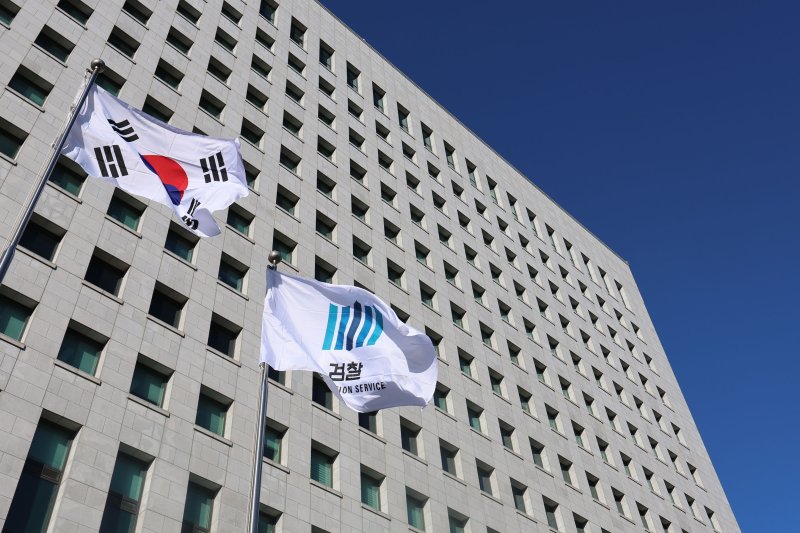
According to the Ministry of Government Legislation (MOLEG) on the 15th, the draft notice for the Serious Crimes Investigation Agency Act stipulates that judicial police officers at the Serious Crime Investigation Agency are to be appointed and operated in two categories: investigative judicial officers and professional investigators. Investigative judicial officers will make up around 10% of the total staff and will be appointed from those who hold a lawyer's license or possess equivalent legal expertise. As the agency is planned to have a staff of 3,000, the number of investigative judicial officers is expected to be around 300. They will be responsible for legal review and similar tasks related to the agency's investigations.
This dual-track structure at the Serious Crime Investigation Agency has drawn strong backlash. Critics say it will create a "hierarchy within a hierarchy," with investigative judicial officers effectively commanding professional investigators. Of the 16 advisory members of the Prosecution Reform Task Force under the Office for Government Policy Coordination, six tendered their resignations on the 14th over the issue. The majority of advisors had argued for a unified structure, but the Prosecution Reform Task Force did not accept this and instead used their input merely as a formal justification that "expert opinions were heard," they contend.
Advisory members who resigned — Seo Bohak, professor at Kyung Hee University School of Law; Hwang Moon-gyu, professor at the Department of Police Administration, Joongbu University; and attorneys Attorney Kim Pil-sung, Han Dong-su, Jang Beom-sik, and Attorney Kim Sung-jin — held a press conference at the National Assembly Communication Center on the 14th. They stated, "Our view was that the organization should be designed as a unified body of 'investigators,' yet the bill adopts a dual structure of 'investigative judicial officers' and 'professional investigators.'" They added, "By granting investigative judicial officers powers and privileges equivalent to current public prosecutors, the Serious Crime Investigation Agency is bound to face criticism for being prosecutor-centered."
The Prosecution Reform Task Force maintains that claims of hierarchical stratification through the distinction between investigative judicial officers and professional investigators are unfounded. A Task Force official explained that both investigative judicial officers and professional investigators fall under the category of judicial police officers under the Criminal Procedure Act of the Republic of Korea, and therefore there is no difference in their authority to initiate and conduct investigations. The official added that what matters is not the job series itself, but which specific post an individual holds within the Serious Crime Investigation Agency, as that will determine the scope of authority exercised.
There is also an explanation that the dual-track structure is an unavoidable measure to retain the investigative know-how accumulated by the Prosecution Service. One advisory member of the Prosecution Reform Task Force said, "We are creating a large investigative body with 3,000 personnel, and ensuring that it takes root is crucial," adding, "We also considered that this could serve as an incentive for existing public prosecutors, who have been conducting investigations, to more easily move over as investigators by stepping down from the rank of prosecutor."
Despite such explanations from the Prosecution Reform Task Force, concerns persist that the dual-track system will create internal hierarchies within the Serious Crime Investigation Agency. A police investigator who had been considering transferring to the new agency said, "Looking at the dual-track structure and the provisions on the right to request case transfers in the agency's establishment bill, it only appears that prosecutors want to conduct investigations as they please," and added, "I honestly do not see how the Serious Crime Investigation Agency will be any different from the current Prosecution Service."
An attorney who previously served as a Deputy Chief Prosecutor likewise commented, "I believe the mere act of making the organization more complex is bound to raise suspicions," and advised, "It is important to say 'we will conduct investigations well,' but it is even more important to think about 'how to prevent investigative powers from becoming so bloated that they lead to anti-human-rights investigations.'"
Justice Minister Jeong Seong-ho also addressed the recent controversy on the 14th, stating, "Rather than framing it as what is good or evil, we need to have a thorough discussion on which system is best for the people."
[email protected] Kim Dong-gyu Reporter