Tobacco firms win again in 53.3 billion won damages suit on appeal: “Difficult to recognize occurrence of loss”
- Input
- 2026-01-15 15:02:10
- Updated
- 2026-01-15 15:02:10
[Financial News] The National Health Insurance Service (NHIS) has also lost on appeal in its tobacco lawsuit worth more than 50 billion won against cigarette manufacturers. The court held that it is difficult to find that NHIS suffered losses as a result of unlawful conduct by the tobacco companies, and that it is likewise hard to recognize individual causal relationships between smoking and specific cases of lung cancer and other cancers.
Civil Division 6-1 of the Seoul High Court (Presiding Judge Park Hae-bin, with Judge Kwon Soon-min of the Seoul High Court and Judge Lee Kyung-hoon of the Seoul High Court) on the 15th upheld the lower court and ruled against the plaintiff in NHIS’s 53.3 billion won damages claim on appeal against three tobacco companies including KT&G.
In April 2014, NHIS filed the lawsuit, stating that it sought to hold tobacco companies socially accountable for the harms of smoking and to prevent leakage of health insurance finances. The claimed amount of 53.3 billion won corresponds to the insurance benefits NHIS paid for 3,465 patients who had a smoking history of at least 20 pack-years, had smoked for at least 30 years, and were diagnosed with lung or laryngeal cancer.
As in the first instance, the appellate court found that NHIS has no right to claim damages. The court stated, “The fact that NHIS paid insurance benefits is the performance of its obligations as an insurer as envisaged under the National Health Insurance Act,” adding, “It is difficult to see that any legally protected interest of NHIS has been infringed.” The court also held that it could not be viewed that any unlawful acts by the tobacco companies were involved in this process.
On the key issues in dispute, the court rejected most of NHIS’s arguments. NHIS relied on the legal doctrine of a manufacturer’s heightened duty to prevent risks, which had been recognized in the Agent Orange litigation, but the court drew a line, stating, “Agent Orange and cigarettes differ in terms of how they are used, the possibility of avoiding harm, and the function of additives used in manufacturing.”
Regarding NHIS’s argument that the damage could have been reduced if tobacco companies had adopted a reasonable alternative design, the court found that it is difficult to regard the design of currently marketed cigarettes as having any particular defect, and that it is also hard to conclude that there exists an alternative design whose harmfulness is significantly lower to a degree that would warrant replacement. The court likewise found it difficult to accept the claim of a labeling defect on the grounds that the risks and addictiveness of cigarettes were not sufficiently indicated.
The court also declined to recognize individual causal relationships between smoking and the onset of diseases such as lung cancer. It added, “Epidemiological research results concerning the relationship between smoking and disease occurrence can only identify, at a statistical level, the distribution and determinants of disease occurrence within a group,” and “they have limitations in that they do not provide precise information about the individual causes for a specific person.”
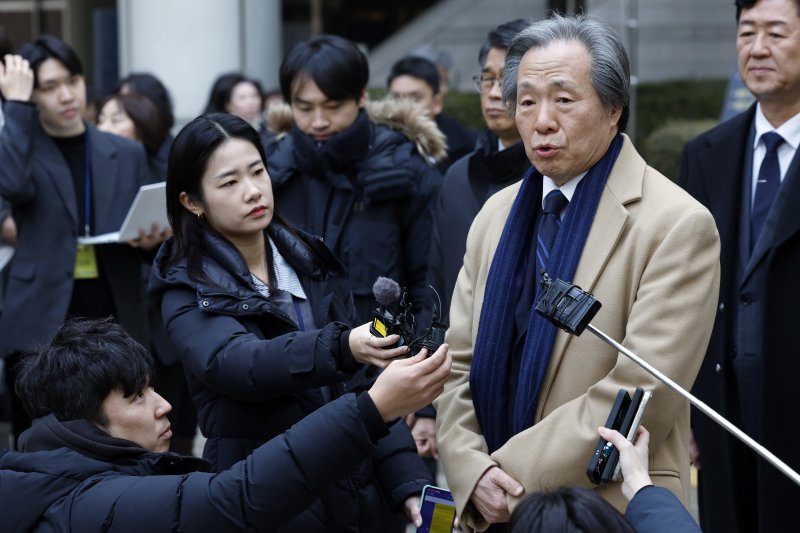
Jung Ki-seok, president of NHIS, who was present in court for the sentencing, told reporters immediately after the ruling, “We respect the court’s decision,” but added, “I did not realize the gap between science and the law was this great,” expressing regret. NHIS plans to review its strategy for further appeal and seek a judgment from the Supreme Court of Korea.
[email protected] Choi Eun-sol Reporter