Eco-friendly and Used Car Exports Surge... Last Year’s Auto Exports Hit Record High of $72 Billion
- Input
- 2026-01-15 11:13:29
- Updated
- 2026-01-15 11:13:29
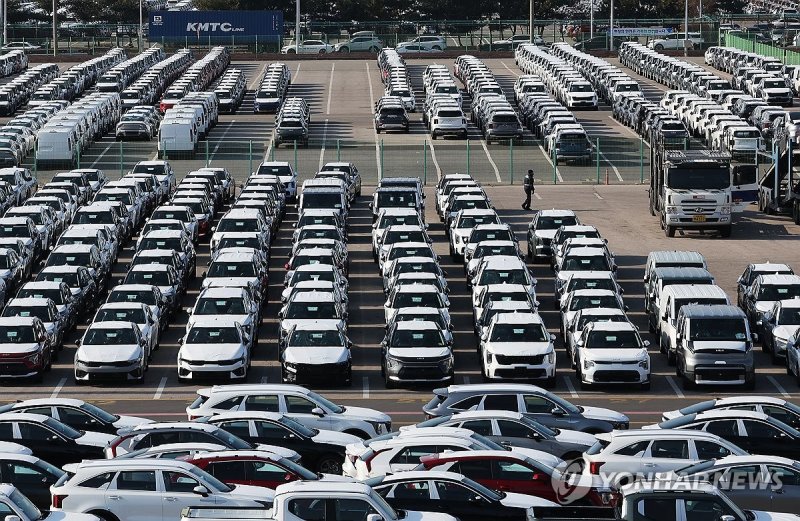
According to the Ministry of Trade, Industry and Energy on the 15th, last year’s annual automobile export value reached $72 billion, up $1.2 billion from the previous year and marking a record high. The previous record was $70.9 billion in 2023.
Robust growth in exports of eco-friendly vehicles and used cars underpinned this achievement.
Last year, exports of eco-friendly vehicles rose 11% from the previous year to $25.8 billion. Hybrid vehicles, whose export value jumped 30%, made a particularly large contribution. Hybrid car exports totaled $14.8 billion last year.
Exports of used cars came to $8.87 billion last year, a 75.1% increase from the previous year.
The Ministry of Trade, Industry and Energy analyzed that “improved perceptions of Korean-made cars and the impact of a strong won-dollar exchange rate helped push exports to a new record high.”
Domestic automobile production reached 4.1 million units last year, maintaining output above 4 million units for the third consecutive year. Of the vehicles produced, 67% were exported. Domestic production and export volumes each edged down slightly from a year earlier, by 0.6% and 1.7%, respectively.
By model, production volumes were highest for the following: Chevrolet Trax at 308,000 units, Hyundai Kona at 270,000, Hyundai Elantra at 269,000, Kia Sportage at 226,000, Hyundai Tucson at 201,000, and Kia Carnival at 186,000.
Domestic auto sales totaled 1.68 million units last year, including 1.36 million Korean-made vehicles and 320,000 imported vehicles. By vehicle type, sales of eco-friendly cars rose 25% from the previous year to 813,000 units, accounting for 48% of new vehicle registrations. Within this segment, electric vehicle sales (216,000 units) increased by 52%.
The Ministry of Trade, Industry and Energy stated, “Although 2025 was a year in which the automobile industry faced a crisis due to tariffs imposed by the United States of America (U.S.), we were able to achieve $72 billion in exports as uncertainties eased thanks to strengthened competitiveness in eco-friendly vehicles and secondary batteries, the implementation of emergency measures in response to U.S. auto tariffs, and the conclusion of tariff negotiations.” The ministry added, “This year as well, we will do our utmost to support the enhancement of the auto industry’s competitiveness and the reinforcement of export growth engines.”
[email protected] Kim Jun-hyuk Reporter