Seoul city bus strike resolved in wage deal, services back to normal from first buses in the morning (Comprehensive)
- Input
- 2026-01-15 06:43:10
- Updated
- 2026-01-15 06:43:10
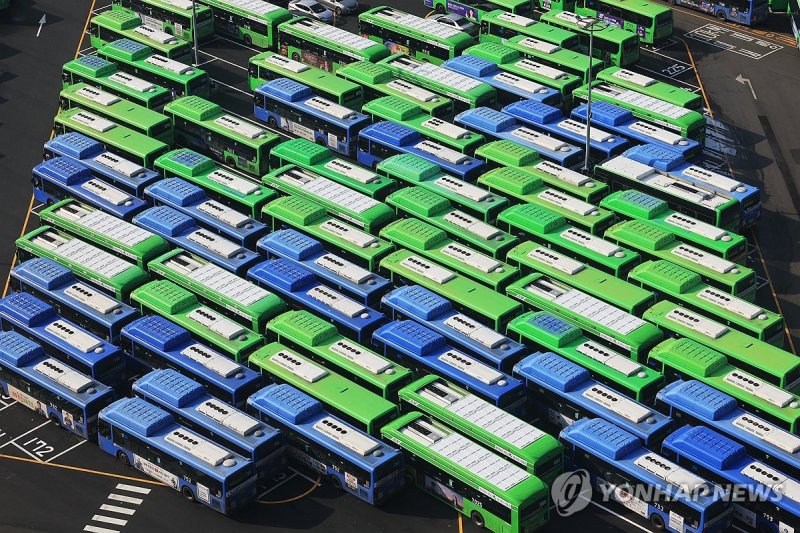
[Financial News] The labor and management of Seoul city buses have finally accepted the mediation proposal on wages and collective bargaining. The general strike that began with the first buses on the 13th has come to an end after two days. According to the bus union and management, they agreed to raise wages by 2.9% this year and to gradually extend the retirement age to 65.
The Seoul City Bus Labor Union and the Seoul City Bus Transportation Business Association announced on the 15th that at around 11:50 p.m. on the 14th they accepted the mediation proposal put forward by the special mediation committee of the Seoul Regional Labor Relations Commission.
Starting at around 3 p.m. the previous day, labor and management took part in a second post-fact-finding mediation session at the Labor Relations Commission and, after roughly nine hours of marathon talks, managed to reach a dramatic compromise.
Under the agreement, this year’s wage increase rate has been set at 2.9%.
This is lower than the union’s demand of 3.0%, but far above the 0.5% increase proposed in the first mediation plan.
The retirement age, currently 63, will be extended to 64 in July this year, and then raised to 65 from July 2027.
The system for inspecting Seoul’s bus operation conditions, which the union had demanded be abolished, will be reviewed by establishing a Tripartite Labor-Management-Government Task Force.
In line with the agreement, the bus union will withdraw its strike and resume normal operations starting with the first buses at 4 a.m. today.
The Seoul Metropolitan Government will also lift its emergency transportation measures.
Subways and district shuttle buses, which had been running extended services during the strike, will return to their normal operating schedules.
Park Jeom-gon, head of the Seoul City Bus Labor Union, said immediately after the agreement was reached, “We apologize to citizens for the hardship caused by the strike,” adding, “We are grateful that an agreement was reached, even if it came late at night.”
Kim Jeong-hwan, chairman of the Seoul City Bus Transportation Business Association, stated, “It is fortunate that we were able to finalize an agreement, even at this point.”
Oh Se-hoon, mayor of Seoul, said, “I sincerely apologize to citizens who have experienced inconvenience during this period,” and added, “I welcome the decision by both labor and management to keep talking and ultimately reach an agreement.”
The labor and management of Seoul city buses have faced difficulties in wage and collective bargaining negotiations since the first half of last year.
The core issue was the extent of wage increases required under a Supreme Court of Korea precedent that recognized bonuses as part of ordinary wages.
To reduce the labor cost burden arising from the expanded scope of ordinary wages, management proposed introducing a new wage system that would incorporate bonuses into base pay.
The union, on the other hand, argued that any additional payments resulting from the recognition of ordinary wages should be resolved in court, and demanded a 3% increase in base pay without overhauling the wage system.
After staging several rounds of work-to-rule actions, the union rejected the proposal for a 0.5% increase in base pay at the first mediation session of the Labor Relations Commission on the 12th and launched a general strike starting with the first buses on the 13th.
Most of the roughly 7,000 buses joined the strike, resulting in an operating rate of only 6.8% on the first day. As commuter inconvenience mounted amid severe cold weather, labor and management returned to the negotiating table.
However, because the key issue of restructuring the wage system was not included in the latest mediation plan, concerns remain that the seeds of future labor-management conflict have not been fully removed.
Labor and management, who appealed the second-instance ruling in the Dong-a Transportation case, are expected to revisit discussions on a new wage system after the Supreme Court of Korea hands down its decision.
Among the seven local governments nationwide where city buses are operated under a semi-public system, Seoul is the only one that has yet to implement a restructured wage system.
[email protected] Ahn Seung-hyun Reporter