Neglecting Towel Laundry Can Lead to ‘This Condition’...A Chilling Warning [Health Issue]
- Input
- 2026-01-15 05:40:28
- Updated
- 2026-01-15 05:40:28
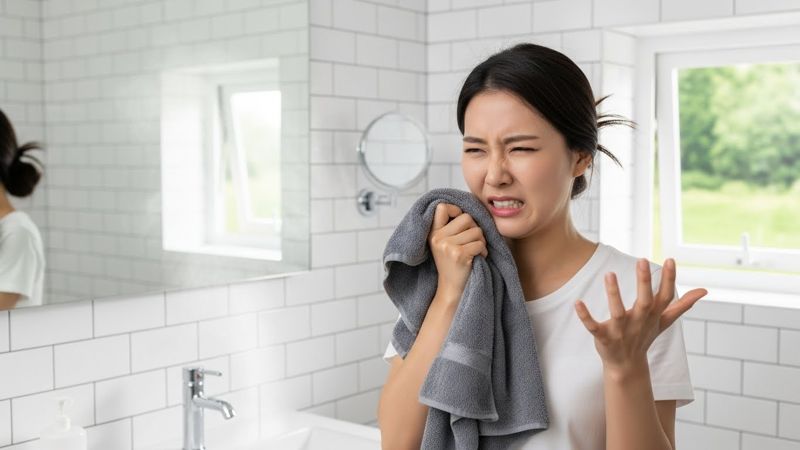
[Financial News] Because towels come into direct contact with our skin every day, maintaining proper hygiene is extremely important. However, it is very common for people to leave damp towels hanging in the bathroom after use and keep putting off doing the laundry. This habit not only worsens hygiene problems but can also shorten the lifespan of the towels themselves.
As a rule, a used towel that is wet should be washed immediately. If washing it every time is not realistic, you should at least hang it on a drying rack to dry first and then wash several towels together. Even in that case, it is advisable to wash them within one to two days so that they do not pile up excessively. If you notice even a faint, unusual odor coming from a towel, you should wash it right away, because odor is a sign that mold or bacteria have already begun to grow inside the fabric.
If you keep hanging up a towel that has been used multiple times, the risk of bacteria and mold growth increases.
If you leave a towel that has been used several times hanging continuously in a warm, humid bathroom, there is a high likelihood that bacteria and mold will develop, so it should be washed as quickly as possible. A bathroom, with its high moisture and humidity, is an ideal environment for microorganisms to thrive. Continuing to use a contaminated towel can put you at risk of developing various skin conditions on your face and body.
If pathogenic strains of E. coli proliferate, you may also be at risk of experiencing symptoms of food poisoning. In a real-world example, a research team at the Gyeonggi-do Institute of Health and Environment examined 22 towels used communally by children at daycare centers after handwashing (7 before use and 15 in use). They found coliform bacteria on 4 out of 7 towels (57.1%) before use, and on all 15 towels (100%) that were in use. Among the E. coli detected on these towels was Bacillus cereus, a bacterium known to cause food poisoning.
When washing towels, they should not be mixed with other clothing but washed separately. If you wash towels with densely woven loops together with other garments, dust and bacteria from the other laundry can transfer into the loops of the towel. In addition, friction during the wash cycle can cause the loops to unravel and damage the towel. It is recommended to use only an appropriate amount of fabric softener, because using too much can reduce the towel’s natural ability to absorb moisture.
If towels still smell after washing, bacteria or mold have likely already taken hold.
If a towel has visibly stained areas or a strong bad odor, and the smell lingers even after washing and drying, it is highly likely that bacteria or mold have already taken hold. In this case, dissolve a spoonful of sodium percarbonate in hot water, soak the towel for about 20 minutes, then hand-wash it until the mold is completely removed and dry it in direct sunlight. It is also effective to add a spoonful of vinegar or baking soda when running the washing machine, or to boil only the towels separately. Once the wash cycle is finished, drying should begin without delay. If natural air-drying is difficult, make active use of a dryer, dehumidifier, or fan.
Many people tend to keep using the same towel for years, but towels do in fact have a limited lifespan. Experts generally recommend a usage period of about one to two years. If you continue to use them for too long beyond that, the fiber structure of the towel breaks down and can actually become a source of irritation to the skin.
[email protected] Han Seung-gon Reporter