‘Winner’s Curse’ for Luxury Department Store Operator Saks Global as It Files for Bankruptcy Protection After Neiman Marcus Acquisition
- Input
- 2026-01-15 03:13:08
- Updated
- 2026-01-15 03:13:08
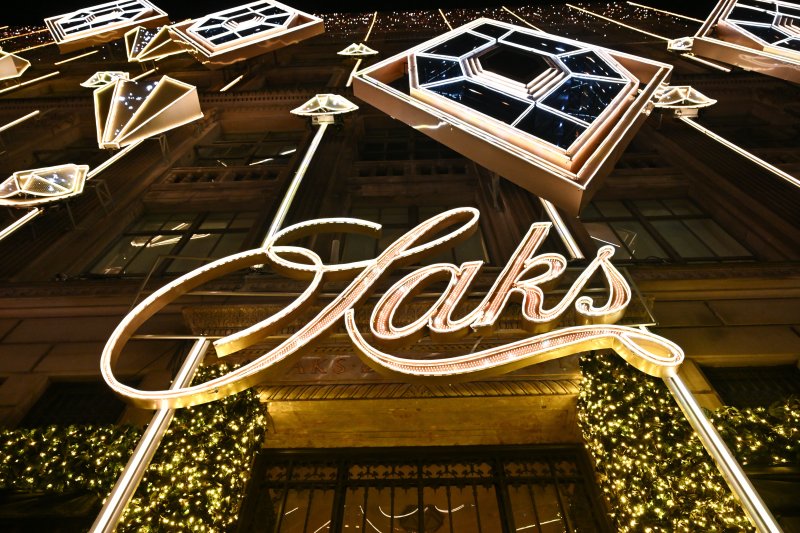
Saks Global, which operates luxury department store chains including Saks Fifth Avenue, Neiman Marcus, and Bergdorf Goodman, filed for bankruptcy protection under Chapter 11 of the U.S. Bankruptcy Code with the court on the 14th (local time).
The company has been sinking under 2.7 billion dollars in debt it took on when it acquired Neiman Marcus in 2024.
Saks beat out rivals such as Nordstrom, Macy's, and private equity firms Apollo Global Management and Pacific Investment Management Company LLC (PIMCO) to win Neiman Marcus, but ultimately fell victim to the so-called “winner’s curse.”
159-year-old luxury department store files for bankruptcy protection
Saks Global, whose origins lie in Saks Fifth Avenue, the 159-year-old luxury department store founded by Andrew Saks in 1867, filed for bankruptcy protection on the 14th with the United States Bankruptcy Court for the Southern District of Texas in Houston, Texas.
The United States District Court for the Southern District of Texas is known for handling corporate restructuring cases quickly and professionally, making it a popular venue. Since the headquarters of Neiman Marcus, which Saks acquired, is located in Dallas, Texas, there is no issue with jurisdiction.
Saks had recently failed to make timely debt payments, fueling speculation that it would file for bankruptcy protection.
Winner’s curse
The decisive trigger for Saks’s bankruptcy protection filing was its acquisition of Neiman Marcus in 2024.
Saks agreed to acquire Neiman Marcus for 2.7 billion dollars but had little cash on hand. It financed a large portion of the purchase price through high-interest loans and bond issuance. However, under high interest rates, its interest burden snowballed, and it ultimately sought bankruptcy protection.
The interest payments alone that Saks had to make each month reached 100 million dollars (about 146.5 billion won).
Vicious cycle and plunging sales
After acquiring Neiman Marcus, Saks entered a vicious cycle.
Because the money it earned from operations went straight to servicing interest, there was little left to spend on purchasing merchandise or improving services. It failed to pay suppliers on time, and angry luxury brands such as Chanel and Gucci cut off or sharply reduced supplies of new products, leaving store shelves sparsely stocked.
With few attractive products to buy, customers stopped coming. It was a vicious cycle.
The K-shaped polarization of the U.S. economy—where spending by the wealthy increases while consumption by the middle class and below declines—also dealt a blow.
The “luxury newcomers” (middle-class consumers) who had supported Saks’s sales closed their wallets amid inflation. Meanwhile, the “truly wealthy,” who have ample spending power, shifted from department stores to brand-owned boutiques and official online stores.
Ultra-high-end luxury brands such as LVMH Moët Hennessy Louis Vuitton (LVMH), Hermès, and Chanel increasingly preferred standalone boutiques and official online stores over department store concessions, tightening the squeeze on Saks.
In addition, high-end department stores like Saks are also losing customers to luxury-focused online shopping platforms.
Liquidation crisis averted, but large-scale restructuring inevitable
Saks has replaced its chief executive officer (CEO) and secured a large capital injection, thereby avoiding immediate liquidation.
With the bankruptcy filing, Richard Baker stepped down as CEO, and former Neiman Marcus executive Joffroy van Raemdonck became the new CEO. Key positions such as president and head of brand partnerships have been filled by former Neiman Marcus executives, resulting in a complete overhaul of top management.
Saks has also secured approximately 1.75 billion dollars in new financing, allowing it to avoid liquidation and continue operating. Its goal is to emerge from bankruptcy protection in the second half of this year.
In return, it is expected to close a number of underperforming locations among its roughly 200 stores over the coming months.
[email protected] Song Kyung-jae Reporter