"If He Becomes a C-Grade, He'll Be Taken" – Kia Tigers Face Dilemma Over Kim Ho-ryeong's Salary: Bold Raise vs. Sticking to Principles
- Input
- 2026-01-14 07:00:00
- Updated
- 2026-01-14 07:00:00
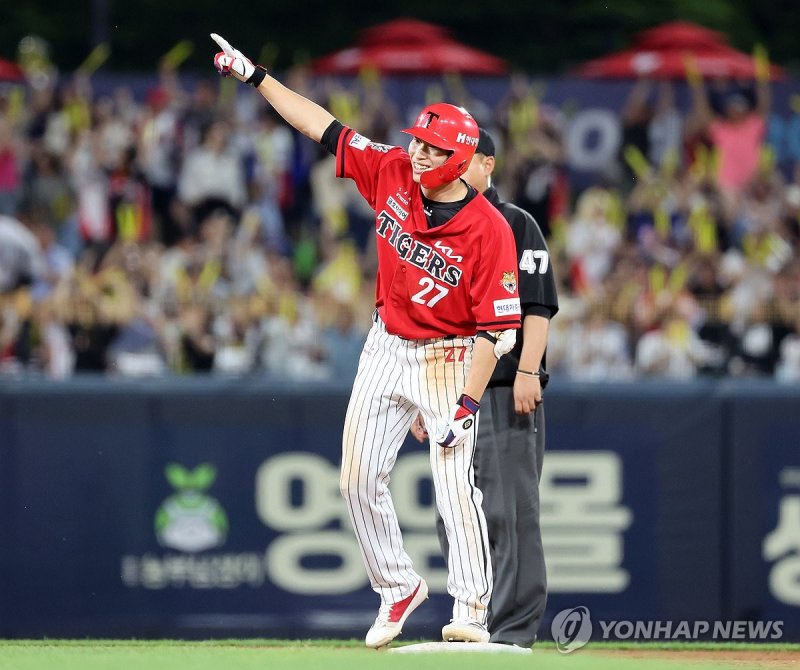
[Financial News] "Is raising his salary really the best path for the team, or is it right to keep it in check?"
The calculators in the Kia Tigers front office are working overtime. The club is facing a "happy headache" and at the same time a "troublesome dilemma" over outfielder Kim Ho-ryeong (34) as they head into salary negotiations for the 2026 season.
This is not simply about rewarding last season’s performance. The outcome of this salary negotiation will determine whether Kim, an impending free agent, ends up shackled with an A-grade FA label or given wings as a C-grade FA. The silent FA war has already begun at the salary negotiation table.
For Kim Ho-ryeong, 2025 was the highlight reel of his baseball career. He batted .283 with 6 home runs and 12 stolen bases. He shed the 11-year stigma of being a "half-complete player" and was reborn as a true two-way center fielder. He fell just two days short of the required first-team service time to qualify for FA, pushing his eligibility back by a year, but given the way the market is shaping up, that delay may actually turn out to be a once-in-a-lifetime opportunity.
In today’s KBO League, players up the middle—especially center fielders with reliable defense—are worth their weight in gold. Clubs in urgent need of outfield help, such as the Hanwha Eagles, are scouring the market with laser focus. If Kim, whose elite defensive range in center is dubbed the so-called "Ho-ryeong Zone," can once again come close to his goal of hitting .300 this year, he becomes an exceptionally attractive card.
Looking at the bigger picture, the Kia Tigers will be able to breathe a little easier in the upcoming Hot Stove League. Unlike this year, when a fierce battle for major external signings was expected, next year’s market is shaping up to be one in which they can respond more calmly. But "breathing room" does not mean they can relax. If anything, locking down their own players has become even more important. At the center of that effort are veteran catcher Kim Tae-gun and center fielder Kim Ho-ryeong.
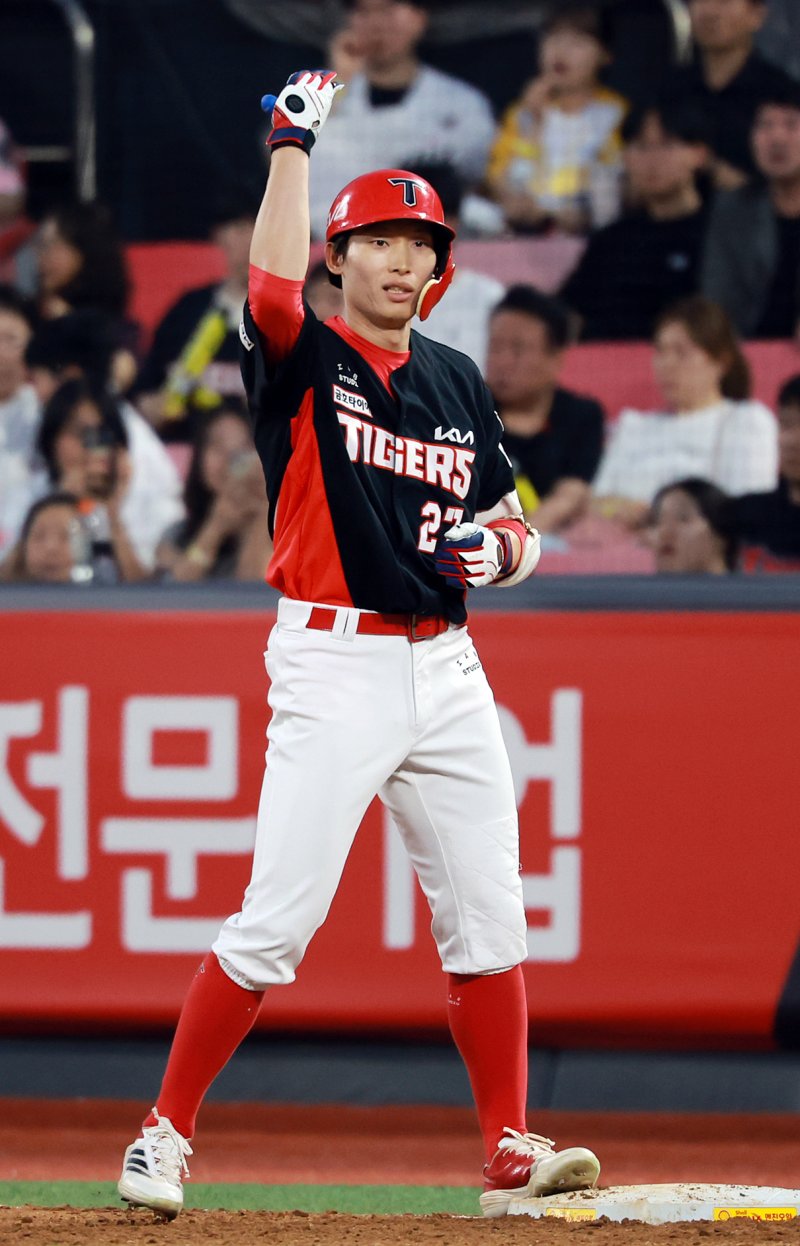
Kim Ho-ryeong is especially crucial because he is the starting center fielder the Kia Tigers finally managed to secure. While they are developing prospects like rookie Kim Min-gyu to prepare for the future, in terms of winning right now, Kim’s experience and defense are absolutely indispensable. From the club’s perspective, tightening their grip on in-house assets like Kim Ho-ryeong and Kim Tae-gun is a more critical task for next season than dealing with external variables.
The question is what strategy they should use to keep Kim. This is where the FA Grading System emerges as a key variable.
To sign an A-grade FA, a team must surrender one compensation player (outside the 20-man protected list) and pay 200% of the player’s previous-year salary. That is a massive barrier to entry for other clubs. In contrast, for a C-grade FA, there is no compensation player; the signing team only pays 150% of the previous-year salary. In other words, the door to a move swings wide open. A-grade status applies to players who rank within the top three in team salary over the past three years and within the top 30 in overall league salary over the same period. That is quite a distance from Kim Ho-ryeong, whose current salary is only 80 million won. B-grade applies to players who rank within the top 10 in team salary over the past three years and within the top 60 in overall league salary. C-grade applies to players who rank 11th or lower in team salary or 61st or lower in overall league salary over the past three years, or who are 35 years of age or older.
As seen in the cases of Cho Sang-woo (Kia Tigers) and Kim Beom-su (Hanwha Eagles), a borderline A-grade can become a shackle for the player. On the other hand, if Kim Ho-ryeong ends up classified as a C-grade FA, then given the high demand in the market, the probability of him moving teams would skyrocket.
This is exactly where the Kia Tigers’ dilemma deepens.
Paradoxically, if they want to firmly anchor Kim in place, they may need to hand him a bold raise in this round of salary talks and at least push him up to a B-grade FA, even if making him an A-grade is unrealistic. This is what is often called a "defensive salary increase." Because his base salary is so low, even that would require a fairly substantial percentage hike.
It would send the message, "We’ll pay you more, so don’t even think about leaving," while at the same time serving as a strategy to fundamentally block approaches from other clubs.
Given his relatively advanced age, if his compensation grade becomes too burdensome, it will be very difficult for him to move. From his standpoint, if he is aiming for a big payday in free agency, it actually works in his favor to keep his salary as low as possible for now.
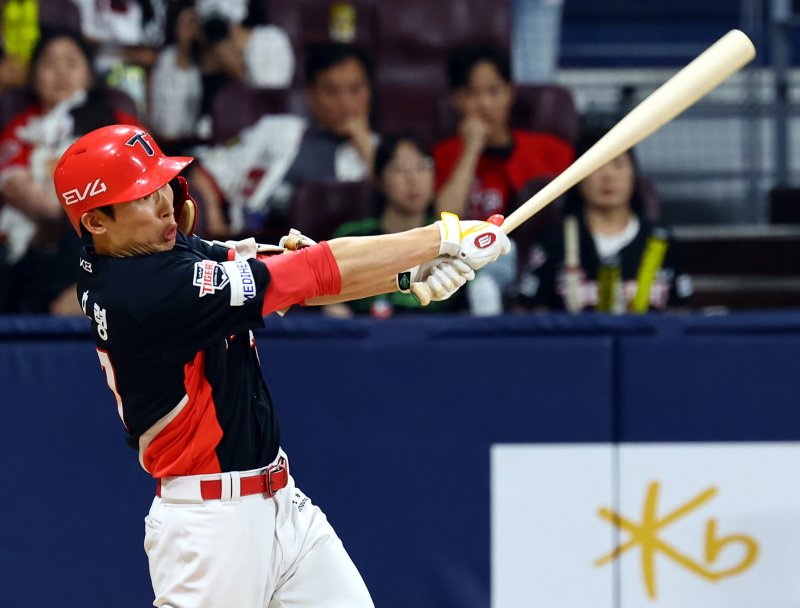
Conversely, what if the club sticks to the same principles it applied when it cut Kim Do-young’s salary and limits Kim Ho-ryeong to only a modest raise? In that case, Kim would go into the market with a lower compensation grade and be free to enjoy a flood of offers. From the player’s perspective, it is a strange situation in which he might welcome a lower raise now in order to chase a much bigger deal down the road, rather than gaining an extra 100 to 200 million won in the short term.
Throughout this Hot Stove League, the Kia Tigers have not deviated from their principles even once. There were no exceptions for Choi Hyoung-woo or for Kim Do-young. They have adhered to their hardline salary policy to the very end.
On the surface, the Kia Tigers may appear to be in a relatively comfortable position, but beneath that surface, a fierce strategic battle is unfolding this winter. What card will the club play to protect the clearly valuable in-house asset that is Kim Ho-ryeong?
The Korea Baseball Organization (KBO) announced on the 11th that there were no salary arbitration filings. That means all salaries have already been set.
The figure that will be stamped on Kim Ho-ryeong’s salary contract—those numbers could determine the entire landscape of next year’s Hot Stove League for the Kia Tigers.
jsi@fnnews.com Jeon Sang-il Reporter