Will Kim Jong Un’s daughter break the ‘glass ceiling’ of fourth-generation hereditary succession? Attention on three top-ranking women in the DPRK
- Input
- 2026-01-13 14:38:45
- Updated
- 2026-01-13 14:38:45
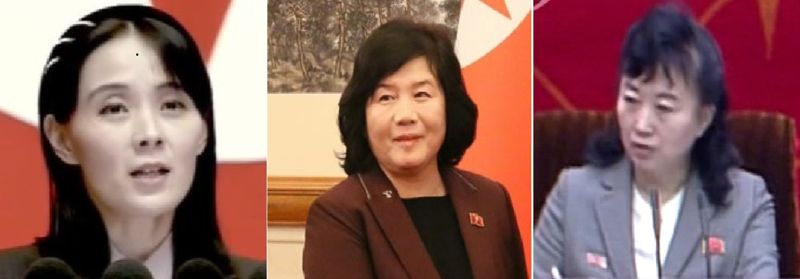
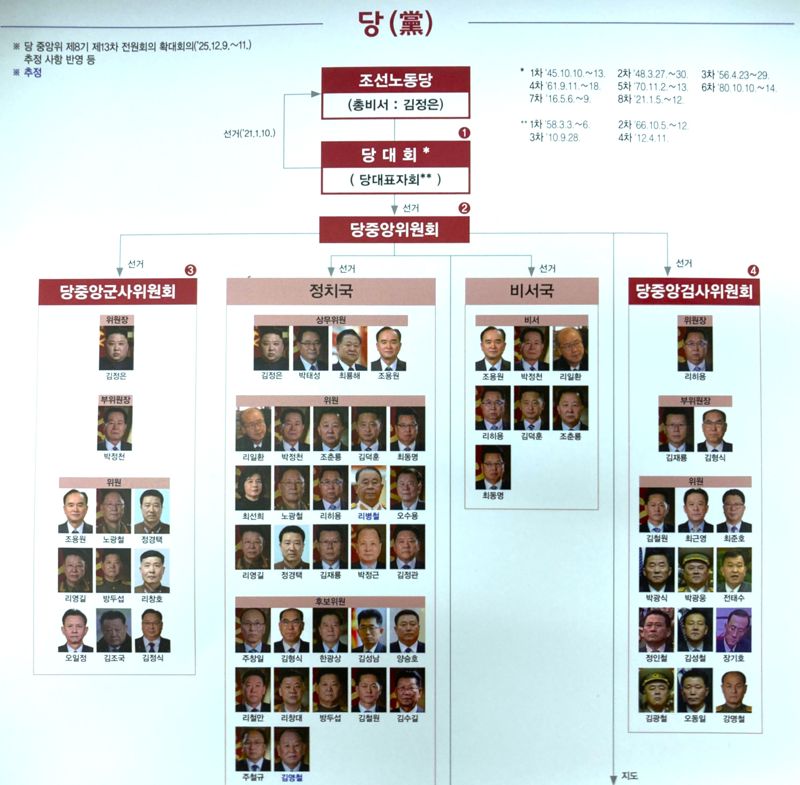
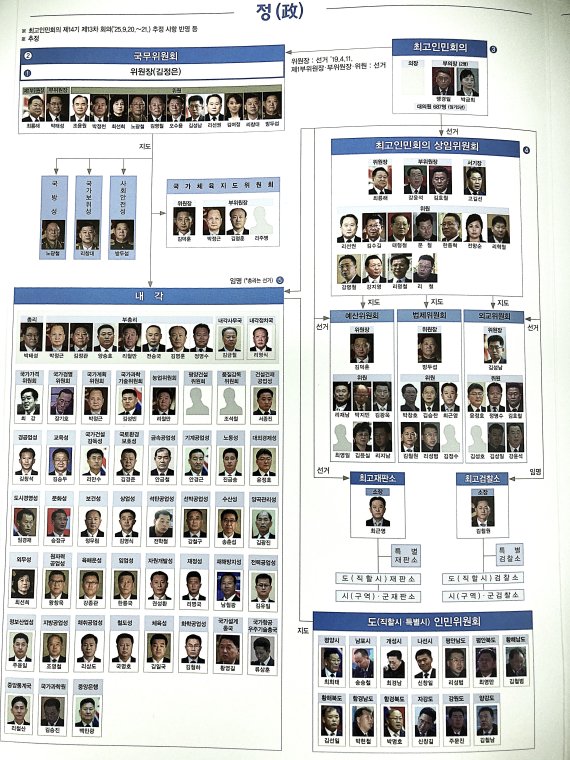
According to an analysis released on the 13th by the Ministry of Unification (MOU) on last year’s power structure in the DPRK, there are only three top-ranking female leaders active in the Workers' Party of Korea and the Cabinet of North Korea: Kim Yo Jong, a member of the State Affairs Commission of the Democratic People's Republic of Korea (State Affairs Commission), Foreign Minister Choe Son-hui, and Park Geum-hui, vice chair of the Supreme People's Assembly. Excluding Kim Yo Jong, who is the younger sister of Chairman Kim and part of the Baekdu bloodline, Choe Son-hui and Park Geum-hui are classified as holding the highest positions in the women’s power hierarchy.
Among them, Choe Son-hui is the only woman whose name appears in three key party and state bodies. She holds three titles — member of the State Affairs Commission, member of the Political Bureau of the Workers' Party of Korea, and foreign minister in the Cabinet of North Korea — making her a triple officeholder.
This is seen as a result of the trust placed in her by Kim Jong Un, who takes a keen interest in foreign policy. Three other female leaders have been identified, but they are somewhat removed from the very top of the power structure. These women work in specialized departments such as the Workers' Organizations Department of the Central Committee of the Workers' Party of Korea, the Party History Institute, and the Budget Committee.
The DPRK’s party–state power structure is organized around a protective system for the Kim family. A major reshuffle was recently carried out in the units responsible for guarding and protecting Kim Jong Un. Commanders were replaced in three of the four guard and protection units under his direct control. This change was confirmed through footage from the military parade marking the 80th anniversary of the founding of the Workers’ Party of Korea last October. Of the four key posts related to security, only the head of the Guard Bureau retained his position.
Observers interpret this as Kim Jong Un further strengthening the personal security of the Kim family in preparation for a fourth-generation hereditary succession.
The military command structure has also been reorganized. The position of first vice minister in the Ministry of National Defence, previously held by a single person, has been turned into a two-person system shared by General Kang Sun-nam (four-star) and Vice Minister of National Defense Cha Yong-bom, a lieutenant general (two-star). The post of first vice chief of the General Staff of the Korean People's Army has likewise been changed to a two-person system held by Colonel General Jeong Myeong-do (three-star) and Colonel General Kim Yong-bok. In particular, Kim Yong-bok is assessed to have risen in stature by leading the DPRK troops dispatched to Russia. The Commander of the Korean People's Navy was replaced, with Pak Kwang-sub taking over from Kim Myong-sik. This is interpreted as a punitive personnel move following last year’s failed launch of a new 5,000-ton-class destroyer. The Reconnaissance General Bureau (RGB), known as the agency in charge of operations against South Korea, has been reorganized as the Reconnaissance General Bureau (RGB), and the Korea Asia-Pacific Peace Committee (KAPPC), which served as the DPRK’s channel for talks with the United States in 2018, is believed to have been disbanded.
Regarding possible changes in the power leadership at the 9th Party Congress to be held next month, the MOU stated that it is difficult to predict. Some assessments both inside and outside the ministry suggest that, given the still-uncertain status of Kim Ju Ae as successor and the rapidly shifting global situation, a large-scale reshuffle of the leadership will be difficult.
[email protected] Kim Kyung-soo Reporter