Government Goes All-In on Internationalizing the South Korean Won... Accelerating Stablecoin Infrastructure Build-Out [Crypto Briefing]
- Input
- 2026-01-13 15:45:04
- Updated
- 2026-01-13 15:45:04
[Financial News] As the government accelerates efforts toward the internationalization of the Korean won, which it views as the core infrastructure for a Korean won stablecoin, the industry’s attention is increasingly focused on the initiative. The key is not only to establish issuance requirements through the General Act on Digital Assets (second-phase legislation), but also to prepare a regulatory framework for cross-border stablecoin transactions by revising the Foreign Exchange Transactions Act.
According to the National Assembly of the Republic of Korea and financial authorities on the 13th, the Financial Services Commission (FSC) plans to push ahead in the first quarter of this year with the second-phase digital asset legislation, which will include a regulatory framework for stablecoins, as part of the government’s 2026 Economic Growth Strategy. The purpose of this legislation is to secure the stability of the Korean won stablecoin and to manage and operate it at a level comparable to a legally recognized means of payment and settlement.
Specifically, the legislation is expected to codify a licensing regime for stablecoin issuers (including reviews of capital strength and financial soundness), a requirement to hold reserve assets of at least 100% of the amount issued, and a legally guaranteed right of redemption. This signals an intention to manage stablecoins effectively as a form of “digital South Korean won.” A total of eight related bills, including the government’s proposal drafted by the FSC, have been introduced in the National Assembly of the Republic of Korea and are awaiting deliberation.
The government views the Korean won stablecoin not merely as a virtual asset, but as a key driver for the internationalization of the Korean won. To this end, it plans to draw up a “roadmap for the internationalization of the Korean won” in the first half of this year and, in the second half, to begin revising the Foreign Exchange Transactions Act to provide institutional support for cross-border stablecoin transactions.
In a recent report, Seungho Lee, Senior Research Fellow at the Korea Capital Market Institute, noted that “despite 30 years of capital market liberalization, the South Korean won has remained constrained within a regulatory framework and has failed to function as an internationally exchangeable currency.” He analyzed that “the internationalization of the Korean won is a far more proactive and efficient way to respond to crises than traditional methods such as increasing foreign exchange reserves.”
In particular, offshore transactions in the South Korean won have been strictly limited, resulting in low usability in the global digital finance market. Through the forthcoming roadmap, the government intends to dramatically improve foreign investors’ access to the South Korean won and to expand cross-border won payment and settlement, as well as offshore demand for won-denominated financial services.
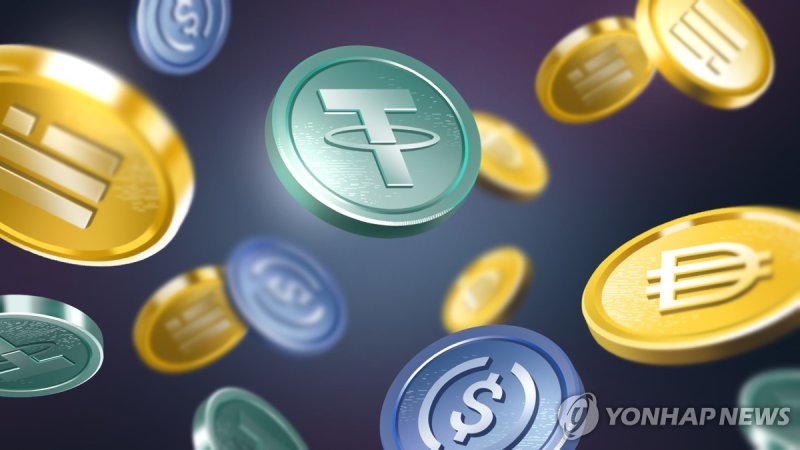
As policymakers’ roadmap becomes more concrete, industry attention is turning to the details of the rules governing cross-border transactions. A key flashpoint is how to regulate the domestic circulation and offshore transfer of dollar-based stablecoins that dominate the global market, such as Tether (USDT) and USD Coin (USDC) issued by Circle. Observers point out that only by striking the right balance between Anti-Money Laundering (AML) requirements and foreign exchange soundness can a Korean won stablecoin secure genuine global competitiveness.
An industry official stressed, “For a domestic Korean won stablecoin to become self-sustaining, it is essential to design a regulatory framework that is equitable with that applied to major overseas stablecoins.” The official added, “The success or failure of the initiative will hinge on how rigorously the Foreign Exchange Transactions Act revision process addresses AML controls for stablecoin-based transactions and mechanisms to manage volatility in the foreign exchange market.”
KB Securities Co., Ltd. also drew attention to the infrastructure enhancement plans included in the Bank of Korea (BOK)’s monetary and credit policy operation guidelines for this year. Kim Ji-won, a researcher at KB Securities Co., Ltd., said, “Notable measures include extending the operating hours of the Bank of Korea Financial Wire Network (BOK-Wire+) and establishing a 24-hour offshore won payment and settlement system.” Kim added, “If an environment is created in which the South Korean won can be bought and sold anytime, anywhere, stablecoins will play a role in crossing borders and supporting the internationalization of the Korean won.”
[email protected] Kim Mi-hee Reporter