"We Took a Taxi Because There Were No Buses": Citywide Seoul Bus Strike Triggers Commuter Chaos in Freezing Weather
- Input
- 2026-01-13 07:21:26
- Updated
- 2026-01-13 07:21:26
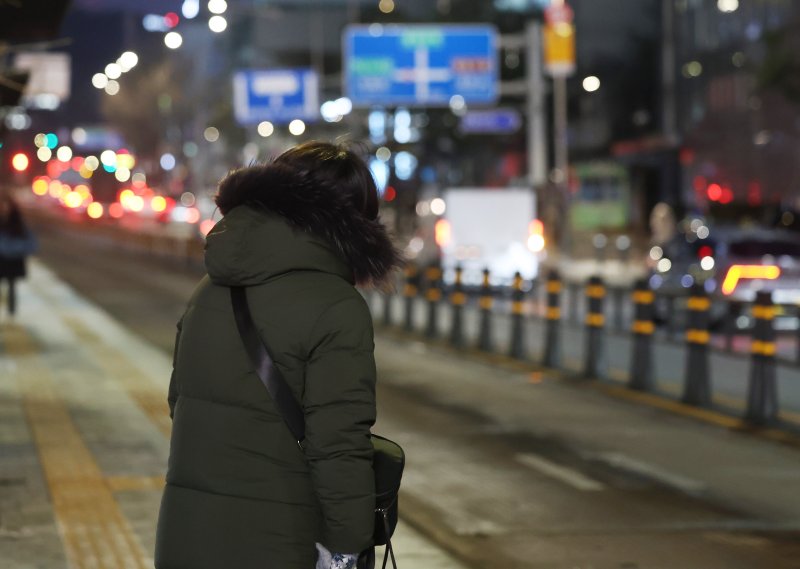
[Financial News]"Because no buses were running, we ladies ended up pooling our money and taking a taxi. What a mess in the dead of winter." This was how a woman in her seventies, who normally takes the first bus of the day to a cleaning job in an office building in the Gangnam area of Seoul, described the situation.The Seoul City Bus Workers' Union began its strike with the first buses of the day on the 13th. This is the first time in about two years, since 2024, that city buses in Seoul have come to a halt due to a strike, raising the prospect of commuter chaos in the morning rush hour as temperatures drop to a low of minus 4 degrees Celsius.
Strike from the first buses on the 13th... "The city tells us to use public transport, but there are no buses"
In the early hours of the 13th, at around 1:30 a.m., the Seoul City Bus Workers' Union of the Federation of Korean Automobile Workers' Unions (hereinafter the bus union) and management, represented by the Seoul City Bus Transportation Business Association, declared that negotiations over their wage and collective bargaining agreement (CBA) had broken down.
Labor and management had been holding a follow-up mediation session of the special mediation committee on the CBA from about 3 p.m. the previous day at the Seoul Regional Labor Relations Commission in Yeongdeungpo District. However, after more than 10 hours of marathon negotiations without reaching common ground, the union decided to proceed with a general strike as scheduled from 4 a.m. that day.
Currently, about 7,000 city buses operate on 394 routes run by 64 companies in Seoul. All 64 companies are part of the bus union, and the union has already stated that even if a last-minute deal were reached, services would not resume until the first buses on the 14th. As a result, city bus operations are effectively suspended for the entire day on the 13th.
On the morning of the 13th, when the strike began, many commuters who usually rely on the first buses of the day struggled to find alternative transportation. A worker identified as A, who works as a cleaner in a building in the Gangnam area of Seoul, said, "I start work early, so I normally take the bus to get to work, but today there were no buses, so I had to come by taxi."
On X (formerly Twitter) and other online communities, some users shared reports that a few buses were operating without collecting fares in connection with the strike. Commenters expressed concern about commuting in the cold snap, saying things like, "Because of yesterday's snowfall, the Seoul Metropolitan Government keeps sending safety alert text messages telling us to use public transportation, but now the buses are on strike. Is this some kind of comedy?" and "I'm afraid the subway alone is going to be packed to bursting on the way to work."
Meanwhile, the Seoul Metropolitan Government is implementing emergency transport measures from 4 a.m., when the first buses would normally start running, in an effort to minimize inconvenience during the morning and evening commute by deploying alternative transportation. Subway services during peak commuting hours will be extended by one hour, operating from 7 a.m. to 10 a.m. with additional trains, and late-night service will also be extended until 2 a.m. the following day. In total, there will be 172 additional subway runs per day. In addition, to improve connections to subway stations, the city's 25 autonomous districts plan to operate free shuttle buses.
Labor and management fail to bridge gap over ordinary wage... CBA talks collapse
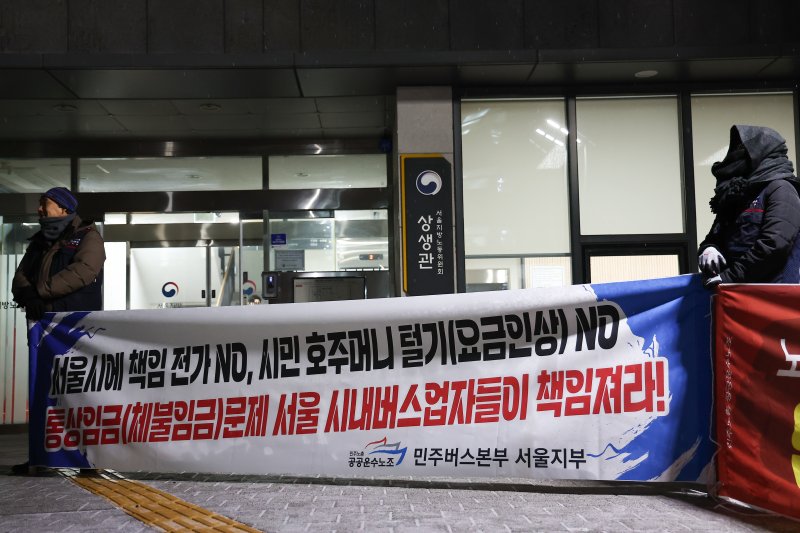
Labor and management remained far apart over the issue of the ordinary wage. Management proposed an overall wage increase in the 10-percent range and suggested introducing a new wage structure that would incorporate bonuses into base pay. The aim, they said, was to bring the excessive labor cost burden arising from recognizing bonuses as part of the ordinary wage—following a ruling by the Supreme Court of Korea—down to a more reasonable level.
The union, however, argued that additional wage payments resulting from recognizing bonuses as part of the ordinary wage should be excluded from the current round of talks. Instead, it demanded a 3% wage increase without any overhaul of the wage structure, an extension of the retirement age to 65, and the elimination of wage discrimination.
Management countered that if it accepted the union's proposal of a 3% wage increase and later recognized bonuses as part of the ordinary wage, actual wages would effectively rise by about 20%, calling the union's demands excessive. In the end, the two sides failed to narrow their differences.
[email protected] Kim Hee-sun Reporter