"Is the Next Fed Chair Paying Attention?" What Trump Is Aiming for With the Criminal Probe Into Powell
- Input
- 2026-01-13 04:48:23
- Updated
- 2026-01-13 04:48:23
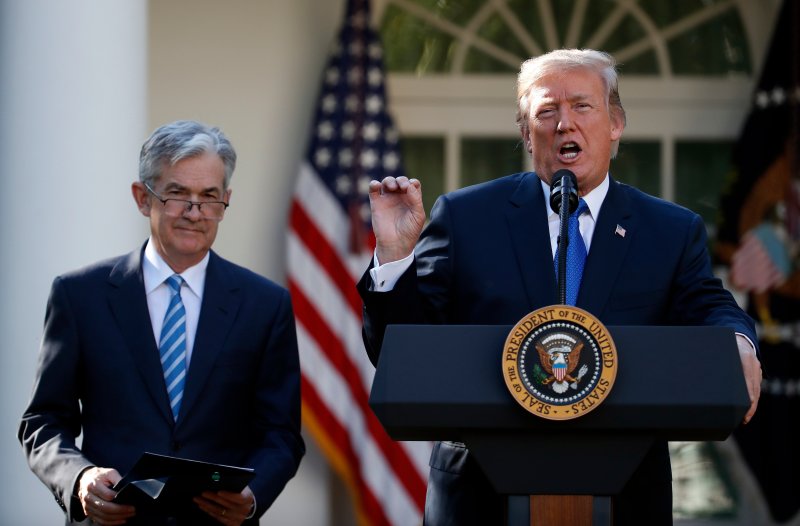
The United States Department of Justice (DOJ) is investigating Fed Chair Jerome Hayden Powell on allegations of budget embezzlement, abuse of power, and perjury before Congress, and many analysts say this is effectively a politically ordered investigation at the behest of President Donald Trump.
The Wall Street Journal (WSJ) reported on the 12th (local time) that what President Trump is targeting through the probe into Fed Chair Powell is neither the Fed’s headquarters, nor Powell himself, nor even interest rate cuts. Rather, it assessed that this is purely a move aimed at consolidating power.
Having returned to office and reclaimed power in January last year, Trump concluded that during his first term his policy agenda was thwarted because federal agencies refused to carry out his directives on legal grounds. In his second term, he has been ousting career civil servants who oppose him and filling those posts with loyalists.
Trump first purged the Democratic commissioners inside the Federal Trade Commission (FTC), brushing aside the relevant statutes. He has also fired large numbers of officials in the DOJ, the Department of Defense, and law enforcement agencies whose loyalty he deemed questionable. He has trampled on Congress’s power of the purse as well.
The current investigation into Powell is being interpreted as the final step in seizing control of the Fed, the last remaining stronghold.
Reining In the Next Fed Chair
Despite criticism that it is carrying out a politically ordered investigation from the president, U.S. federal prosecutors have launched a sweeping probe into the Fed chair.
Using the massive cost overruns that occurred during the renovation of the Fed’s headquarters in Washington, D.C., as a pretext, prosecutors are examining whether Powell neglected or approved wasteful spending and thereby caused financial losses to the federal government. They are also investigating allegations that Powell made untruthful or misleading statements about this renovation project when he testified before Congress.
No investigation has been opened into the cost of building a White House ballroom, which doubled from 200 million dollars to 400 million dollars, or into the more than 60 billion dollars in federal funds poured into the border wall that was supposed to be paid for by Mexico. Yet prosecutors have singled out Powell for investigation, fueling suspicions that this is a politically motivated, targeted probe.
This is being interpreted as Trump’s attempt to use prosecutors to bring the Fed’s interest rate decision-making directly under his control. The fact that Powell is scheduled to step down as chair on May 23 suggests that this pressure campaign is in effect a powerful message not to Powell himself, but to the next Fed chair.
With Trump’s economic adviser Kevin Hassett and Fed Governor Kevin Warsh being mentioned as leading candidates for the next Fed chair, the message to them is to fall in line on their own. Both men insist that, if they become Fed chair, they will set monetary policy independently, but through this investigation Trump is issuing a stark warning that anyone who defies the president’s wishes could end up like Powell.
Through this probe, Trump has made it unmistakably clear to senior Fed officials that he can manufacture grounds for dismissal and use them as leverage. He is inducing self-censorship across the Fed and other federal agencies so that they will refrain from defying the president’s will.
The Fed’s independence now appears likely to be reduced to a mere scrap of paper.
Turning Federal Agencies Into Direct Arms of the White House?
With Trump now shaking even the Fed’s independence, fears that U.S. federal agencies will effectively become departments directly under the president’s command are turning into reality.
This would mean a shift beyond indirect control through senior appointments to a “unitary executive” system in which the president directly commands each department. Experts warn that in such a scenario, all policy would be subject to the president’s personal will and could change at any time, resulting in an unstable form of government.
From the start of his presidency, Trump had his eye on wielding precisely this kind of power.
He stripped the DOJ of its independence and built a direct-control system, laying the groundwork for prosecutors to carry out investigations ordered from the top at his direction.
He dismissed Jack Smith, the special counsel who had investigated him, and then had him indicted on charges including abuse of authority.
He is also putting pressure on Alvin Bragg, the Manhattan District Attorney who saddled him with the ignominy of a “mug shot,” and on Letitia James, the New York State attorney general. Because they are elected local officials rather than federal employees and he cannot fire them, he is resorting to indirect tactics such as pushing to cut New York State’s federal funding or to have their law licenses revoked.
These relentless attacks are spreading the perception within the DOJ, other law enforcement bodies, and federal agencies that crossing Trump means ruin or severe hardship, and fueling concern that a culture of unconditionally obeying presidential orders will take root.
In the end, the DOJ’s investigation of Powell is expected to serve as a stepping stone for Trump to realize his desire for an imperial presidency and a fully unitary executive in which the entire administration functions as his personal instrument.
[email protected] Song Kyung-jae Reporter