“From soup joints to sushi bars, everyone is selling ‘Dubai Chewy Cookie’... the craze is bordering on madness as even ingredient prices soar”
- Input
- 2026-01-13 05:35:00
- Updated
- 2026-01-13 05:35:00
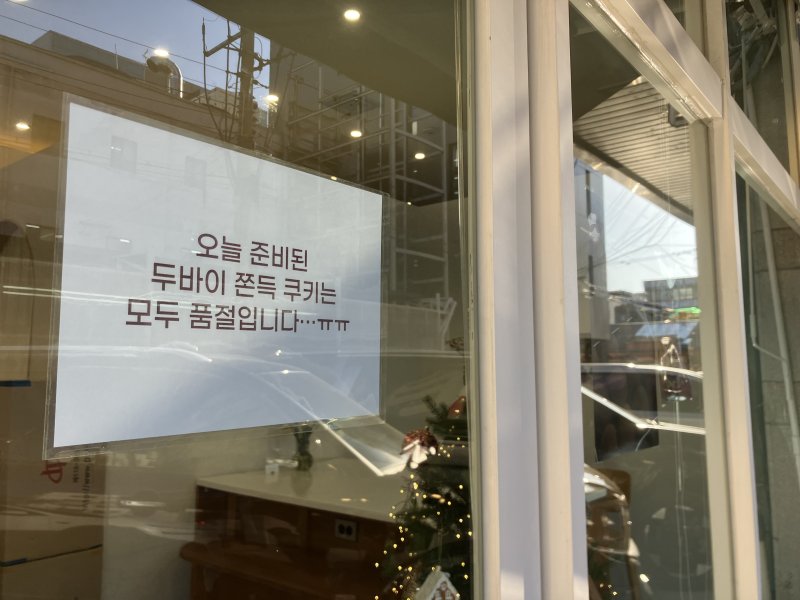
[Financial News] The Republic of Korea has been swept up in a “Dubai Chewy Cookie” craze. Inspired by the Dubai Chocolate that was all the rage in 2024, the Dubai Chewy Cookie, created in Korea, has triggered a rush among self-employed business owners to jump into sales, while consumers are lining up before opening hours and swallowing steep price hikes to get their hands on it.
The Dubai Chewy Cookie is a dessert made by mixing kadayif (a thin noodle-like pastry common in the Middle East), the main ingredient in Dubai Chocolate, with pistachio cream for the filling, then wrapping it into a ball with marshmallow mixed with cocoa powder. Although it is called a cookie, its soft and chewy texture makes it closer to rice cake, and it is characterized by a crisp yet sweet and nutty flavor.
The popularity of the Dubai Chewy Cookie exploded after Jang Won-young of the group Ive posted a photo of it on her Instagram story last September, and it began to go viral, especially on social media. As the dessert gained traction, bakeries and cafés across the country started selling it, but demand surged so sharply that “open-run” purchases—showing up right at opening time—became essential.
Its popularity is also clearly visible on delivery apps. In the first week of this month, the number of Dubai Chewy Cookie pickup orders placed through Baedal Minjok jumped 321% from a month earlier. The number of searches for Dubai Chewy Cookie in December last year was 25 times higher than two months before.
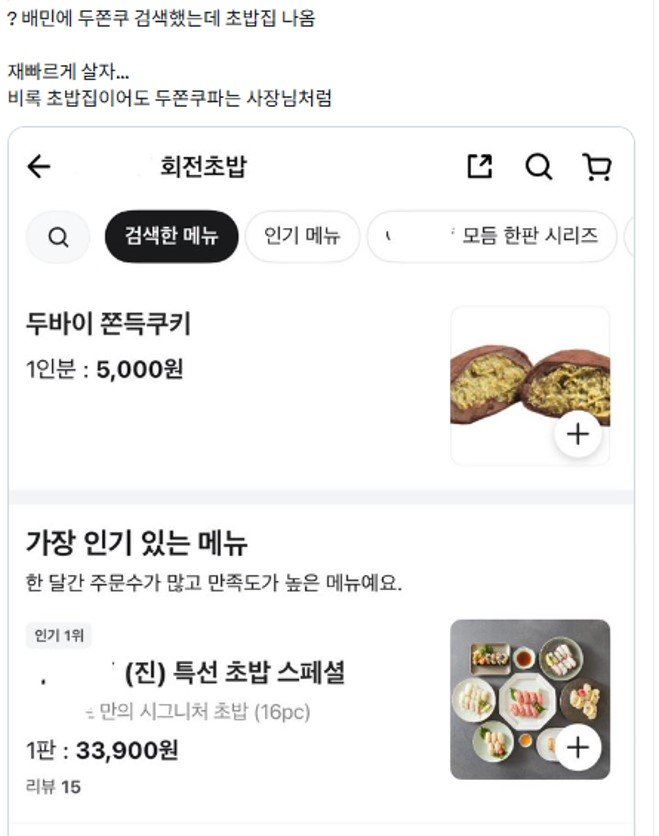
As the Dubai Chewy Cookie craze reaches fever pitch, more and more ordinary restaurants, not just dessert shops or cafés, are adding it to their menus. A post on January 7 in the small-business owners’ community Apeunikka Sajangida, titled “The local monkfish stew place is selling Dubai Chewy Cookie,” is a prime example. There have been multiple reports that sushi restaurants, soup-and-rice eateries, eel restaurants, cold-noodle shops, and many other types of establishments are now selling the dessert.
Looking at the types of businesses offering Dubai Chewy Cookie, many either sell it directly through shop-in-shop arrangements or use it as a kind of “loss leader” to drive search traffic. In a sluggish economy where consumer sentiment is depressed, the Dubai Chewy Cookie boom can be seen as a welcome lifeline for self-employed business owners.
There are also growing concerns. According to Yonhap News Agency, some self-employed business owners say that supplies of Dubai Chewy Cookie ingredients such as pistachio are unstable and ingredient costs have surged, raising doubts over how long the dessert’s popularity can last. Many also argue that price hikes are inevitable due to rising raw material costs and unstable ingredient supplies, as well as the higher won–dollar exchange rate.
One shop owner who sells Dubai Chewy Cookie lamented, “Pistachio prices have risen the most—what used to cost 45,000 won per kilogram is now 100,000 won, more than double.” On top of that, factors such as higher raw material prices and the rising won–dollar exchange rate (a weaker won) have pushed up the retail price of pistachios that consumers pay.
In fact, one major discount chain has raised its pistachio prices by 20% since the beginning of this year. At that retailer, the consumer price for 400 grams of shelled pistachios climbed from about 18,000 won in 2024 to 20,000 won last year, and has risen further to 24,000 won this year. The current international price of U.S. pistachios (shelled kernels) is about 12 dollars per pound, roughly 1.5 times the level of a year ago, when it hovered around 8 dollars.
[email protected] Kim Hee-sun Reporter