"My period ended in just two hours" says woman in her 20s; turns out it was due to this [Health Talk]
- Input
- 2026-01-13 04:10:00
- Updated
- 2026-01-13 04:10:00
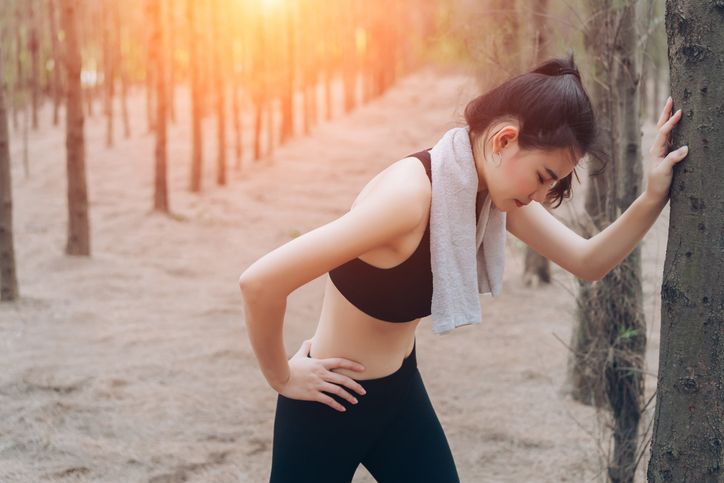
[Financial News] A woman in her 20s in China has revealed that she developed exercise-induced amenorrhea, a condition in which reproductive function shuts down, after engaging in high-intensity workouts and experiencing rapid weight loss.
According to the South China Morning Post (SCMP) on the 12th, a 23-year-old woman, identified only by her surname A, who lives in Zhejiang Province in eastern China, was recently told in a hospital examination that her female hormone levels had dropped to those typically seen in women in their 50s.
Ms. A said, "The doctor told me I had clear signs of kidney deficiency and strongly advised me to stop exercising," adding, "I was prescribed a large amount of herbal medicine to help restore balance in my body."
She explained that after her weight increased to 65 kilograms due to binge eating, she became excessively obsessed with working out over the course of several months. "I exercised about six times a week for roughly 70 minutes each session, and during this period my menstrual flow gradually decreased, to the point that recently my period ended in just two hours," Ms. A said.
Obstetrician-gynecologist Dr. Pan Yibing said, "Ms. A’s condition is exercise-induced amenorrhea, which occurs when energy intake is insufficient compared with the amount of energy being expended."
He continued, "When the body senses an energy crisis, it temporarily shuts down reproductive function in order to survive. The secretion of gonadotropins from the brain decreases, which lowers female hormone levels, and as ovulation stops, menstruation can be delayed or cease altogether."
He added, "This type of amenorrhea is reversible, so if you adjust exercise intensity and restore energy balance, menstruation can return. To maintain a normal menstrual cycle, body fat percentage generally needs to be at least around 17%."
High-intensity exercise, stress, and rapid dieting increase amenorrhea risk
Dr. Liu Haiyuan of Peking Union Medical College Hospital warned, "If you lose more than 15 kilograms in a short period of time, the risk of amenorrhea becomes very high." He also pointed out, "If you take health supplements containing female hormones without consulting a doctor, it may increase your risk of breast cancer."
He advised, "It is best to stop high-intensity exercise for at least two to three months and instead do relaxing activities such as yoga about three to four times a week."
In fact, amenorrhea is known to be common among female athletes. In their case, high-intensity training and stress from a highly competitive sports environment can suppress the central nervous system and impair reproductive function.
When exercise volume is high, imbalances can occur in hormone secretion and energy metabolism. When the body senses an energy crisis, it temporarily shuts down reproductive function as a defense mechanism.
The impact of stress on the menstrual cycle extends beyond hormonal changes and affects overall health. Under stress, the body releases stress hormones such as adrenaline and cortisol to adapt. Over time, these hormones can suppress the immune and reproductive systems, which may lead to irregular menstruation or amenorrhea.
Problems related to women’s reproductive health, including exercise-induced amenorrhea, can lead in the long term to other health issues such as osteoporosis and cardiovascular disease. Therefore, it is important to ensure adequate nutrition and to follow a well-balanced training plan.
moon@fnnews.com Moon Young-jin Reporter