[Editorial] President Lee Should Also Pursue Pragmatic, National-Interest-First Diplomacy with Japan
- Input
- 2026-01-12 18:32:08
- Updated
- 2026-01-12 18:32:08
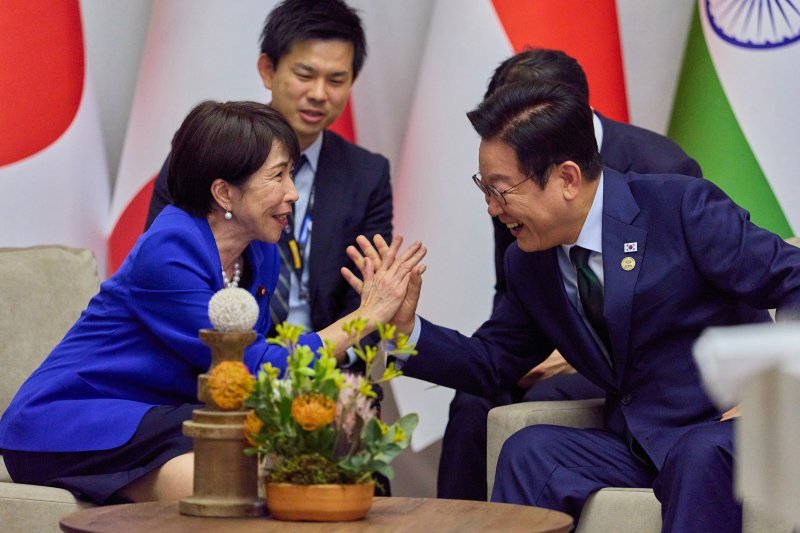
President Lee’s back-to-back visits to China and Japan are taking place at a time of rapidly shifting international dynamics, which makes them highly significant. Under orders from United States of America (U.S.) President Donald Trump, Venezuelan President Nicolás Maduro has been brought into custody, and as confrontation between China and Japan over the security of Taiwan intensifies, uncertainty in the diplomatic and security landscape is growing further. In this context, President Lee’s consecutive trips to China and Japan appear to reflect a strategic decision to broaden communication with neighboring countries rather than leaning toward any single power.
The upcoming South Korea–Japan summit is expected to address both future-oriented cooperation and historical issues. Alongside discussions on cooperation in various economic sectors such as artificial intelligence (AI), semiconductors, and cultural content, the issue of recovering the remains of some 130 Koreans who were forcibly mobilized to work at the Josei Coal Mine during the Pacific War is also highly likely to be raised as an agenda item. Because a large number of Japanese managers as well as Korean laborers were submerged in the 1942 mine collapse, the two countries should cooperate on a joint investigation from a humanitarian standpoint and use it as an opportunity to advance the resolution of historical disputes.
One particularly noteworthy agenda item is whether South Korea will join the Comprehensive and Progressive Agreement for Trans-Pacific Partnership (CPTPP), which is led by Japan. As the free trade order weakens and protectionist, country-first policies spread, the CPTPP is one of the alternatives South Korea can consider. However, South Korea’s long-standing ban on imports of seafood from eight Japanese prefectures following the Fukushima Daiichi nuclear disaster, as well as the issue of opening its agricultural market, is likely to emerge as a major point of contention during the accession process.
The messages that China and Japan are currently sending to South Korea are clear. China, through export controls on rare-earth elements (REE), is seeking to prevent South Korea from tilting toward the U.S.–Japan camp and appears intent on using economic interests as leverage to shape its diplomatic messaging. Japan, by contrast, characterizes China’s moves as a campaign to sow division and is trying to keep South Korea firmly within the democratic camp. The series of actions by both China and Japan is aimed at treating South Korea not as a mere strategic buffer zone but as a country that must make a definitive choice.
This diplomatic environment demands a responsible attitude not only from South Korea but also from Japan. Japan, too, must demonstrate its willingness to use this summit as an opportunity to promote stability and shared prosperity in Northeast Asia. Recently, Prime Minister Takaichi made the outrageous claim in her own parliament that Dokdo is inherently Japanese territory. With such irrational rhetoric, it is difficult to expect a future-oriented relationship between South Korea and Japan.
As U.S.–China tensions spill over into the military and security realms, the international order is being rapidly reshaped. For South Korea, which finds it difficult to side exclusively with either camp, the reality is that it must cooperate with its ally on security while, in the areas of the economy and trade, seeking multilateral cooperation that is not constrained by ideology. In such circumstances, what is needed most is strategic flexibility that does not become captive to ideology. As the president and his government head to Japan, they must prepare a comprehensive diplomatic strategy that separates historical issues from future cooperation while at the same time linking economic, security, and trade agendas. Only diplomacy that firmly upholds principles yet pursues pragmatic solutions can serve as the most reliable means of advancing the national interest in an age of uncertainty.