A Single Tattoo Led to a Close Call: Man in His 30s Develops Alopecia Universalis, Anhidrosis, and Vitiligo [Health Talk]
- Input
- 2026-01-13 04:40:00
- Updated
- 2026-01-13 04:40:00
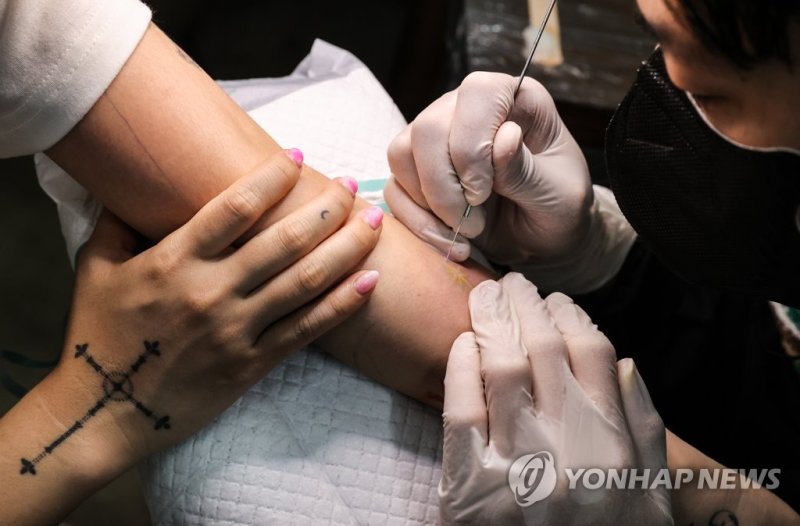
[Financial News] More and more people are getting tattoos as a way to express their individuality. However, a recent case from Poland has drawn attention in the international medical community: a man who used red ink for a tattoo developed rare complications, including his entire skin peeling and loss of all body hair.
"After getting a red tattoo, his skin peeled and he lost his hair"...tattooed skin removed surgically
According to The Independent and other British media on the 9th (local time), the international journal Clinics and Practice recently reported the case of a 36-year-old Polish man who suffered severe complications after receiving a tattoo done with red ink.
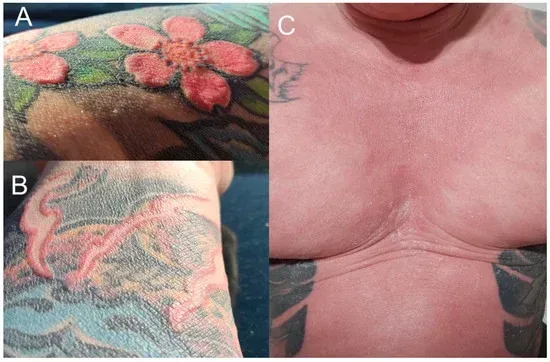
Previously in good health, the man had a red flower tattooed on his right arm in 2020. Starting from the tattooed area, the redness spread and his skin began to peel all over his body. He was diagnosed with exfoliative dermatitis (erythroderma).
In addition, about two months after the onset of erythroderma, he developed alopecia universalis, losing not only the hair on his scalp but also his eyebrows, underarm hair, and all other body hair. He also developed anhidrosis, a complete inability to sweat, which caused severe difficulty in regulating his body temperature.
The medical team suspected an allergic reaction to the tattoo ink and attempted treatment with high-dose steroids and immunosuppressants, but his condition did not improve. Tests confirmed that he had an extreme hypersensitivity reaction to components of the red tattoo ink.
Ultimately, the doctors surgically removed all of the skin in the tattooed area that had triggered the reaction and administered immunomodulatory drugs alongside other medications. As a result, the patient’s scalp hair and eyebrows grew back, but he developed vitiligo due to destruction of skin pigment, and his anhidrosis did not resolve. This was because his sweat glands had been destroyed and replaced by scar tissue.
Red tattoo ink triggers an attack by the immune system
The team at Wroclaw Medical University in Poland, who reported the case in the journal, stated that testing “confirmed a hypersensitivity reaction to components of the red tattoo ink,” adding, “This is the first time we have seen such an extensive reaction.”
Earlier in May, a research team at Lund University in Sweden that analyzed the relationship between tattoos and lymphoma warned, “Carcinogenic chemicals contained in tattoo ink can trigger reactions when injected into the skin. The body recognizes the ink as a foreign substance, activates the immune system, and induces low-grade inflammation,” noting in particular that red-toned inks are more likely to cause skin irritation and inflammation.
Red ink is considered especially risky because the metal components and organic pigments added to produce the red color—such as mercuric sulfide and iron oxide—can stimulate the immune system. The European Union (EU) has restricted the use of harmful chemicals in tattoo inks since January 2022, but this man got his tattoo two years before those regulations took effect, so it is possible that compounds now banned were included in the ink he received.
The man now uses a spray bottle to help regulate his body temperature and is reported to have impaired exercise capacity, including increased urine output since developing anhidrosis. The medical team emphasized, “People with allergies or autoimmune diseases should be particularly aware of potential side effects from tattoo ink,” and added, “It is advisable to consult a dermatologist before getting a tattoo.”
[email protected] Kim Hee-sun Reporter