Lee administration struggles to join Japan-led CPTPP: No ministry approval or National Assembly report even a day before visit to Japan
- Input
- 2026-01-12 15:02:10
- Updated
- 2026-01-12 15:02:10
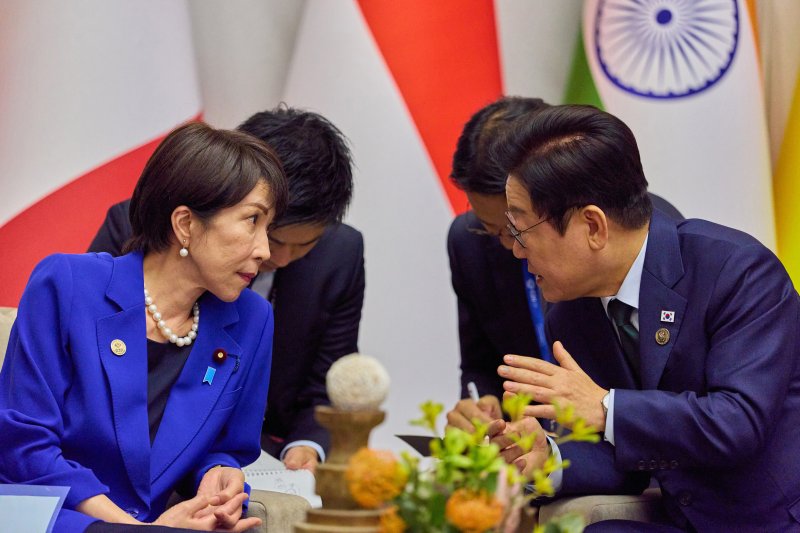
According to this newspaper’s reporting on the 12th, the final domestic procedural steps for joining the CPTPP — a resolution at the Ministerial Meeting on External Economic Affairs and reporting to the National Assembly of the Republic of Korea — had still not been completed as of that day. It is understood that the process stalled at the final hurdle of reporting to the National Assembly during inter-ministerial coordination.
The Ministerial Meeting on External Economic Affairs on CPTPP accession centrally involves a joint resolution by the Ministry of Foreign Affairs, the Ministry of Trade, Industry and Energy (MOTIE), the Ministry of Economy and Finance, the Ministry of Agriculture, Food and Rural Affairs (MAFRA), and the Ministry of Oceans and Fisheries (MOF). Without an agreed resolution among these ministries, reporting to the National Assembly cannot proceed. As a result, the National Assembly report has been pushed back until after the Korea–Japan summit.
Since the launch of the Lee Jae-myung administration, the Ministry of Trade, Industry and Energy (MOTIE) and the Ministry of Foreign Affairs have been working to formalize and prepare South Korea’s accession to the CPTPP. However, due to coordination issues among ministries and a cautious stance within the Prime Minister's Office, the process has not reached the resolution stage.
Reporting to the National Assembly of the Republic of Korea is a legally required step for joining the CPTPP. Under the Act on the Conclusion and Implementation of Commercial Treaties, the government must report its accession plan to the National Assembly. After the Ministerial Meeting on External Economic Affairs adopts a resolution, the government reports the plan to standing committees such as the Trade, Industry, Energy, SMEs and Startups Committee and the Foreign Affairs and Unification Committee. Once this reporting is completed, the domestic procedures are finalized and an official application for accession can be submitted.
Foreign Minister Cho Hyun of the Republic of Korea stated during a policy briefing chaired by the president on the 19th of last month that the government "will pursue accession to the CPTPP to expand the territory of our economy." However, Prime Minister Kim Min-seok of the Republic of Korea responded that "for various reasons, it is realistically expected that there will be little progress on the CPTPP," calling for further coordination among ministries.
Efforts to join the CPTPP were also derailed at the final stage of reporting to the National Assembly under both the Moon Jae-in administration and the Yoon Suk Yeol administration. Public resistance to resuming imports of Japanese seafood, which had been blocked following the discharge of contaminated water from the Fukushima Daiichi Nuclear Power Plant, was one of the key factors.
Previously, at the end of 2021, the Moon Jae-in administration officially adopted a "plan to apply for accession to the CPTPP" through a written Ministerial Meeting on External Economic Affairs. However, the process was halted at the National Assembly reporting stage due to opposition from farmers and fishers. The Yoon Suk Yeol administration also adopted a "plan to pursue CPTPP accession" at the 228th Ministerial Meeting on External Economic Affairs in April 2022. Although reporting to the National Assembly was imminent, similar backlash meant the process did not advance to the stage of submitting an actual application.
The Comprehensive and Progressive Agreement for Trans-Pacific Partnership (CPTPP) is a major free trade agreement among 12 countries around the Pacific Ocean that lowers tariffs and sets rules on investment and services. The combined economic size of the member countries is estimated to be about 15% of global Gross Domestic Product (GDP).
[email protected] Kim Kyung-soo Reporter