President Lee Calls Pro-Comfort Women Remarks “Idiotic Defamation of the Dead,” but Punishing Insults to Victims Remains Uncertain
- Input
- 2026-01-14 14:57:01
- Updated
- 2026-01-14 14:57:01
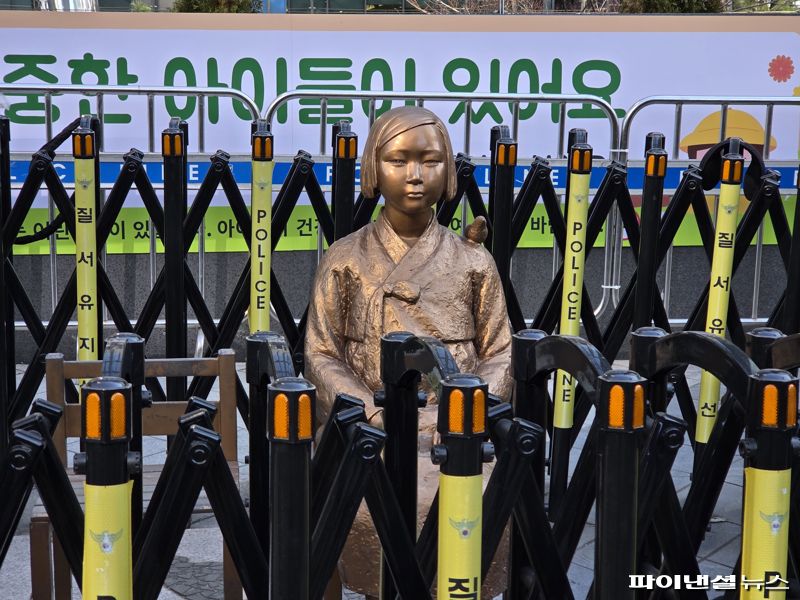
[Financial News] As rallies insulting victims of the Japanese military sexual slavery system continue to be held, the police have announced a policy of responding sternly, but critics say it remains unclear whether such actions can actually be punished under current law. Experts point to the limits of applying the offense of defaming the dead and stress that legislative measures are needed to fill the gap in legal sanctions.
According to data that the office of Democratic Party of Korea (DPK) lawmaker Seo Mi-hwa received from the Seoul Metropolitan Police Agency (SMPA) on the 14th, there were a total of 453 rallies over the past three years that insulted victims of the Japanese military sexual slavery system, organized by groups such as the National Action for the Abolition of the Comfort Women Act, Mom's Army, and the National Enlightenment Movement Headquarters. This is about three times the number of Wednesday Demonstrations organized by The Korean Council for Justice and Remembrance for the Issues of Military Sexual Slavery by Japan (the Korean Council), which demand an official apology and compensation from the Japanese government over the comfort women issue.
Earlier, on the 7th, the National Action for the Abolition of the Comfort Women Act held a counter-rally right next to the first Wednesday Demonstration of the new year, carrying placards with slogans such as “Comfort women were working women who signed contracts with brothel owners and made money.”
In response, the police announced on the 7th that they “plan to strengthen the management of rallies and demonstrations around schools and locations where the Statue of Peace is installed, and to respond sternly to illegal acts such as damaging the Statue of Peace or defaming its honor.” They also booked Byung-heon Kim, head of the National Action for the Abolition of the Comfort Women Act, on charges including defamation of the dead for holding anti–comfort women hate rallies in front of schools and the Statue of Peace without prior notification.
This move is seen as following President Lee Myung-bak’s criticism on the 6th, when he shared an article about Kim on social media and denounced it as “idiotic defamation of the dead.” During the presidential campaign, President Lee had also pledged to establish a legal basis for punishing violations of the human rights and defamation of victims of the Japanese military sexual slavery system, and to seek the inscription of comfort women records in the UNESCO Memory of the World Register.
However, despite the police’s announcement of a stern response, analysts say it will not be easy to secure convictions for the offense of defaming the dead without amending the law. Under current law, it is difficult to establish the required specificity because the remarks are generally directed not at individual victims but at the collective group referred to as “comfort women,” and damaging the Statue of Peace is considered an act against a monument rather than a person.
Jung Jun-young, an attorney at HMP Law, stated, “Acts that insult the comfort women group as a whole, targeting a large number of people who are already deceased, lack specificity under current law, making it difficult to apply the legal doctrine of defamation of the dead.”
In February last year, the Supreme Court finalized an acquittal for former Yonsei University professor Ryu Seok-chun, who had been put on trial on charges of saying during a lecture that “the grandmothers who were Japanese military comfort women voluntarily became comfort women in order to engage in prostitution.” The Supreme Court accepted the lower court’s finding that the remarks were “directed at the group as a whole at a general and abstract level, rather than at specific individual victims.”
In addition, the offense of defaming the dead is a crime that can be prosecuted only if the victim’s family files a complaint, but many of the victims of the Japanese military sexual slavery system who have passed away have no surviving family members, making it difficult in practice to initiate complaints.
Kang Kyung-ran, head of solidarity movements at The Korean Council for Justice and Remembrance for the Issues of Military Sexual Slavery by Japan, said, “Far-right groups such as Kim’s tend to single out victims who have no surviving family members in order to avoid charges of defaming the dead while carrying out their hate campaigns.”
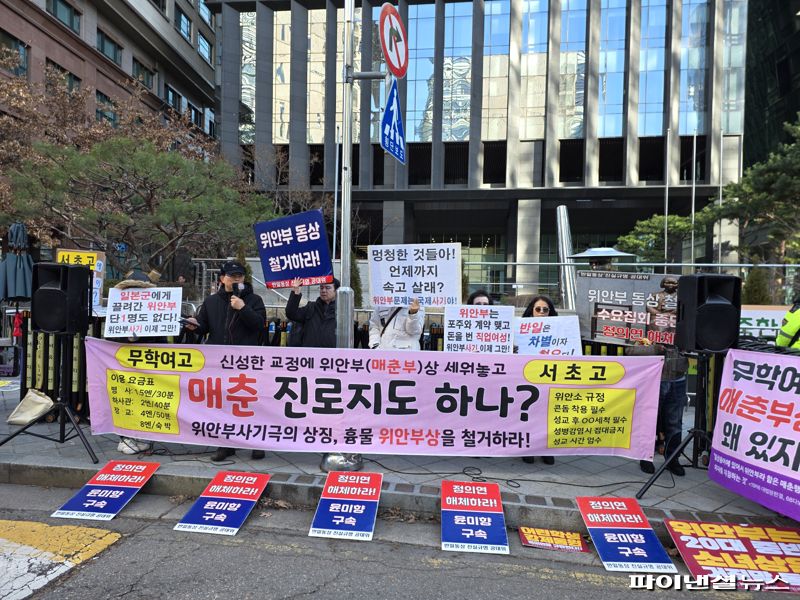
Against this backdrop, there are growing calls for legislative measures to close the gap in legal sanctions against acts that insult victims of the Japanese military sexual slavery system.
Lee Chang-hyun, a professor at Hankuk University of Foreign Studies Law School, explained, “If the law were to clearly specify provisions on acts that insult victims of the Japanese military sexual slavery system or commemorative symbols for them, there would be no major obstacle to imposing criminal penalties.”
However, related bills have so far failed to pass the National Assembly due to disagreements between the ruling and opposition parties. A total of 10 amendment bills to the Act on the Protection of Victims of Japanese Military "Comfort Women" are currently pending before the National Assembly Gender Equality and Family Committee. Most of these bills would prohibit defamation and the spread of false information about the victims and include provisions for punishing acts that damage the Statue of Peace. The Gender Equality and Family Committee is understood to be reviewing the proposed bills in a consolidated manner.
[email protected] Park Sung-hyun Reporter