New Serious Crimes Investigation Agency to Adopt Dual-Track Structure... Supplementary Investigation Powers for Public Prosecution Office Still Unclear [Comprehensive]
- Input
- 2026-01-12 14:11:24
- Updated
- 2026-01-12 14:11:24
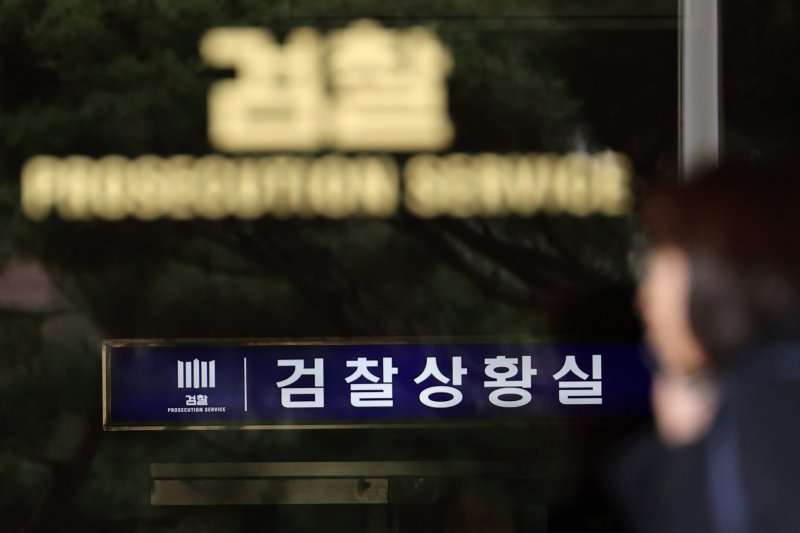
[Financial News] In October, when the investigative functions of the Prosecutors' Office are separated and made independent, the newly established Serious Crime Investigation Agency (Serious Crimes Investigation Agency) will adopt a dual-track structure of "investigative judicial officers" and "general investigators" to investigate nine major categories of serious crimes, including economic and corruption offenses. It remains uncertain whether the Public Prosecution Office, which will be responsible for maintaining prosecutions, will be granted supplementary investigation powers.
The Government Task Force on Prosecution Reform announced this on the afternoon of the 12th while unveiling draft bills for the Public Prosecution Office and the Serious Crimes Investigation Agency.
According to the task force, the criterion for distinguishing between investigative judicial officers and general investigators within the Serious Crimes Investigation Agency is whether they hold a lawyer's license. Investigative judicial officers who are qualified lawyers will be responsible for securing investigative capacity for serious crimes that require complex legal analysis, while professional investigators will be graded from level 1 to 9 and will handle investigative tasks such as evidence collection.
The task force stated, "By allowing professional investigators to transfer to positions as investigative judicial officers and to be appointed to senior posts without restriction, we have secured flexibility in personnel management," adding, "Professional investigators at level 5 or above may be appointed as investigative judicial officers through a transfer process." This measure is seen as addressing concerns raised in some quarters that the dual-track structure of the Serious Crimes Investigation Agency could create a "second Prosecutors' Office" or a new "legal cartel."
The Serious Crimes Investigation Agency will have the authority to initiate investigations into nine categories of serious crimes: corruption crimes, economic crimes, crimes by public officials, election crimes, defense procurement crimes, major disaster crimes, drug crimes, national security crimes such as insurrection and treason, and cybercrimes.
Investigations conducted by the Serious Crimes Investigation Agency will be directed by the Minister of the Interior and Safety. However, according to the task force, such direction by the Minister of the Interior and Safety will be exercised only in exceptional cases, such as when serious and clear violations of the law are identified.
The Public Prosecution Office will be composed primarily of prosecutors and will be responsible for maintaining prosecutions within the criminal procedure system. The first item in the list of prosecutors' duties, "criminal investigation" and "initiation of investigations," will be deleted and replaced with "initiation and maintenance of public prosecutions," clearly restructuring the office as a body dedicated to prosecutions. In other words, prosecutors will no longer be able to initiate investigations.
However, the question of whether prosecutors will retain supplementary investigation powers has been left out of the current bill. The task force said, "With regard to supplementary investigations into cases transferred to the Public Prosecution Office, we plan to review the matter in the course of amending the Criminal Procedure Act."
As for prosecutors' duties, internal and external oversight mechanisms have been newly established or made more substantive in order to strengthen control over their powers and enhance accountability. Specifically, a case review committee will be set up at each High Public Prosecution Office to deliberate on matters such as requests for arrest warrants and decisions on whether to bring charges in cases that attract significant public attention.
Minister of Justice Jung Sung-ho said, "Through this bill, we have laid the groundwork for implementing the principle of separating investigation and prosecution—namely, preventing the agency that initiates an investigation from also concluding it—while at the same time maintaining our capacity to respond to crime so that we can focus on our core role of protecting citizens' daily lives from criminal acts," adding, "We will actively support the subsequent work of revising subordinate regulations and operate the Public Prosecution Office in a way that allows the public to tangibly feel the changes."
[email protected] Kim Dong-gyu, Lee Hwan-joo Reporter