Window for Rate Cuts Closing... “Only One Member May Signal Easing in Forward Guidance”
- Input
- 2026-01-12 14:37:56
- Updated
- 2026-01-12 14:37:56
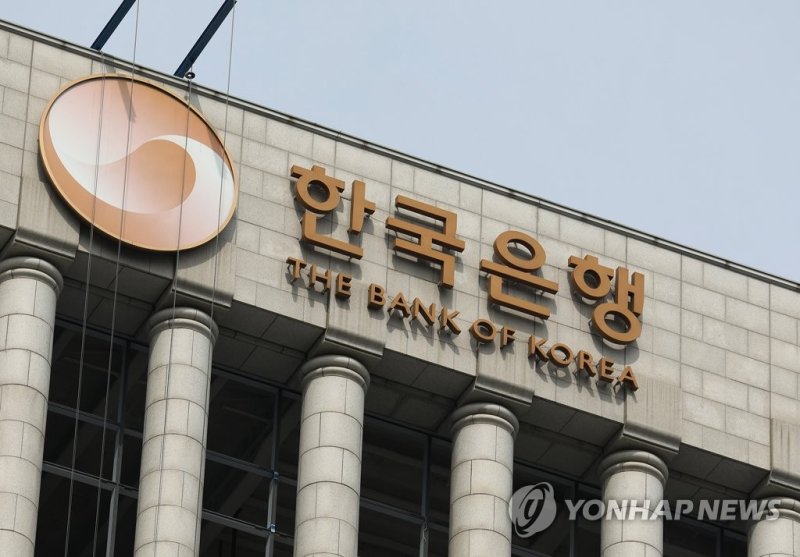
On the 12th, market participants broadly agreed that at the Monetary Policy Board meeting scheduled for the 15th, three or fewer of the six Board members will indicate a possible cut in the three‐month forward guidance. Some even expect that number to fall to just one. The number of members signaling a cut had already declined from five in August last year to four in October and three in November, and the consensus now is that the crack in the door for rate cuts will narrow even further this time.
Ahn Yeha, a researcher at KIWOOM Securities, said, “Since the BOK already hinted last November at the possibility of an extended period of unchanged rates, the number of Monetary Policy Board members of the Bank of Korea who leave open the possibility of keeping the base rate on hold in their forward guidance could increase to five,” adding, “This is because exchange rate and real estate risks remain, while exports, led by semiconductors, are expected to continue improving.” However, Ahn does not see the possibility of a rate cut as completely shut off, projecting that one cut could come toward the end of the year.
Cho Yong Gu, a researcher at Shinyoung Securities, also projected that at most two Monetary Policy Board members will express a view in favor of a rate cut within three months in the forward guidance. “The easing cycle is effectively over,” he said, adding, “If there is no meaningful change in rates through the first half of this year, it will be difficult to see cuts even next year.”
Cho went so far as to mention the possibility of a rate hike, albeit under certain conditions. “It will be difficult this year,” he said, “but it could become possible around the time when annual growth reaches about 2.3% to 2.4% and the GDP gap turns from negative to positive.”
Introduced in October 2022, the three‐month forward guidance represents the Monetary Policy Board members’ assessment of the likelihood of keeping the base rate unchanged, raising it, or cutting it within the next three months. It signals that, barring any major shocks, there is a high probability that the indicated decision will be implemented.
Although the assessment is based on current conditions, the prevailing view is that the stance of holding rates steady will persist for some time, as there are no signs that real estate or exchange rate issues will be resolved in the near term.
The BOK also stated in its “Monetary and Credit Policy Operational Guidelines for 2026,” released on the 25th of last month, that it will “decide whether and when to further cut the base rate next year by comprehensively considering uncertainties in the path and outlook for inflation and growth, as well as risks to financial stability.” This marks a shift from the “Monetary and Credit Policy Management Direction for 2025,” which merely referred to “further cuts” without questioning whether they would occur at all. The new wording is being interpreted as indicating that, depending on inflation and exchange rate developments, the base rate may not be lowered.
Above all, the persistent rise in the won–dollar exchange rate—now widely seen as having settled into a new normal in the 1,400‐won range—is effectively extinguishing the possibility of rate cuts. In particular, as annual outbound investment into the United States of up to 20 billion dollars gets fully under way this year, analysts expect the lower bound of the exchange rate to move higher. In this environment, cutting rates and thereby widening the interest rate gap between South Korea and the United States becomes an even more remote option.
That said, the door to rate cuts is not completely closed. Reviving the construction sector, easing the burden of household debt, and boosting employment are also pressing policy challenges. Yongtaek Jeong, an economist at IBK Securities Co., Ltd., noted, “One of the necessary conditions for a decision to cut rates is confirmation that the exchange rate has stabilized,” adding, “Resuming rate cuts is a prerequisite for achieving growth of around 1.8% this year, and rising market interest rates are a factor that constrains expectations for the economy and the stock market.”
[email protected] Kim Taeil Reporter