US weighs options on Iran, including possible military action, as Tehran signals willingness to negotiate
- Input
- 2026-01-12 14:30:36
- Updated
- 2026-01-12 14:30:36
According to Financial News, the United States of America (US) is reportedly reviewing a range of options on Iran, including the possible use of military force, as anti-government protests continue to spread there.
On the 11th (local time), as President Donald Trump said he was seriously considering a military strike on Iran, The Wall Street Journal (WSJ) reported that a briefing is scheduled at The White House on the 13th, where, in addition to military operations, economic sanctions and cyberattacks will be discussed.
The paper said the planned briefing indicates that Washington is considering punitive measures against the Iranian government for its crackdown on protesters, and that it could raise the likelihood of stepped-up support for Iran’s online opposition, cyberattacks on Iranian military and civilian facilities, additional sanctions, and even military strikes.
US government officials said US Secretary of State Marco Rubio, Defense Secretary Pete Hegseth and Joint Chiefs of Staff Chairman Dan Caine are expected to attend the briefing.
However, as the review is still in its early stages, President Trump is not expected to make a final decision at the briefing.
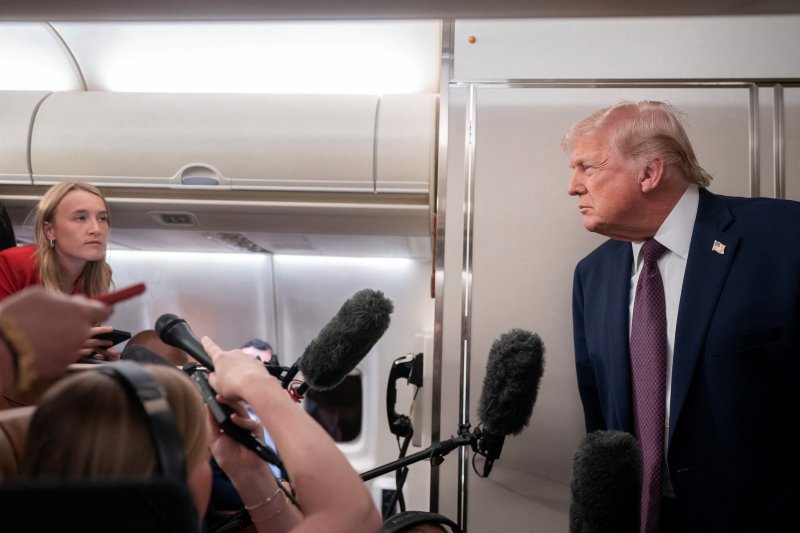
Speaking to reporters aboard Air Force One, President Trump said he is looking at military options very seriously and that there are some very strong measures on the table, adding that he will eventually make a decision.
He also revealed that, after the possibility of military action was raised, Iran’s leadership has tried to reach out and has shown a willingness to negotiate, and that preparations for a meeting are under way.
US media outlets including CBS News and The New York Times (NYT) reported that President Trump received a briefing that laid out possible military strike options against Iran.
The US has not yet shown any notable military movements around Iran.
In addition to military options, the possibility of cyberattacks against Iran is also being discussed.
A US government official said President Trump has approved a plan for Elon Musk’s Starlink to provide terminals to Iran.
US Secretary of State Marco Rubio and Israeli Prime Minister Benjamin Netanyahu held a phone call the same day to discuss possible US involvement, and Israel is said to be raising its alert level in preparation.
The Iranian government has warned that if the US attacks Iran, it will retaliate against US military bases in the Middle East and against Israel.
Within the United States Congress, opinions are divided over the prospect of an attack on Iran.
Senator Randal Howard "Rand" Paul (Republican–Kentucky) said in an interview with American Broadcasting Company (ABC) that the US government should not intervene in every freedom movement around the world, warning that US airstrikes could risk driving Iranian citizens to rally behind their government.
Senator Tim Kaine (Democrat–Virginia), a member of the United States Senate Committee on Foreign Relations, also voiced concern, saying that launching a military operation now under the pretext of helping Iranian protesters would be a grave mistake.
He argued that if there is a military attack, the Iranian government will portray the US as a force destroying the country, and said that sanctions similar to those previously imposed on the Assad regime in Syria would be more appropriate.
By contrast, Senator Lindsey Olin Graham (Republican–South Carolina) said in an interview with Fox News Channel that President Trump is rallying the protesters and frightening the Iranian government, adding that if he were president, he would "remove the Iranian leadership that is killing its own citizens."Human Rights Activists News Agency (HRANA) and other human rights groups estimate that so far 544 people have been killed in Iran and around 10,000 have been detained..
Protests denouncing the Iranian government’s crackdown and expressing solidarity with Iranian citizens are continuing overseas as well, in cities such as London, Paris and Istanbul.
Crowds in front of the Iranian Embassy in London and near the prime minister’s residence at 10 Downing Street have swelled into the thousands.
One Iranian woman said, "We want a revolution. Change the regime," adding that an opportunity has come to replace the Iranian government.
In Paris, about 2,000 people marched toward the Iranian Embassy carrying the former Iranian flag and chanting slogans such as "Down with the terrorist Islamic Republic," but they were blocked.
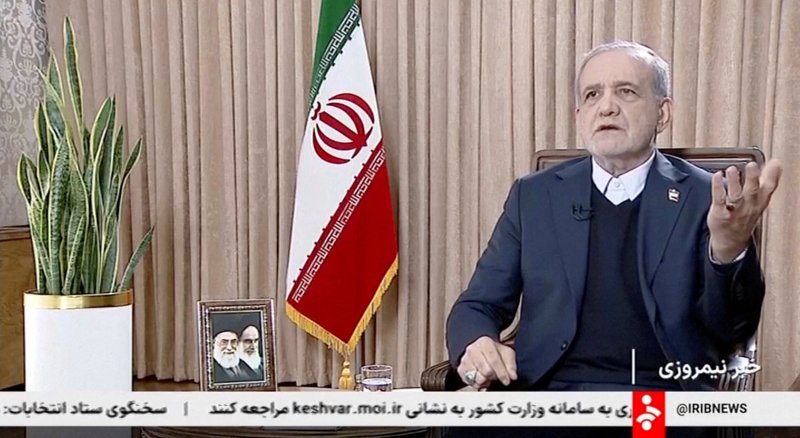
In an interview with Islamic Republic of Iran Broadcasting (IRIB), Iranian President Masoud Pezeshkian criticized the current protests as being driven by "terrorists" linked to foreign powers who are causing chaos and disorder, while at the same time striking a conciliatory tone by saying that Iranian authorities can listen to the voices of the people.
However, Sky News pointed out that President Pezeshkian’s political power is so limited that Supreme Leader Ali Khamenei could overturn his decisions.
[email protected] Yoon Jae-joon Reporter