Even More Than During COVID-19... Unemployment Benefits Near 12.3 Trillion Won Last Year, an All‐Time High
- Input
- 2026-01-12 13:39:53
- Updated
- 2026-01-12 13:39:53
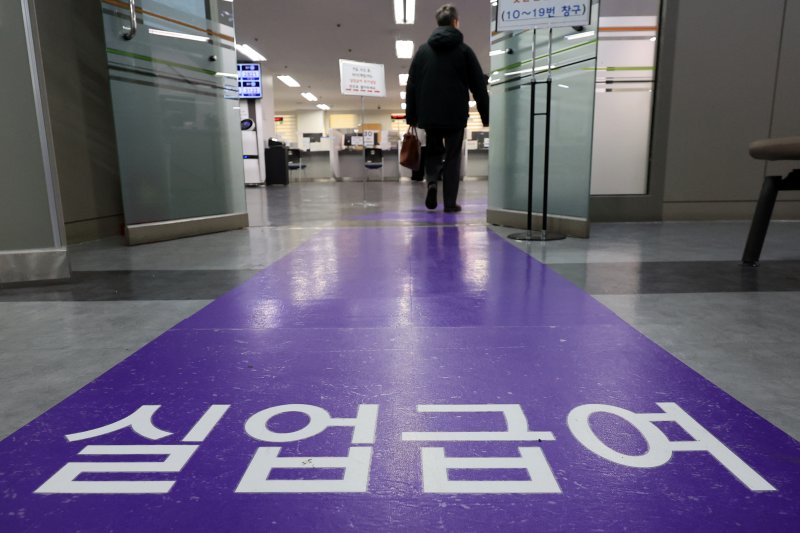
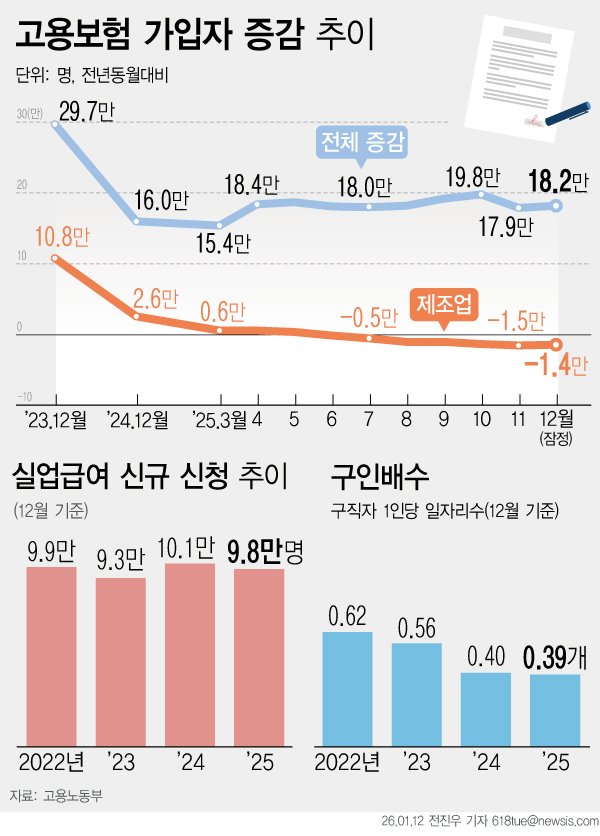
On the 12th, according to the labor market trends based on employment administration statistics released by the Ministry of Employment and Labor (MOEL), unemployment benefits paid in December last year amounted to 813.6 billion won, up 1.3% (10.4 billion won) from the same month a year earlier. Total unemployment benefits paid over the whole of last year came to 12.2851 trillion won. The previous record was 12.0575 trillion won in 2021, during the COVID-19 pandemic.
Last year, monthly unemployment benefit payments exceeded 1 trillion won for nine consecutive months.
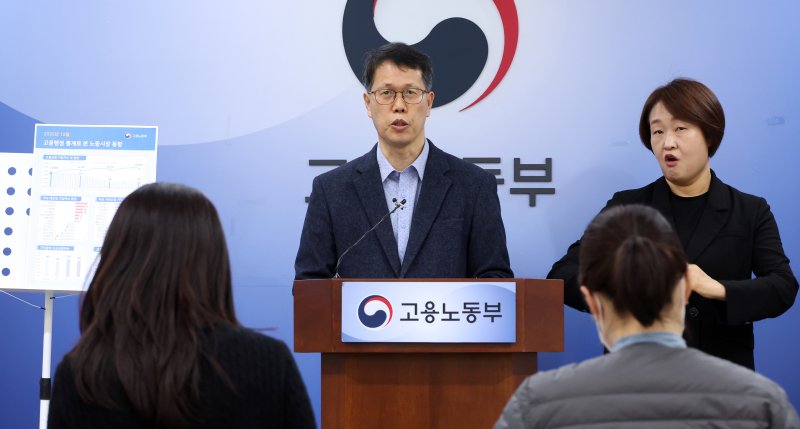
Chun Kyung-gi, director of the Future Employment Analysis Division at MOEL, said, “Beyond the simple total amount paid, we also need to take into account the overall statistics on the number of recipients,” adding, “There are areas where the number of recipients has decreased, and we should also note that the scope of social security has expanded as the number of employment insurance subscribers has generally increased.” He also explained that the unemployment benefit level, which is linked to the minimum wage, has been raised every year and this must be considered as well.
By industry and age group, the rise in the number of subscribers was supported by the service sector and those aged 60 and older, while manufacturing, construction, and younger people continued to show steady declines.
By industry, the number of employment insurance subscribers in manufacturing last year was 3,846,000, down 3,000 from the previous year. This marks a shift back to decline for the first time in five years since 2020, when the number fell by 43,000.
The number of subscribers in the construction industry decreased by 19,000 compared with 2024. This is the second consecutive year of decline, and the drop is larger than the previous year’s decrease of 10,000.
Last year, the number of subscribers in the service sector was 10,789,000, an increase of 195,000 from the previous year. However, the pace of increase has been slowing each year.
By age group, the number of subscribers aged 60 and older last year was 2,744,000, up 179,000 from the previous year, representing the largest increase. In contrast, the number of subscribers aged 29 and under fell by 95,000, marking the steepest decline.
Chun said, “Overall, there is a broadly shared outlook that, within the service sector, growth will continue to be driven by health and welfare services due to population aging and rising welfare needs,” adding, “In manufacturing, exports are very strong, but they are concentrated in specific industries such as automobiles, semiconductors, and shipbuilding, so there are still concerns about whether the number of insured workers and employed persons will increase.”
Regarding the construction industry, he said, “According to projections by the Korea Development Institute (KDI), construction investment is expected to be better this year than last year in terms of its contribution to economic growth,” but added, “However, an expansion in investment does not immediately translate into employment; it appears with a time lag, so we believe it will be difficult for employment in the construction sector to recover in the short term.”
Chun also commented on this year’s outlook for employment insurance subscription trends by age group, saying, “The increase in subscribers aged 60 and older is driving the overall growth,” and, “Since May 2024, the employment rate among young people has been continuously declining, and we are not yet seeing clear signs of a recovery in youth employment. We hope that this year’s job policies will prove effective and that corporate demand will be tapped so that we can see positive results.”
[email protected] Kim Jun-hyuk Reporter