U.S. government will not directly operate Venezuelan oil sector, will support private companies instead
- Input
- 2026-01-12 09:20:56
- Updated
- 2026-01-12 09:20:56
[Financial News] The Federal government of the United States, which launched an attack on Venezuela this month, has drawn a clear line, saying it will not directly operate local oil companies. However, Washington signaled that U.S. firms will move into Venezuela and ramp up oil production.
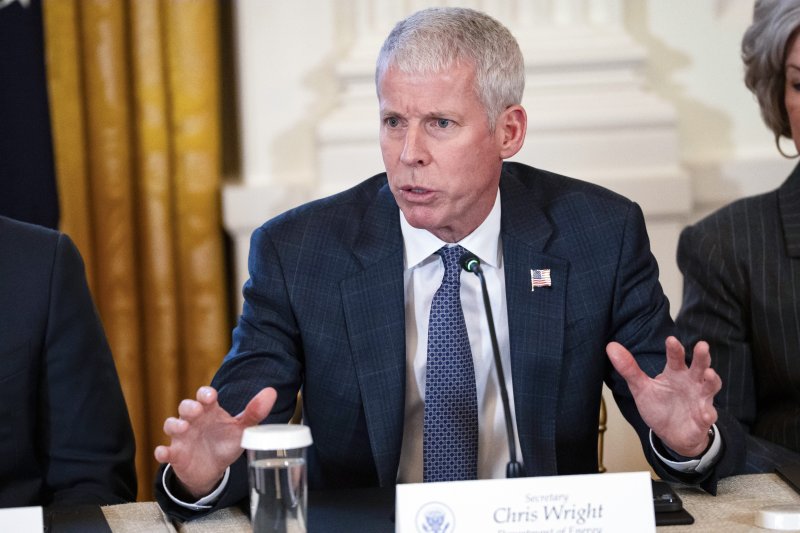
Christopher Allen Wright, U.S. Secretary of Energy, appeared on CBS Broadcasting Inc. (CBS) on the 11th (local time) and discussed Petróleos de Venezuela, S.A. (PDVSA), the Venezuelan state-owned oil company. Asked whether the United States would acquire PDVSA and directly run it going forward, he replied, “No,” adding, “At present, we are managing the sale of their oil.” Wright went on to say, “U.S. involvement in Venezuela’s oil industry will expand,” and asserted, “You will see greater participation by U.S. companies and an increase in production volumes.”
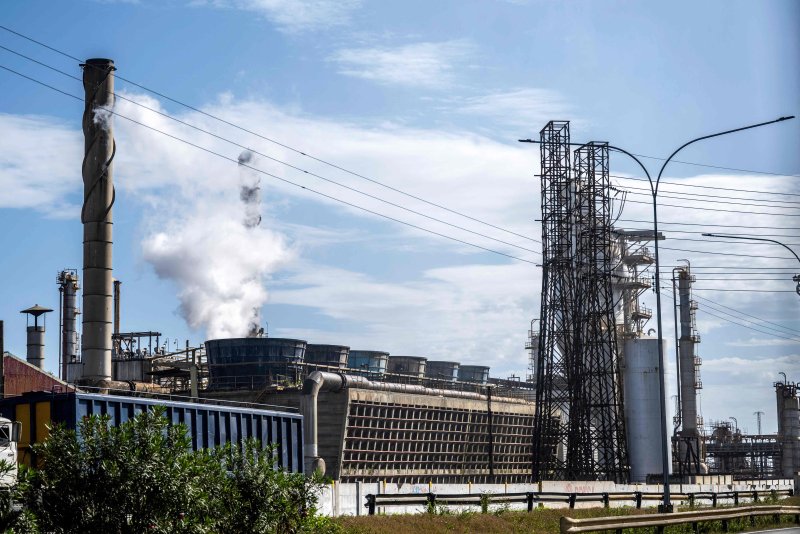
According to the U.S. Energy Information Administration (EIA), as of 2023 Venezuela’s proven oil reserves accounted for about 17% of the world’s total, the largest share for any single country. Yet in the same year, the volume Venezuela actually produced and supplied to the international oil market amounted to only 0.8% of global output, due to poor crude quality and inadequate refining technology.
Venezuela’s oil production, which reached 3.5 million barrels per day in the late 1990s, had fallen to 860,000 barrels per day as of last November. Foreign media outlets have pointed out that Western oil majors pulled out en masse after the inauguration of Hugo Chávez in 1999 and under the subsequent leftist government of Nicolás Maduro, following unilateral nationalization measures. At the same time, they note that deteriorating oil infrastructure has led to a sharp drop in output. ConocoPhillips and ExxonMobil withdrew from Venezuela in 2007 in protest against the Chávez administration’s nationalization drive, and Chevron Corporation is now the only remaining U.S. oil company operating in the country.
On the 3rd, after ordering an attack on Venezuela and capturing Maduro, Donald Trump, President of the United States (POTUS), told reporters that same day, “We will run the country (Venezuela) until we can achieve a safe, appropriate, and prudent transfer of power.” On the 9th, he gathered executives from major oil companies, including ExxonMobil, and urged them to take part in rebuilding Venezuela’s oil facilities. On the 11th, Wright explained that in Venezuela, “We are not at the stage of providing direct military guarantees for U.S. companies.”
Wright stated that all of Venezuela’s oil “is being traded through U.S. oil marketers,” and claimed, “The proceeds will be used to improve the lives of the people of Venezuela and the United States.” He said the administration intends to increase Venezuelan oil production to push down global oil prices, while emphasizing, “Trump is not a patron of the oil and gas industry.”
Wright also commented on a proposal for a U.S. hedge fund to acquire Citgo Petroleum Corporation, the U.S. subsidiary of PDVSA, saying, “It would be a fantastic outcome for American refining assets to be owned by American businesspeople.” He flatly rejected allegations that Elliott Management, a hedge fund run by major Trump donor Paul Elliott Singer, is receiving special favors in the Citgo acquisition process, saying, “That is absolutely not true.”
“The President of the United States is actually driving down oil prices, which in turn is hurting the profitability of oil companies,” Wright said. “Policies by the Democratic Party of the United States that restrict supply and push prices higher are, in fact, more advantageous to oil companies.” He added, “There is no corruption or favoritism. Every contract has been awarded through open auctions and will be reported to Congress.”
[email protected] Park Jong-won Reporter