At Least 538 Killed in Iran’s Anti-Government Protests, Death Toll Could Reach 2,000
- Input
- 2026-01-12 06:00:13
- Updated
- 2026-01-12 06:00:13
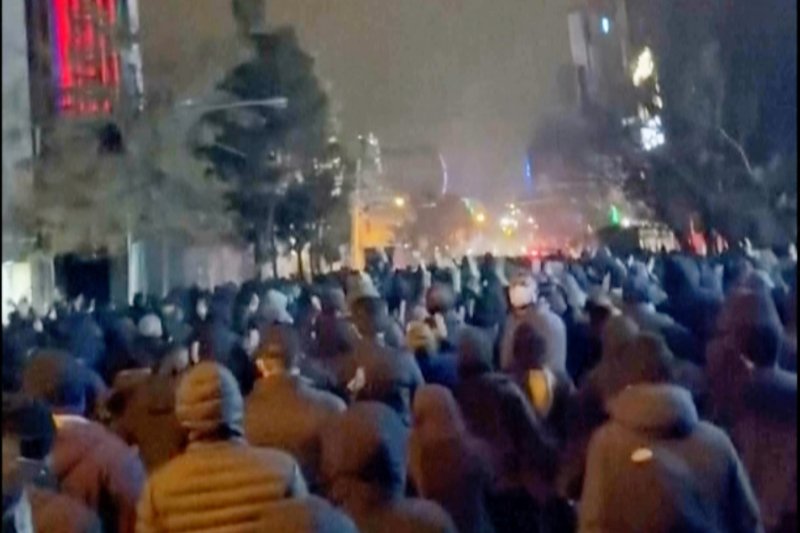
According to Financial News, as anti-government protests in Iran have continued for about two weeks, some now claim that the cumulative death toll has reached at least 538. There is also speculation that more than 2,000 people may have been killed.
At least 538 dead, possibility of more than 2,000
In a report on the 11th (local time), The Associated Press (AP) cited the U.S.-based human rights activist outlet Human Rights Activists News Agency (HRANA) as saying that 538 people have been killed in Iran’s anti-government protests that began last year, including 490 civilians and 48 members of the security forces. The number of people arrested is estimated at a minimum of 10,600. Earlier, Time Magazine reported on the 10th, citing officials in Tehran, Iran, that at least 217 deaths had been confirmed at six hospitals, most of them caused by live ammunition.In addition, the Norway-based human rights organization Iran Human Rights (IHR) stated in a release on the 11th that it had confirmed at least 192 deaths as of that day. This is about four times the 51 deaths the group reported on the 9th. IHR pointed out that Iranian authorities have blocked internet and telecommunications services for more than 60 hours and said, “According to unverified reports, some sources suggest that more than 2,000 people may have been killed.” IHR added that most of the deaths occurred over the two days of the 9th and 10th, and that there are claims that hundreds of bodies of protesters were seen at a morgue in Tehran, the capital of Iran.
Mahmood Amiry-Moghaddam, director of IHR, warned, “The massacre of protesters that has taken place over the past three days, especially since the internet was shut down nationwide, may be far more extensive than we can imagine,” and urged, “The international community must use every possible means to stop this.” Amiry-Moghaddam also criticized the fact that Iranian prosecutors have labeled the protests a crime of “moharebeh (enmity against God) against Allah,” saying this amounts to “a threat to execute the protesters.”
As the anti-government protests, which began as a denunciation of economic hardship, intensified, Iranian authorities last week cut off internet and other communications. In some regions, ground forces of the Islamic Revolutionary Guard Corps (IRGC), the elite political-military force under Iran’s supreme leader, were deployed to suppress the protests. Some Iranian citizens had been using Starlink satellite internet operated by Space Exploration Technologies Corp. (SpaceX), but even that service is now reportedly experiencing serious connectivity issues.
Hard-line crackdown continues as U.S. and Israel watch closely
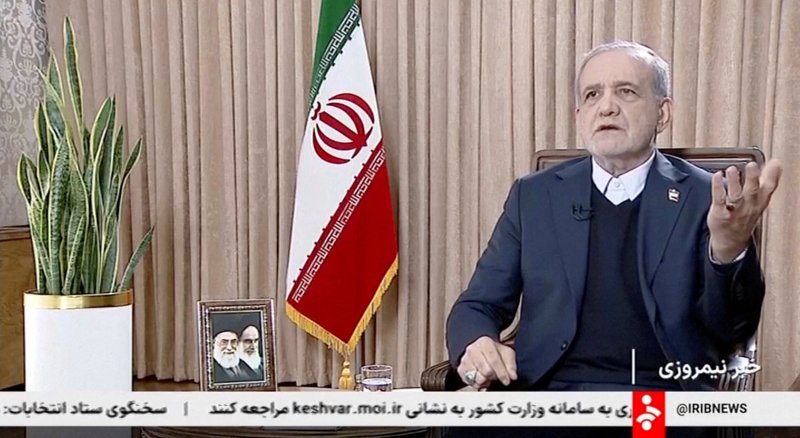
According to Iran’s state-run Press TV, Masoud Pezeshkian, the Iranian president who had previously shown a more reformist stance than Iran’s supreme leader Ayatollah Seyyed Ali Khamenei, also stressed the need to suppress the protests in a speech on the 11th. He said the anti-government demonstrations are something “our security and defense institutions must resolutely put down.” Pezeshkian stated, “The people’s protests are legitimate, and we have a duty to meet with them and talk,” but added, “It is our even more important duty not to allow a small number of rioters to plunge society as a whole into chaos.”He went on to say that “riots, attacks on public places, arson at mosques, and the burning of the ‘Book of God (the Quran)’ are all part of the plans and conspiracies of the United States of America (U.S.) and Israel,” shifting the blame abroad. He added, “They have trained people inside and outside the country and brought in terrorists from overseas to set fire to mosques, markets, and public places,” insisting, “Such crimes are not something our people could commit.”
Mohammad Baqer Qalibaf, speaker of Iran’s parliament, criticized U.S. President Donald Trump, who has hinted at intervening in the unrest, saying he is “delusional,” and warned that “an attack on Iran would make all U.S. bases, military facilities, and vessels in the region legitimate targets.”
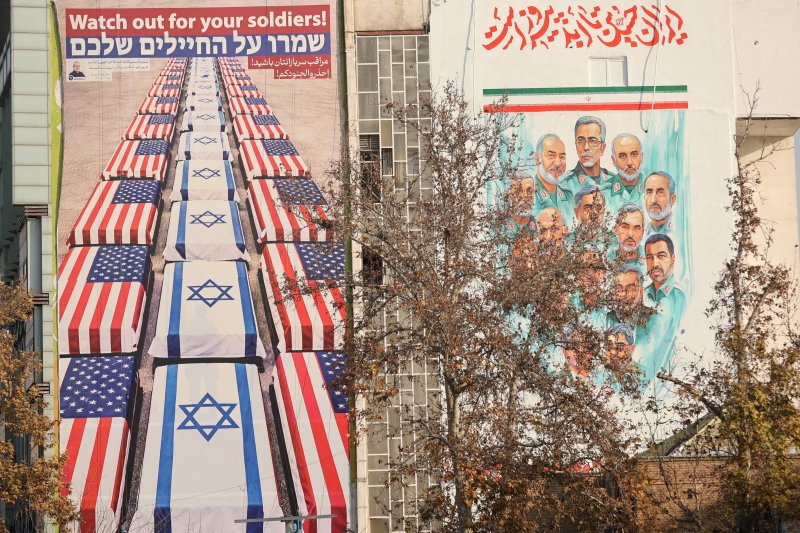
The United States of America (U.S.) and Israel, which bombed Iran’s nuclear facilities last year, are closely monitoring the current protests. According to The Wall Street Journal (WSJ), Trump is scheduled to receive a detailed briefing on possible responses to the protests in Iran on the 13th. Israeli Prime Minister Benjamin Netanyahu said at a cabinet meeting on the 11th, “Israel is closely following the situation unfolding in Iran,” and expressed support for the protests, saying, “We hope the people of Persia will free themselves from the yoke of tyranny.” On the same day, an Israel Defense Forces (IDF) official said, “The protests are an internal matter for Iran,” but added, “We are prepared to respond forcefully if necessary,” leaving open the possibility of military action.
[email protected] Jong-won Park Reporter